

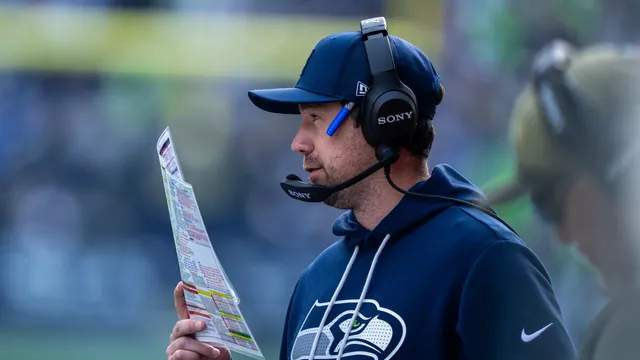
Klint Kubiak secures second interview with Cardinals as head coach candidate
Klint Kubiak secures second interview with Cardinals as head coach candidate
- Klint Kubiak is interviewing for head coach positions with the Cardinals and Raiders.
- Kubiak was previously hired as the Seahawks' offensive coordinator and has a history of roles in the NFL.
- He is positioned well to negotiate a contract after being a top choice for both teams.
Story
In early February 2026, Klint Kubiak, the offensive coordinator for the Seattle Seahawks, is in the running for head coaching positions with both the Arizona Cardinals and the Las Vegas Raiders. Kubiak has garnered attention from both teams after conducting interviews on a Saturday. The Seahawks are anticipated to lose Kubiak following the Super Bowl as they prepare for a significant transition in their coaching staff. Kubiak’s impressive track record as an offensive coordinator has given him a strong standing in the eyes of potential employers. Having spent multiple seasons in various coaching roles with notable teams, including being the offensive coordinator for the Vikings and a passing game specialist for the 49ers, Kubiak brings a wealth of experience that has positioned him as a leading candidate for future opportunities. With the departure of other candidates like Davis Webb of the Broncos from consideration for the Raiders' head coaching job, Kubiak's chances of securing a position are improving. His previous work with players like Sam Darnold has drawn praise, showcasing his ability to enhance offensive performance. The situation surrounding Kubiak underscores the dynamics at play in the NFL coaching carousel, particularly as teams look to make strategic changes after the conclusion of the Super Bowl. Kubiak's skill in negotiation is evident, as he is likely positioned to leverage interest from both teams to secure a favorable contract. The importance of Kubiak's role in the Seahawks organization is recognized; losing a key assistant coach like him may have lasting effects on the team's offensive strategy in the upcoming seasons. Given the timing of the interviews and the ongoing action within the NFL coaching market, Kubiak's immediate future will depend heavily on the decisions made in the following weeks, potentially reshaping the offensive strategies for whichever team secures his services. With both the Raiders and Cardinals clearly interested, Kubiak could establish a new legacy as a head coach, following in the footsteps of his father, Gary Kubiak, who also had a notable coaching career in the NFL.
Context
The impact of coaching changes on NFL teams is a significant area of study, as it can greatly influence a team's performance, player morale, and overall organizational culture. Coaching changes can come as a result of poor performance, management decisions, or the pursuit of new philosophies. When a team undergoes a coaching change, it typically leads to a period of adjustment for both the players and the coaching staff. New coaches bring their own systems and strategies, which can create uncertainty among players who need time to acclimate to different playbooks and coaching styles. This adjustment period can impact a team’s performance in the immediate term, often leading to inconsistent results as players adapt to new expectations and methodologies. Furthermore, the psychological aspect of a coaching change cannot be overstated. Players may experience a range of emotions, from excitement at the prospect of a fresh start to anxiety about their place within the team. Coaching changes can also affect team dynamics, with some players flourishing under new leadership while others may struggle. Strong leadership from the new coach is essential for fostering an environment of trust and cooperation. For teams with established stars, coaching changes may lead to a power shift where certain players must adjust their roles, potentially leading to conflicts or power struggles. Therefore, the interpersonal relationships between players and the new coaching staff can greatly influence the overall success of the transition. From a performance standpoint, historical data shows both positive and negative outcomes following coaching changes. Some teams improve significantly after hiring a new head coach, benefiting from new strategies and renewed motivation. This can lead to immediate success on the field, as seen in cases where teams have rallied around a new vision. Conversely, there are instances where a coaching change has resulted in further decline, particularly if the new coach fails to connect with the players or if the system implemented is not well-suited to the team's personnel. The timing of the change is also a crucial factor; mid-season changes often complicate matters, as they limit the ability to fully implement a new system within a shortened timeline. Additionally, the long-term effects of coaching changes can be profound. Successful transitions have the potential to redefine a franchise's trajectory, leading to a culture shift that can foster sustained success over multiple seasons. Teams that consistently struggle may find themselves in a repeated cycle of coaching changes, leading to instability and fragmented team identity. Conversely, teams that make well-calculated coaching changes often experience surges in performance, securing a stronger competitive position within their division and the league. Understanding the multifaceted impact of coaching changes is essential for teams looking to maximize their potential; it requires careful consideration not only of the immediate implications for on-field performance but also of the long-term vision for the organization.


