

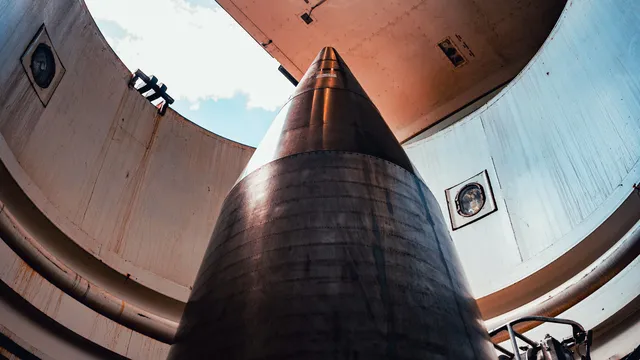
Nuclear tensions rise as New START treaty expires
Nuclear tensions rise as New START treaty expires
- The New START treaty, which limited U.S. and Russian nuclear arsenals, expired on February 5, 2026.
- Experts warn that the expiration could lead to an escalation in nuclear arms production and instability.
- Continued dialogues and existing constraints may mitigate the immediate risk of an unconstrained arms race.
Story
On February 5, 2026, the expiration of the New START treaty, which was designed to limit the nuclear arsenals of the United States and Russia, raised concerns about a renewed arms race between the two nuclear powers. Initially signed by Richard Nixon and Leonid Brezhnev in 1972, this treaty mandated that both countries would keep their deployed nuclear warheads to a maximum of 1,550 and limit delivery systems to 700. This 2010 treaty represented a critical guardrail against expansive nuclear capability. The absence of constraints on nuclear warheads comes at a time when global tensions are escalating, especially against a backdrop of ongoing conflicts. Experts worry that the two nations may now view the expiration as a cue to increase their arsenals. As of early 2026, estimates indicate there are approximately 12,321 nuclear warheads worldwide, with the U.S. and Russia holding the majority. Donald Trump, the U.S. president at the time, criticized the New START treaty, deeming it poorly negotiated and advocating for a new treaty instead of extending the expired one. His administration hinted at potentially resuming U.S. nuclear testing and, along with Russia's indications of readiness to bolster its military capabilities, evokes fears that the treaty's expiration could rekindle aggressive nuclear postures. Despite the gravity of the situation, analysts believe that an immediate, uncontrolled arms race is unlikely. Other frameworks developed over decades that promote controls, such as ballistic missile launch notifications and strategic exercise agreements, still exist. However, these systems are insufficient to prevent potential escalation as new technologies, particularly in Artificial Intelligence, enable autonomous warfare and create a new military landscape where traditional nuclear deterrence may falter. The undercurrent of instability is underlined by fears that the integration of AI into military operations could lead to quicker decisions that might escalate conflicts, possibly overlooking or underestimating the nuclear risks involved.
Context
The history of nuclear arms control treaties is a critical narrative that highlights the evolution of international diplomacy aimed at preventing the proliferation of nuclear weapons and mitigating the devastating consequences of nuclear warfare. The journey began after World War II, during which the immense destruction caused by nuclear bombs in Hiroshima and Nagasaki underscored the need for regulating nuclear armament. The first significant international treaty, the Treaty on the Non-Proliferation of Nuclear Weapons (NPT), was opened for signature in 1968 and entered into force in 1970. The NPT established a framework for preventing the spread of nuclear weapons, promoting peaceful uses of nuclear energy, and furthering disarmament efforts. With 191 parties, it remains one of the most widely adhered to arms control agreements in history, though challenges persist, particularly due to non-signatory states and issues surrounding compliance by existing nuclear powers. In the subsequent decades, several treaties aimed at specific aspects of nuclear disarmament and arms control emerged, reflecting the changing geopolitical landscape. The Strategic Arms Limitation Talks (SALT) in the 1970s led to agreements limiting the number of strategic ballistic missile launchers, while the Intermediate-Range Nuclear Forces Treaty (INF) in 1987 eliminated an entire class of nuclear weapons. These agreements marked significant steps in US-Soviet relations and contributed to easing Cold War tensions. However, the dissolution of the Soviet Union in 1991 and the unilateral disarmament approaches adopted by some former Soviet republics complicated the arms control landscape, showcasing the need for robust verification mechanisms and comprehensive engagement strategies. The 1996 Comprehensive Nuclear-Test-Ban Treaty (CTBT) sought to prohibit all nuclear explosions, but it has not yet entered into force due to lack of ratification by key states, including the United States and China. Although the CTBT has established a monitoring system that has proven effective in detecting nuclear tests, its incomplete status highlights the ongoing challenges in achieving universal adherence to arms control agreements. Additionally, the emergence of new nuclear states and non-state actors possessing nuclear capabilities requires a re-evaluation of existing treaties and potentially the creation of new frameworks that address modern complexities and security concerns. In recent years, the landscape of nuclear arms control has faced tumultuous shifts, particularly with the rise of geopolitical tensions and the re-evaluation of commitments by major powers. Treaties such as the New START agreement, which was signed in 2010 and limits the number of strategic nuclear warheads and delivery systems, underscore the ongoing need for dialogue and negotiation. With the current global climate characterized by uncertainty and competition, sustaining and advancing nuclear arms control remains a vital concern for the international community. Future efforts must focus on reinvigorating existing treaties and addressing gaps in the nuclear non-proliferation framework to promote global security and prevent nuclear catastrophe.


