

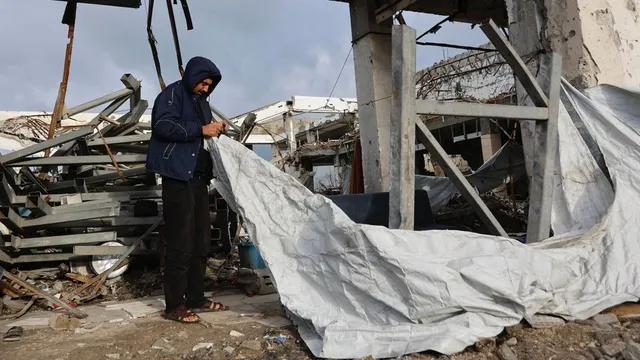
U.S. initiates Phase Two of Gaza peace plan amidst ongoing violence
U.S. initiates Phase Two of Gaza peace plan amidst ongoing violence
- The U.S. announced the launch of Phase Two of the Gaza peace plan aimed at establishing a transitional administration.
- Despite the ceasefire, violence continues in Gaza with significant casualties reported, raising skepticism about the effectiveness of the new phase.
- Local residents question the potential changes to their lives and whether promises made will be fulfilled.
Story
In early January 2026, the United States announced the transition to Phase Two of its plan for peace in Gaza, which was originally outlined by President Donald Trump. As part of this phase, U.S. special envoy to the Middle East, Steve Witkoff, highlighted goals such as demilitarization, technocratic governance, and reconstruction of the Gaza Strip. The announcement underscored established objectives to create a transitional technocratic Palestinian administration while also requiring Hamas to disarm unauthorized personnel. These developments occur in the context of ongoing violence, with more than 450 Palestinian casualties reported since the ceasefire was initiated. Local sentiment in Gaza is mixed, as many residents question whether the new phase will yield tangible improvements in their living conditions, given past promises that have gone unfulfilled. Concerns about lack of humanitarian aid, persistent violence, and insufficient reconstruction efforts continue to plague the region, signaling a complicated road ahead for peace initiatives. The recent announcement in Gaza emerged from long-standing tensions exacerbated by conflict and power struggles among Palestinian factions, primarily between Hamas and the Palestinian Authority. Despite previous ceasefires and peace negotiations, both sides have been accused of failing to uphold commitments. Witkoff's statement was met with skepticism, mainly due to deep-rooted issues surrounding governance, international oversight, and the potential for continued violence. Many residents remain displaced or are living under dire conditions, signaling a critical need for improved humanitarian aid and infrastructure redevelopment. In response to the U.S. push for progress, Hamas expressed their willingness to hand over control of Gaza while also demanding compliance from Israel regarding the first phase of the ceasefire agreement. Moving forward will require the intervention of external mediation from countries like Egypt, Turkey, and Qatar, which have facilitated prior negotiations. The complexity of these demands highlights the tenuous nature of securing lasting peace as multiple actors have vested interests in the outcomes. As negotiations continue, the need for a cohesive and unified Palestinian leadership is evident to address the humanitarian crisis effectively. Overall, the path forward for Gaza remains uncertain. While the U.S. administration aims to facilitate a new governance structure, deep skepticism persists among residents about the likelihood of tangible changes that could enhance daily living conditions. Reports from the region indicate that ongoing violence could jeopardize the potential for progress, while many Gazans express a mix of hope and doubt for the future. Ensuring swift implementation of humanitarian support, infrastructure rebuilding, and peacekeeping operations will be essential to addressing the immediate needs of the population and fostering a stable environment conducive to long-term peace.
Context
The history of ceasefire agreements in Gaza is marked by a series of efforts to mitigate conflict between Israel and Palestinian factions, primarily Hamas. The region has seen multiple escalations of violence since Hamas took control of Gaza in 2007, leading to numerous casualties and humanitarian crises. Ceasefires are often brokered by international entities, including Egypt, the United Nations, and the United States, each attempting to impose a halt to hostilities to allow for humanitarian aid and diplomatic talks. The agreements are frequently fragile, facing many challenges including violations by both sides and the complex political landscape of the region. One of the early notable ceasefires occurred in June 2008, after a period of intense fighting that saw the deaths of numerous civilians. This agreement was intended to last six months but saw multiple breaches from both sides, leading to its collapse. Following this, there were several significant escalations, notably in 2012 and 2014, where more comprehensive ceasefire agreements were reached. The 2014 conflict was one of the deadliest, resulting in over 2,200 Palestinian deaths and significant destruction within Gaza. The ceasefire brokered by Egypt in August 2014 brought a halt to hostilities but did not resolve underlying issues, which include the blockade of Gaza and the status of Israeli settlements. In the years following, several temporary ceasefires were established, usually in response to flare-ups of violence. After the May 2021 conflict, the most recent ceasefire was negotiated in the context of renewed tensions and military exchanges. This ceasefire quickly stabilized, yet the underlying issues remain unresolved. Ceasefires are often treated as temporary pauses in violence rather than long-term solutions, and both sides have expressed grievances that fuel ongoing hostility. The international community continues to advocate for a more sustainable peace agreement, but progress has been stymied by political divisions and mutual distrust. The intricacies of ceasefire agreements in Gaza highlight the challenges of conflict resolution in a deeply divided sociopolitical context. Each ceasefire serves as a reminder of the urgent need for a lasting resolution that addresses the core issues of the Israeli-Palestinian conflict. As new geopolitical dynamics unfold, including shifts in regional allegiances and ongoing international diplomatic efforts, the future of ceasefire agreements and stability in Gaza is uncertain. Continuous dialogue and engagement from all parties involved remain imperative to pave the way for a peaceful resolution that can address the aspirations and security needs of both Israelis and Palestinians.


