

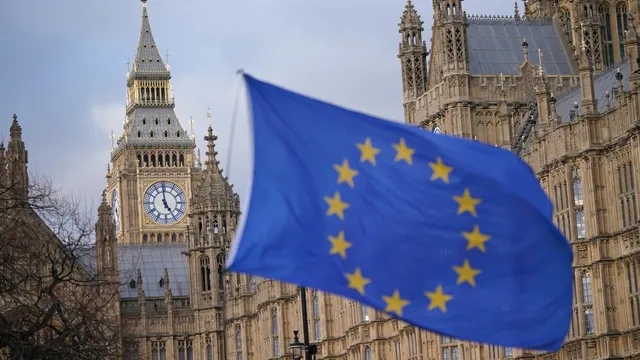
David Lammy suggests EU customs union could benefit UK economy
David Lammy suggests EU customs union could benefit UK economy
- David Lammy suggested that rejoining the EU customs union could enhance economic growth while failing to rule out reversing Brexit.
- Work and Pensions Secretary Pat McFadden countered Lammy's comments, asserting the government's position against rejoining the customs union.
- The Labour Party faces increasing pressure from MPs to shift its position on the EU amidst concerns over poor economic growth forecasts.
Story
In the United Kingdom, tensions are rising within the Labour Party regarding the issue of Brexit and the customs union. Labour's Deputy Prime Minister David Lammy proposed that rejoining the EU customs union could drive economic growth, while simultaneously failing to rule out reversing Brexit during an interview. Work and Pensions Secretary Pat McFadden firmly rebuffed Lammy’s comments, emphasizing that Prime Minister Rishi Sunak has made it clear that the UK will not rejoin the customs union. McFadden pointed out that the government has conducted significant trade deals, which complicates any potential move toward a customs union. Furthermore, concerns over the negative impact of Brexit on the UK economy have been voiced by various Labour MPs, who are increasingly pressuring the party leadership to reconsider its stance on the EU. Lammy's remarks came amid Labour's ongoing effort to repair relations with European leaders in light of economic forecasts suggesting poor growth ahead. Sir Keir Starmer, the party leader, has reiterated Labour's commitment to a “clear” stance against rejoining the single market and customs union while seeking to foster productive relations with the EU. Following Lammy's comments, a tied vote in Parliament indicated a growing interest among lawmakers in exploring a new bespoke UK-EU customs union. This motion received support from 100 MPs, including 13 Labour backbenchers, and reflects the divided views within the party on the issue. Following the latest economic challenges since the UK's exit from the EU, parts of the Labour Party are increasingly calling for a reevaluation of the party's position regarding integration with the European Union. The need for a response to Brexit's long-term impacts on the economy has led prominent figures within Labour to highlight the necessity for a thoughtful reconsideration of their approach towards the EU. As discussions continue, the party's internal dynamics around this issue will shape the future of its economic policy and relationship with Europe in the coming years.
Context
The Labour Party has undergone significant transformations in its stance on the customs union in recent years. Initially, the party faced internal divisions over the issue, especially following the 2016 Brexit referendum. Many party members were split between those advocating for a second referendum and those who supported a softer Brexit approach that included remaining in a customs union with the European Union. Over time, the leadership under Keir Starmer has moved towards a clearer position favoring a customs union, which aims to reconcile the differing viewpoints within the party and address concerns about the economic impact of Brexit. The rationale behind Labour's support for a customs union includes economic stability and the maintenance of strong trading relationships with EU countries. The party believes that being part of a customs union would help avoid a hard border in Ireland and facilitate smooth trade, thereby protecting jobs in key industries such as manufacturing and agriculture. This position is viewed as a pragmatic solution that balances the desires for Brexit with the realities of economic interdependence between the UK and the EU. Furthermore, it aims to reassure voters who are worried about the potential consequences of a hard Brexit on their livelihoods. Labour's shift towards a customs union stance has been met with varied reactions. Some party members and trade unions have expressed support, seeing it as a necessary compromise to mitigate the risks associated with leaving the EU. However, other factions within the party remain critical, advocating for a more definitive re-commitment to EU membership or a second referendum. This illustrates the ongoing tension within the party, as it seeks a unified approach to navigation through the complexities brought by Brexit while also appealing to a diverse voter base and addressing public concerns about economic ramifications. As the Labour Party moves closer to the general elections, its stance on the customs union will likely play a crucial role in its overall strategy and appeal to voters, especially in constituencies that rely heavily on EU trade. The leadership’s focus on a customs union reflects a broader understanding that bargaining is essential in politics, particularly when looking for solutions that can unify party factions and address the pressing concerns of the electorate. The practical implications of this stance will also be significant as negotiations with the EU continue to evolve and as the impact of Brexit unfolds in the coming years.


