

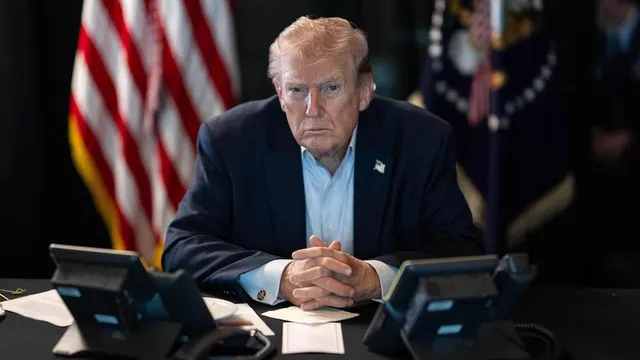
Senator Kaine questions Trump's mental capacity amid Iran strikes
Senator Kaine questions Trump's mental capacity amid Iran strikes
- A senior Democrat raised concerns about Trump's ability to understand the impacts of military actions on Iran.
- Trump confirmed the commencement of U.S. strikes against Iran in a video, stating the objective is to protect American lives.
- Lawmakers expressed divided opinions on the military actions, with calls for Congress to hold a vote on the conflict.
Story
Following the announcement of U.S. airstrikes in Iran, which were confirmed by President Donald Trump, Senator Tim Kaine voiced significant concerns regarding the escalation of military actions without Congress's authorization. He argued that Trump may not comprehend the implications of his decisions and highlighted the past diplomatic agreement known as the Joint Comprehensive Plan of Action (JCPOA), which aimed to limit Iran's nuclear capabilities. Kaine emphasized that the agreement was dismantled by Trump during his presidency, escalating tensions between the two nations rather than resolving them. The strikes were depicted by Trump as necessary to defend American interests against alleged threats from the Iranian regime. Trump addressed the nation via Truth Social, expressing that the ongoing military operations aimed to eliminate threats posed by Iran and protect U.S. troops overseas. He asserted that previous agreements had failed to curb Iran's aggressive actions, leading to deterioration in U.S.-Iran relations. The president's stance garnered mixed reactions from lawmakers; while some supported his military engagement, numerous others, including Kaine and Republican Rep. Thomas Massie, openly criticized the decision, pointing out the lack of clear objectives and concerns about prolonging conflict. The situation further complicates diplomatic relationships in the Middle East and raises public concerns regarding the implications of another military intervention in the region. The calls for Congress to intervene and mandate a vote on military action reflect deep divisions among U.S. lawmakers on future engagement in such conflicts. As the military strikes unfolded, the potential consequences for both American military personnel and Iranian civilians echoed throughout discussions, with fears of escalating violence and loss of life. Amidst this backdrop of military actions and political rhetoric, questions arose regarding the long-term objectives of U.S. involvement in Iran. The necessity for clarity on how this war would end loomed large, as critics pointed out that Americans are largely unaware of the reasons behind yet another regime-change policy in the Middle East. With the Iranian regime's history of aggressive posturing towards the U.S., the hope for a peaceful resolution appears distant, as both sides brace for potential escalations in military conflict and instability within the region.
Context
The history of U.S.-Iran relations is a complex narrative shaped by various political, economic, and cultural factors over the decades. Initially, the United States and Iran maintained a relatively amicable relationship, particularly after World War II, characterized by mutual interests, especially in the context of containing Soviet influence in the region. The signing of the 1953 coup, orchestrated by the CIA to dethrone Prime Minister Mohammad Mossadegh, solidified U.S. involvement in Iranian affairs, establishing the Shah, Mohammad Reza Pahlavi, as a close ally. This partnership, however, ignited considerable resentment among many Iranians and laid the groundwork for future conflicts as the regime's authoritarian nature sparked widespread dissent against U.S. backing of the monarchy. The relationship took a dramatic turn following the 1979 Iranian Revolution that overthrew the Shah. With the rise of the Islamic Republic under Ayatollah Khomeini, the U.S.-Iran dynamic deteriorated sharply. The seizure of the U.S. Embassy in Tehran and the subsequent hostage crisis marked a definitive rupture, leading to a severance of diplomatic ties and the imposition of economic sanctions by the U.S. against Iran. Throughout the 1980s, Washington’s support for Iraq during the Iran-Iraq War further exacerbated tensions, as did Iran’s growing influence in the region, perceived by the U.S. as a threat to its allies and interests. Entering the 1990s and early 2000s, relations remained strained, marked by acts of hostility and economic sanctions. The U.S. classified Iran as part of the "Axis of Evil" in 2002, emphasizing its support for terrorism and nuclear ambitions. However, attempts at diplomacy were made intermittently, exemplified by the 2003 negotiations around Iran's nuclear program. The U.S. and other nations sought to curb Iran's nuclear activities in exchange for economic and diplomatic incentives, but these efforts faced skepticism from within both nations, leading to further stalemates. In the subsequent years, particularly under President Obama, a significant diplomatic breakthrough was reached with the 2015 Joint Comprehensive Plan of Action (JCPOA), which aimed to limit Iran's nuclear capabilities in return for relief from sanctions. Yet, this agreement was contentious and met resistance. The Trump administration's withdrawal from the JCPOA in 2018 marked another pivotal downturn, reinstating strict sanctions and escalating tensions in the Persian Gulf region. As of 2026, the current state of U.S.-Iran relations remains perilous, characterized by mistrust, ongoing sanctions, and geopolitical maneuvering that continues to affect regional stability and international diplomacy.


