

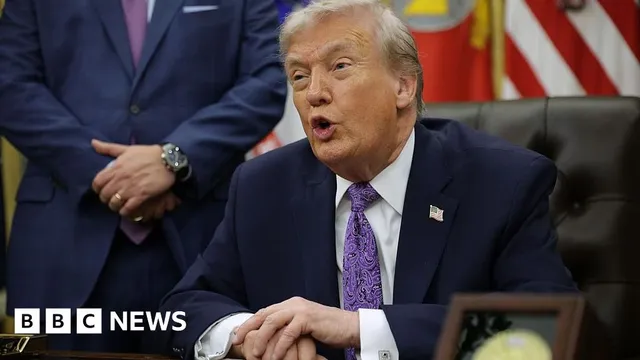
Trump issues pardon for election-denier Tina Peters despite state convictions
Trump issues pardon for election-denier Tina Peters despite state convictions
- Tina Peters was convicted of multiple felonies related to election security breaches in Colorado.
- Donald Trump's pardon is considered symbolic and cannot legally affect state convictions.
- This case highlights ongoing political disputes about election integrity and government authority.
Story
In December 2025, former President Donald Trump announced a pardon for Tina Peters, a former Colorado county clerk imprisoned for her involvement in a scheme to breach voting systems related to the 2020 presidential election. Peters was convicted in October 2024 of multiple felonies, including tampering with voting machines, stemming from actions taken to support false claims of election fraud. Despite her claims of innocence and considerable backing from Trump and his supporters, Peters is currently serving a nine-year sentence. The conviction and subsequent incarceration of Peters have garnered attention in partisan debates surrounding election integrity and government authority. Trump's pardon carries little weight since it applies to state crimes that his presidential powers do not cover, as noted by various Colorado officials, including Attorney General Phil Weiser and Governor Jared Polis, who emphasized the importance of state law and judicial processes. Colorado's legal and political landscape has seen turmoil due to Peters' actions, which included unauthorized access to voting equipment. This has raised questions regarding election security and the influence of political rhetoric in governance. The case also intersects with broader narratives about election deniers and the implications of claims pertaining to voter fraud, as promoted by figures within the conservative movement. In the aftermath of this pardon announcement, it remains unclear what impacts will arise regarding Peters' legal positions, including pending appeals. Political figures on both sides have responded strongly, with some lauding Trump's actions as supportive of election integrity efforts, while others criticize it as a dangerous precedent undermining the rule of law. Peters’ situation has indeed become emblematic of the contentious dynamics surrounding election governance in the United States.
Context
Presidential pardons have a rich history in the United States, rooted in the constitutional power granted to the president. Article II, Section 2 of the U.S. Constitution empowers the president to grant pardons for federal offenses, except in cases of impeachment. This authority serves various purposes, including correcting judicial errors, offering mercy, or providing a second chance to individuals who have demonstrated rehabilitation. Historically, the use of this power has varied significantly among presidents, reflecting their individual philosophies and the socio-political climate of their administrations. For example, early presidents like George Washington extended pardons to unify the nation after the Revolutionary War, while others, such as Franklin D. Roosevelt and Bill Clinton, faced criticism for their blanket pardons that raised questions about accountability and justice. Pardons can be seen as a tool for expressing mercy, often based on recommendations from the Department of Justice or the Office of the Pardon Attorney. They may also invoke public interest, as seen when presidents have granted clemency to those involved in high-profile cases or acts of civil disobedience. Over time, the process has become more formalized, with specific guidelines ensuring that the rights of victims and the rule of law are respected. Nonetheless, the perceived politicization of pardons persists, leading to ongoing debates about their appropriateness and implications for the rule of law. State laws regarding pardons and clemency processes can be quite different from federal statutes, varying widely among the 50 states. Many states grant similar powers to governors, allowing them to issue pardons or commutations, while others may require the involvement of state legislatures or boards of pardons. This state-level discretion reflects the local values and political landscapes, with some states adopting more progressive policies that facilitate reintegration for offenders, while others maintain strict criteria that limit access to clemency. The historical context of these state laws often reflects broader social issues such as race, criminal justice reform, and political considerations that shape public opinion on justice and rehabilitation. The interplay between federal and state pardons illustrates a complex relationship that can create tension, particularly when federal pardon decisions conflict with state laws or public sentiment. An example is the heightened scrutiny faced by governors who choose to exercise their pardon powers in politically charged cases, which can lead to backlash or support from the public. In recent years, advocacy groups have emphasized the need for reform in both federal and state pardon processes, highlighting issues of transparency and fairness as integral to restoring faith in the legal system. As society evolves, so too does the conversation around pardons, with a focus on balancing compassion with accountability, ensuring that this powerful tool serves the interests of justice and reconciliation.


