

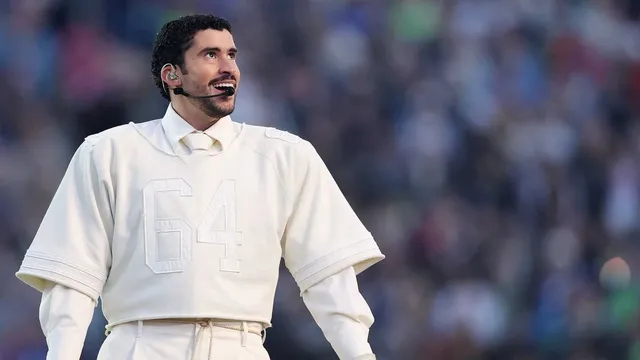
Bad Bunny highlights unity and cultural pride at Super Bowl halftime show
Bad Bunny highlights unity and cultural pride at Super Bowl halftime show
- Bad Bunny delivered a Super Bowl halftime performance focusing on Latino culture and identity, featuring a nearly all Spanish-language set.
- He showcased flags and names of various countries across the Americas, emphasizing the cultural diversity of the region.
- The performance promoted a message of unity and cultural pride amid criticism, highlighting the idea that all individuals from the Americas share a common identity.
Story
In a powerful cultural display, Puerto Rican artist Bad Bunny took to the Super Bowl halftime stage on February 12, 2023, delivering a performance that transcended mere entertainment to convey a meaningful message about identity and unity across the Americas. Notably, he performed nearly the entirety of his set in Spanish, showcasing his cultural roots while reminding audiences of the diverse and rich heritage of Latin American nations. In his energetic 13-minute show held at Levi's Stadium in Santa Clara, California, Bad Bunny engaged millions of viewers by leading them through a celebration of various countries in North, Central, and South America. As he wrapped up his performance, Bad Bunny exclaimed, "God Bless America," while showcasing the flags and names of numerous nations, underscoring the expansive identity of what it means to be American. His performance was a counter-narrative to critics who often define “America” narrowly as just the United States. Fans and commentators alike noted how he framed his message around respect, dignity, admiration, and love, aiming to promote a sense of belonging among individuals of Latin American descent and others within the U.S. Throughout the show, iconic visuals of Puerto Rico were on display, as Bad Bunny brought the audience on a vibrant tour of his homeland. He included various elements representative of Puerto Rican culture, such as a representation of the town’s streets, spirited performers, and traditional cultural practices like domino playing. Notable guests joined him, including fellow Puerto Rican stars Ricky Martin and Karol G, further emphasizing the collaborative and joyous spirit of the event. The presence of such artists helped amplify Bad Bunny’s message of inclusion and cultural pride. Despite some backlash, including disapproval from figures like Donald Trump, the essence of Bad Bunny's performance remained centered on love rather than politics. For many viewers, particularly from Puerto Rico and other Latin American nations, the show represented a significant moment of pride. Gabriel Alejandro Negron Torres, a fan who shares the same hometown as Bad Bunny, expressed deep pride in the representation of diverse cultures during the show. He articulated the necessity of acknowledging that all individuals from the Americas share a common identity as 'Americans,' a viewpoint often overlooked in discussions surrounding nationality in the U.S. Bad Bunny’s performance was not just a musical showcase; it served as a profound reminder of cultural unity and the richness of shared histories among peoples of the Americas.
Context
The Super Bowl halftime show has evolved into a cultural phenomenon with significant social implications and entertainment value. Initially introduced as a brief intermission during the football game, these performances have transformed into major musical spectacles, reflecting societal trends, cultural movements, and the prevailing zeitgeist. The halftime show serves as a platform for artists to reach a vast audience, showcasing their music while also engaging with broader cultural themes. The integration of visual elements, elaborate stage designs, and choreographed performances has elevated the halftime show to an art form that transcends mere entertainment. Artists such as Michael Jackson, Beyoncé, and Shakira have not only highlighted their musical prowess but have also utilized this platform to address social issues and create dialogues around topics such as race, gender, and political identity. The cultural significance of these halftime shows cannot be understated, as they often epitomize the intersection of sports and entertainment. For many viewers, the Super Bowl halftime show is as anticipated as the game itself. This blurring of lines between sports and music has allowed the halftime show to become a staple of American culture, with millions tuning in each year. The event has successfully showcased a diverse range of musical genres and styles, from rock to hip-hop, often featuring collaborations between artists, thereby fostering a sense of unity through music. As a result, it facilitates cultural exchange and emphasizes diverse artistic expressions, paving the way for underrepresented artists to gain recognition on a mainstream platform. Moreover, Super Bowl halftime shows often reflect prevailing cultural sentiments, serving as a mirror to society. For instance, performances during politically charged times have provided artists with the opportunity to express their views and encourage social change. With the increasing awareness around issues such as social justice, climate change, and equality, many artists have used their platform to resonate with contemporary issues, thereby transforming the halftime show into a venue for activism. The responsiveness of artists to current events demonstrates the capacity of entertainment to influence public consciousness and inspire action, further solidifying the halftime show's role in partnership with cultural discourse. In recent years, halftime shows have also adapted to advancements in technology and shifts in audience expectations. The rise of social media has amplified the reach and impact of these performances, allowing fans to engage in real-time, share opinions, and create trends. Therefore, the Super Bowl halftime show serves not only as entertainment during a sporting event but also as a vital cultural event that mirrors societal changes, celebrates diversity, and fosters conversation around pressing issues. As the show continues to evolve, its importance within American culture will likely grow, reflecting the dynamic nature of both music and society.


