

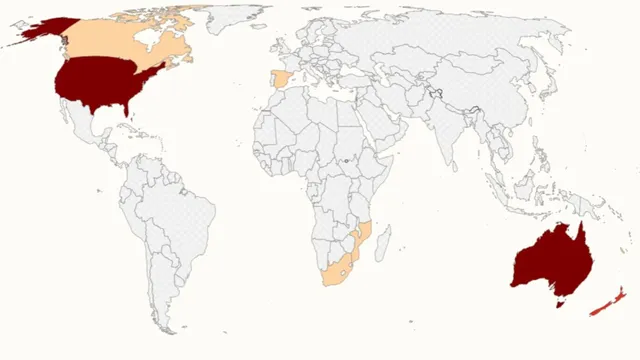
Australia reports highest number of fatal shark attacks in 2025
Australia reports highest number of fatal shark attacks in 2025
- In 2025, there were 65 unprovoked shark incidents worldwide, resulting in nine deaths.
- The United States had the highest number of unprovoked bites, but Florida's incidents fell below its five-year average.
- Australia reported the highest number of fatal shark attacks in 2025.
Story
The International Shark Attack File, established in 1958 by the Florida Museum of Natural History, reported a significant rise in unprovoked shark incidents globally in 2025. The United States, while having the highest number of unprovoked shark attacks, represented a declining share of global incidents. There were 65 unprovoked incidents logged worldwide, with 9 resulting in fatalities. Within the U.S., Florida recorded the most cases, totaling 11 unprovoked bites, a notable decrease from its five-year annual average. Notably, Volusia County was highlighted as one of the most active for shark encounters, signifying patterns in shark behavior and human interaction in coastal regions. Australia experienced a concerning rate of shark-related fatalities in 2025, with five deaths occurring amidst 21 unprovoked bites. This marked a dramatic contrast to the statistics from the United States, showcasing the regional disparities in shark attacks around the world. Other countries, including the Bahamas and New Zealand, also reported incidents of unprovoked bites, although much smaller in number. The geographical distribution of these incidents aligns with the known habitats of large predatory sharks, such as white sharks, which are linked to fatal attacks. Experts emphasize that despite these occurrences, shark attacks remain exceptionally rare when compared to the vast number of people who engage in ocean activities each year. The situation highlights a crucial interaction between shark behavior, environmental conditions, and human presence in waters where shark encounters are more likely to occur. Research suggests that various factors contribute to shark bites, including the number of people in the water and climatic patterns. With researchers pointing out that many bites involve unidentified shark species, it raises further questions about the need for more extensive research into shark behavior and species identification. As analysts monitor these trends, it becomes increasingly crucial to convey proper education and safety measures for those who frequent these coastal areas, particularly in regions with established histories of shark attacks. The rising trends in shark attacks have ignited discussions among oceanographers and marine biologists regarding conservation efforts and shark population management. Joe Miguez, manager of the International Shark Attack File, and Gavin Naylor, director of the Florida Program for Shark Research, commented on the biology of sharks relating to bites, emphasizing the complex interactions between humans and these marine creatures. While fatalities are alarming, they underscore the balance needed in protecting both shark populations and ensuring public safety. As studies continue, understanding how human and shark interactions evolve over time will be key in developing strategies that mitigate risk while preserving essential marine ecosystems.
Context
Climate change is profoundly affecting ecosystems worldwide, and sharks are no exception. As apex predators, sharks play a crucial role in marine environments, yet their behavior is becoming increasingly influenced by changing ocean conditions. Rising sea temperatures, altered salinity levels, and shifting prey distributions due to climate change are leading to significant changes in shark behavior, migration patterns, and feeding habits. These changes not only impact shark populations but also have cascading effects on the entire marine food web, illustrating the importance of understanding how climate impacts these vital species. One of the most notable behavioral adaptations of sharks related to climate change is the alteration in their migratory patterns. Many shark species are known for their long migrations in search of prey or suitable breeding grounds. However, as water temperatures rise, sharks are increasingly venturing into cooler waters further from their traditional ranges. This shift could result in the interaction of sharks with new species and ecosystems, potentially causing ecological disruptions as native species may not be prepared for these new predators. Additionally, shifting migration patterns may pose challenges for conservation efforts as locating and protecting shark habitats becomes more complex. Feeding behavior among sharks is also undergoing transformation due to the availability of prey affected by climate change. As ocean temperatures rise, certain fish populations may thrive while others decline, leading sharks to adapt their diets based on prey availability. In some instances, this has led to increased predation on species that have shifted in response to climate factors themselves, creating a feedback loop of ecological consequences. Understanding these changes in feeding behavior is critical as they can influence the overall health of marine ecosystems and fishery industries reliant on balanced populations. Furthermore, it is essential to consider the implications of changing shark behavior on human interactions. As sharks expand their range and adapt their behaviors, they may come into contact with coastal communities and fisheries more frequently. This could lead to increased encounters, which may contribute to rising concerns regarding shark attacks. Thus, ongoing research into shark behavior in the face of climate change is crucial, not only for conservation purposes, but also for managing human-shark interactions effectively. Addressing these challenges requires a collaborative approach involving scientists, policymakers, and local communities to are adaptable and resilient to the consequences of climate change on shark behavior.


