

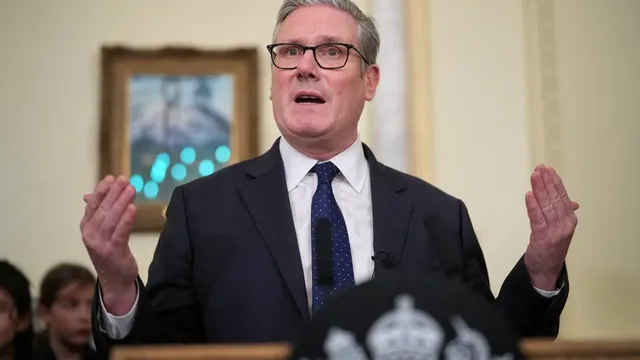
Keir Starmer warns that ousting him would lead to chaos in Britain
Keir Starmer warns that ousting him would lead to chaos in Britain
- Keir Starmer acknowledges he has the lowest approval ratings of any UK Prime Minister in half a century.
- He warns that changing leadership in 2026 could lead Britain into chaos and empower far-right opposition.
- Starmer asserts that maintaining stability is key to navigating current economic pressures and global challenges.
Story
On January 4, 2026, Keir Starmer, the Prime Minister of the United Kingdom, acknowledged his historical unpopularity during an interview with Laura Kuenssberg on BBC. He highlighted his record-low approval ratings, which are the worst for any UK premier in the last 50 years. During the interview, Starmer stressed that public disapproval comes as a challenge of governing amid economic pressures and complex global issues. He expressed his belief that stability and decisive action are crucial, emphasizing that he is focused on long-term goals rather than short-term popularity. His administration is experiencing widespread voter dissatisfaction, particularly due to economic struggles and rising issues related to illegal migration. Despite facing severe criticism from both the public and his own party, Starmer maintained that he has confidence in staying as Prime Minister “this time next year.” He argued that potential changes in party leadership, set to possibly occur in 2026, risk causing chaos in Britain and could pave the way for a far-right government led by Nigel Farage. Starmer traced the current dissatisfaction back to the previous Conservative government's instability, asserting that instability in leadership contributed to the Tories' previous electoral defeat. Starmer also addressed various policies, pointing to efforts made to improve the cost of living situation as inflation and interest rates decrease. Among the criticisms directed towards him is a noted failure in effectively communicating his government's objectives since his victory in 2024, which has prompted discussions about potential successors to his leadership. Key figures mentioned as possible rivals include Health Secretary Wes Streeting, former deputy premier Angela Rayner, and Greater Manchester Mayor Andy Burnham. In the light of rising opposition and negative polling, Starmer's comments reveal a deep concern for the future of his party as well as his administration's ability to respond to the pressing issues facing the country. His comments have ignited debate within Labour as members consider whether a leadership change would be beneficial or detrimental as the next general election approaches, scheduled by 2029 at the latest. Starmer's assertion that continuity in leadership is essential contrasts with the current perception of his leadership quality, underlining the tension in British politics today.


