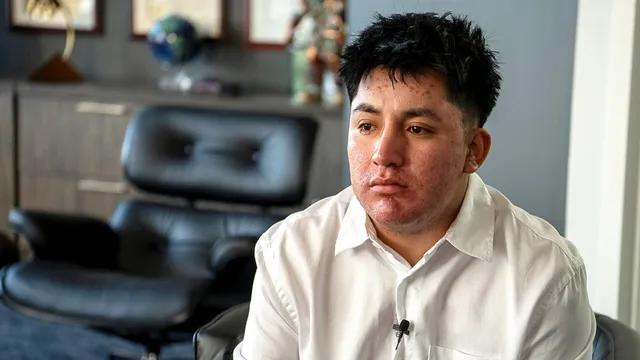
In recent months, Immigration and Customs Enforcement (ICE) has intensified its operations on Long Island, New York, targeting immigrants through surveillance tactics. Reports indicate that ICE agents have been surveilling parking lots, particularly in areas with large Latino populations, and running license plates to identify individuals for potential arrests. One notable case involved Luis, an Ecuadorian citizen, who was arrested after officers identified him through his vehicle's out-of-state license plate. Despite having a valid work permit, he was not given the opportunity to explain his legal status before being taken into custody.
The use of such surveillance methods has raised significant concerns among immigrant communities, leading to fears of racial profiling and warrantless arrests. Community leaders, like Ivan Larios from the New York Immigration Coalition, have reported that families are becoming increasingly isolated and afraid to engage in daily activities due to the presence of ICE agents in public spaces. This has prompted the coalition to conduct know-your-rights presentations to educate immigrants about their rights in the event of an ICE encounter.
Additionally, a leaked document has revealed the extensive surveillance capabilities available to ICE, including tools for monitoring social media, tracking vehicle movements, and accessing personal data from various databases. These technologies allow ICE to conduct investigations and identify individuals without the need for traditional law enforcement methods. The document highlights the agency's reliance on advanced technology to enhance its enforcement efforts, raising questions about privacy and civil rights.
The situation has led to legal challenges, including a class-action lawsuit alleging that ICE's practices infringe on immigrants' constitutional rights. As arrests on Long Island have surged, making up more than half of the region's total, the implications of these tactics continue to unfold, affecting the lives of many undocumented immigrants and their families.