

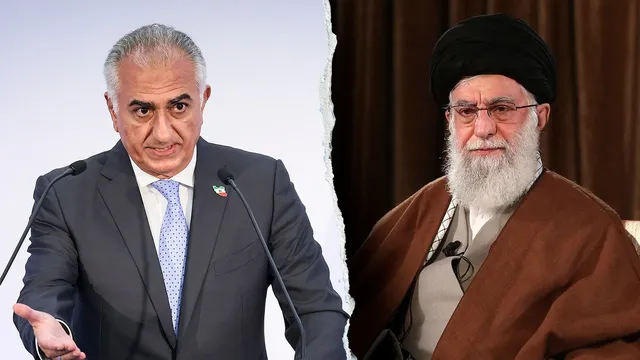
Trump envoy secretly meets Iranian prince as protests escalate
Trump envoy secretly meets Iranian prince as protests escalate
- Ongoing protests in Iran have led to calls for regime change and a return to the monarchy, with demonstrators chanting Reza Pahlavi's name.
- High-level officials from the Trump administration, including Steve Witkoff, met with Pahlavi as part of discussions regarding potential leadership in Iran.
- The situation in Iran raises questions about the future of leadership and the possibility of external intervention amid significant political divisions.
Story
In Iran, extensive protests have erupted over governmental oppression and economic distress. Demonstrators have called for regime change, with chants for the return of the monarchy, specifically invoking Reza Pahlavi, son of the ousted Shah, who was overthrown during the 1979 Islamic Revolution. Amid these protests, which have lasted for several weeks and have reportedly resulted in significant casualties, high-ranking officials from the Trump administration, including Steve Witkoff, met with Pahlavi in what appears to be an effort to assess the situation and possibly prepare for a transitional government in the event the regime falls. The protests have sparked a complex political landscape, showcasing divisions among opposition factions, with Pahlavi’s supporters and the Mujahedin-e Khalq (MEK) leveraging differing political ideologies. However, there is skepticism regarding their support within Iran itself, making any potential leadership role for Pahlavi uncertain at this stage. Analysts have raised concerns about the legitimacy and recognition of any opposition group, given the central government's strong military presence and ability to suppress dissent. As the protests continue, the situation could represent a turning point for Iran's future, with potential external support complicating internal dynamics.
Context
The history of the Iranian monarchy before the 1979 revolution is a complex narrative characterized by a series of dynastic changes, socio-political upheavals, and cultural developments. The roots of the Iranian monarchy can be traced back to the ancient Persian empires, particularly the Achaemenid Empire founded by Cyrus the Great in the 6th century BCE. This empire was marked by its administrative sophistication and cultural achievements, setting a precedent for future dynasties. After the Islamic conquest of Persia in the 7th century, various dynasties emerged, including the Samanids, Ghaznavids, and Seljuks, which contributed to the evolution of Persian identity and governance. However, it was the Safavid dynasty, established in the early 16th century, that marked a significant turning point in Iranian history, as it instituted Twelver Shi'ism as the state religion and unified various ethnic groups under a centralized rule, thus shaping modern Iranian national identity. The Qajar dynasty, which followed the Safavids in the late 18th century, faced numerous challenges, including foreign intervention and internal strife. Despite its attempts to modernize and centralize the state, the Qajar monarchs struggled with corruption and a lack of effective governance, paving the way for growing discontent among the populous. The early 20th century saw an increase in nationalistic sentiments, culminating in the Constitutional Revolution of 1905-1911, which sought to limit the monarch’s powers and establish a parliamentary system. This period also witnessed the emergence of various political movements that would later influence the trajectory of the monarchy and its legitimacy. The Pahlavi dynasty, which began with Reza Shah Pahlavi's rise to power in 1925, ushered in a new era of modernization and authoritarian rule. Reza Shah aimed to secularize the country, promote industrialization, and create a sense of national identity through extensive reforms. His efforts included the establishment of a centralized educational system, the promotion of the Persian language, and the adoption of Western-style clothing. However, this rapid modernization was often met with resistance, particularly from religious leaders who opposed the secularization of society. Reza Shah's rule was marked by a significant level of repression, and his authoritarian tendencies led to widespread dissatisfaction. Following Reza Shah's abdication during World War II, his son, Mohammad Reza Pahlavi, ascended to the throne. His reign was characterized by a more pronounced effort to modernize the economy and society, exemplified by the White Revolution in the 1960s, which included land reforms and women's rights initiatives. However, despite these advancements, political repression continued, and the regime's reliance on security forces alienated many Iranians, paving the way for opposition and dissent. By the late 1970s, widespread discontent stemming from economic challenges, social inequality, and political repression culminated in the Iranian Revolution. The culmination of various internal and external factors ultimately led to the fall of the monarchy in 1979, marking a significant shift in Iran's political landscape and the establishment of an Islamic Republic.


