

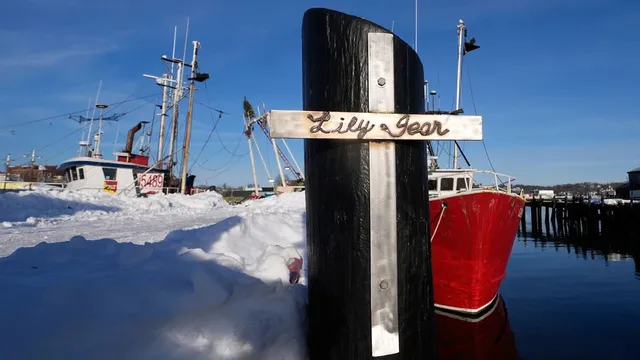
Coast Guard suspends search for missing crew of fishing boat after exhaustive efforts
Coast Guard suspends search for missing crew of fishing boat after exhaustive efforts
- Search efforts by the U.S. Coast Guard failed to locate additional survivors after one death was confirmed.
- The fishing vessel Lily Jean sank without issuing a distress call, alarming the local fishing community.
- The Coast Guard's decision to suspend the search operations highlights the challenges faced in freezing conditions and rough seas.
Story
On January 30, 2026, the United States Coast Guard suspended its search for seven crew members aboard the fishing vessel Lily Jean, which sank approximately 25 miles off Cape Ann, Massachusetts. The emergency response began early Friday morning when the Coast Guard received a distress signal from the vessel's emergency position-indicating radio beacon. The search teams deployed various resources, including aircraft and small boats, covering roughly 1,000 square miles in freezing temperatures and rough seas. Despite finding one deceased individual and an unoccupied life raft, all other search efforts produced no signs of life. The tragedy marks another maritime disaster affecting Gloucester, known as America’s oldest fishing port. The fishing industry is vital to the local economy and community identity, which enhances the devastation felt after the sinking of the Lily Jean. Locals described the incident as particularly heartbreaking, with many mourning the loss of lives tied to their community and craft. Gus Sanfilippo, the vessel's captain and a fifth-generation fisherman, is remembered fondly within the community, where he was a well-known figure. The Coast Guard faced significant challenges during the search due to freezing conditions, rough seas, and an approaching nor'easter, complicating nighttime recovery efforts. Commander Jamie Frederick analogized the search to "looking for a coconut in the ocean," illustrating the difficulty of the situation. Additionally, weather reports indicated strong winds and frigid temperatures had taken hold during the incident, further trudging recovery efforts. The vessel did not issue a distress call before the emergency beacon alert, raising questions about what led to the sinking of the Lily Jean. The Coast Guard has committed to investigating the causes behind the incident as it seeks to provide clarity for the grieving families and the local fishing community. The decision to suspend search operations after more than 24 hours of continuous effort was challenging, and thoughts and prayers were extended to the families affected by the tragedy.
Context
analysis policy analysis trends economic policy geopolitical trends global geopolitical economic market global economic impact strategic strategic analysis trends data analysis economic trends shift global economic strategic policy analysis global data economic market data analysis analysis trends shift policy impact analysis market geopolitical economic data impact geopolitical impact insight data global policy geopolitical strategic policy strategic data impact geopolitical policy insight analysis trends trends data data shift policy data data trends economic policy analysis strategic global global insight shift shift...


