

Iran refuses to relinquish nuclear program amidst rising tensions
Iran refuses to relinquish nuclear program amidst rising tensions
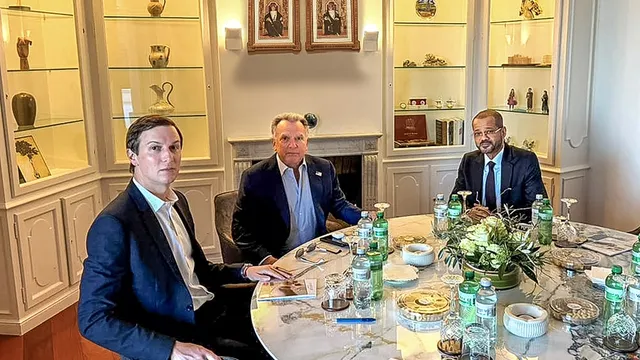
- U.S. and Iran engaged in face-to-face talks in Geneva about nuclear program negotiations.
- Iran insists on retaining aspects of its nuclear program despite U.S. demands for dismantling.
- Rising tensions and military readiness in the region suggest the risk of conflict remains high.
Story
In Geneva, Switzerland, U.S. and Iranian negotiators began the third round of Oman-mediated discussions aimed at addressing tensions surrounding Iran's nuclear program. This meeting follows a substantial military build-up of U.S. forces in the Middle East, raising fears of conflict. Analysts suggest that the likelihood of a U.S. strike remains high if negotiations fail. Iran has asserted its intention to retain certain nuclear capabilities for civilian use, reaffirming its stance that it will not completely dismantle its program. With protests escalating within Iran, the regime perceives its nuclear development as integral to maintaining power. Amidst these discussions, military preparedness in the region is intensifying, particularly for Israel, which is reportedly more ready for conflict with Iran than before. Experts indicate that Israel has fortified its defensive and offensive capabilities in the wake of previous skirmishes. Admiral Yatom highlighted several potential outcomes, including a full-scale American attack on Iran or a smaller-scale operation, suggesting that a mutually acceptable agreement between the U.S. and Iran appears unlikely at this stage. Under these circumstances, it is crucial for the negotiations to yield tangible results to avoid escalation into warfare. The U.S. has publicly demanded that Iran dismantle its principal nuclear facilities and transfer its enriched uranium stockpiles. Reports indicate that Iran may be open to negotiating significant concessions, predicated on the sanctions relief offered by the U.S. An Iranian official described the discussions in Geneva as “intense and serious,” which reflects the gravity of the situation. The potential deal, however, would likely require Iran to maintain some level of enrichment to preserve the regime’s domestic and international image. The backdrop of these negotiations includes the legacy of the Joint Comprehensive Plan of Action (JCPOA), which sought to limit Iran’s nuclear activities in exchange for sanctions relief. The failure of the Biden administration to revive this agreement has led Iran to accelerate its uranium enrichment activities, complicating any future negotiations. Experts warn that as military options are considered, the burden lies heavily on diplomatic channels to resolve ongoing tensions without resorting to armed conflict, making the outcome of the Geneva talks potentially pivotal for regional stability.
Context
The historical context of U.S.-Iran relations is complex and shaped by a series of pivotal events that have significantly influenced the political and cultural landscape of both nations. The U.S. and Iran's relationship can be traced back to the early 20th century, marked by Iran's strategic importance due to its vast oil resources and geopolitical location. Initially, interactions were cordial, as the U.S. was viewed as a supporter of Iran's modernization efforts during the reign of Reza Shah Pahlavi in the 1920s and 30s. However, as geopolitical tensions escalated during World War II, the U.S. and Britain jointly occupied Iran, which sowed the seeds of future distrust and resentment among the Iranian populace towards foreign intervention in their affairs. In 1953, the relationship took a decisive turn when the CIA orchestrated a coup d'état that deposed democratically elected Prime Minister Mohammad Mossadegh, reinstating the Shah's regime. This intervention led to years of autocratic rule that alienated many Iranians and was a significant factor in the eventual Islamic Revolution of 1979. The revolution resulted in the overthrow of the Shah and the establishment of an Islamic Republic under Ayatollah Khomeini. Following this transformation, the embassy hostage crisis in November 1979, where 52 American diplomats and citizens were held for 444 days, dramatically soured relations and has continued to define the U.S. perception of Iran as a rogue state. Throughout the 1980s and 90s, U.S.-Iran relations were characterized by mutual suspicion and hostility, exacerbated by events like the Iran-Iraq War and Iran's support for militant groups in Lebanon and elsewhere. Sanctions imposed by the U.S. in response to Iran's nuclear ambitions further strained ties, with international concerns about Iran's pursuit of nuclear technology leading to a series of diplomatic negotiations culminating in the 2015 Joint Comprehensive Plan of Action (JCPOA). This agreement aimed to limit Iran's nuclear program in exchange for relief from economic sanctions and was seen as a critical step towards thawing relations. However, the political landscape shifted dramatically with the U.S. withdrawal from the JCPOA in 2018 under the Trump administration, which reinstated severe sanctions and escalated tensions between the two nations. The assassination of Iranian General Qassem Soleimani in January 2020 marked another critical episode, bringing both countries to the brink of war. As of 2026, U.S.-Iran relations remain tense, with ongoing debates about nuclear proliferation, regional influence, and various conflicts in the Middle East. Moving forward, the future of these relations hinges on a delicate balance of diplomacy, regional stability, and the geopolitical strategies of both nations.


