

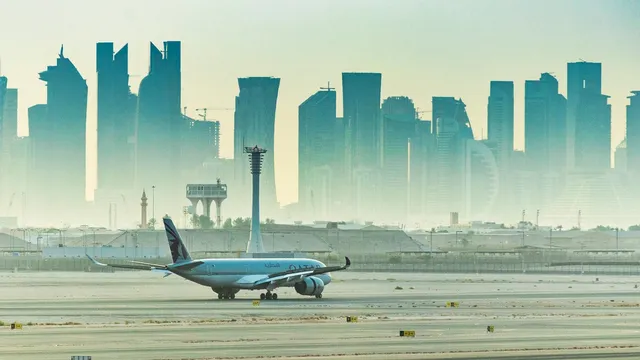
Travelers face uncertainty flying with Qatar Airways amid rising tensions
Travelers face uncertainty flying with Qatar Airways amid rising tensions
- Travelers flying with Qatar Airways face uncertain conditions due to heightened tensions between the US and Iran.
- Despite potential disruptions, authorities assure that passenger safety is a top priority and that alternatives will be arranged for canceled flights.
- Overall, Simon Calder expresses confidence that the majority of flights will operate normally, encouraging travelers to remain optimistic.
Story
On March 2, 2026, travelers who have booked flights with Qatar Airways are considering the implications of flying via Doha in light of recent military actions in the Middle East. As tensions between the US and Iran escalate, passengers are advised that many airlines, including Qatar Airways, are closely monitoring developments in the region. Despite disruptions such as canceled flights and diverted planes, the authorities reportedly ensured that no passenger flights were in danger, providing a level of assurance to travelers. Under UK regulations, if a flight is canceled, Qatar Airways is obligated to arrange alternate travel for affected customers. With a slight uptick in cancellations in the region, there is a concern for travelers who may experience delays or unexpected changes to their itinerary. For instance, while many have their flights booked, reports suggest that travelers may encounter extended journeys due to potential airspace closures. Amid these uncertainties, Simon Calder remains confident that approximately 95% of scheduled flights, including those traveling from London to Australia via Doha, will proceed as planned, reassuring passengers contemplating their travel decisions. Further complicating matters, travelers arriving in Perth face logistical challenges when connecting to cities like Fremantle due to the airport's limited surface links. While an airport train connects to terminals, it does not serve Terminal 3 where many international flights arrive. Passengers are cautioned to plan their connections accordingly, especially if their flights are delayed or canceled. Despite the potential for long waits or disrupted connections, travelers are encouraged to remain optimistic about their journeys and make the most of their layovers. Ultimately, travelers heading to Australia, particularly those arriving at Perth from London, are urged to remain cautious but hopeful as they navigate their journey with Qatar Airways. Although the situation remains fluid due to ongoing geopolitical tensions, airlines have protocols in place to support passengers and minimize disruptions, suggesting that travel can continue, albeit with careful planning and awareness of current events.
Context
The UK air passengers’ rights regulations are designed to protect passengers traveling by air within the UK and those flying to and from the UK with airlines based in the EU. These rights primarily stem from EU laws, particularly Regulation (EC) No 261/2004, which outlines the entitlements of passengers in the event of flight cancellations, significant delays, and denied boarding due to overbooking. Though the UK left the EU, these regulations remain in place as they have been retained in UK law and continue to impact a large number of air travelers. Passengers are entitled to compensation ranging from €250 to €600, depending on the distance of the flight and the circumstances surrounding the disruption. Importantly, these regulations provide a clear framework for claiming compensation and assistance during irregularities that disrupt travel plans. In the event of a delay of more than three hours, passengers may claim compensation, provided the delay is not due to extraordinary circumstances, such as severe weather or political unrest. If a flight is canceled, airlines must inform passengers in advance, offering them the choice between a full refund and a re-routing option to their final destination at the earliest convenience. Furthermore, under these regulations, airlines have the obligation to provide assistance, which may include meals, refreshments, and accommodation. The implementation of these regulations has bolstered consumer confidence in air travel, as passengers are now more aware of their rights and the recourse available to them. Airlines are also required to keep passengers informed about their rights at the point of sale and throughout the travel process. The UK Civil Aviation Authority (CAA) plays a crucial role in enforcing these regulations and ensuring that airlines comply with their obligations. Passengers should be prepared to gather necessary documentation such as booking confirmations and receipts when making claims to facilitate the process. In addition, it is advised for passengers to file complaints directly with the airline first before escalating the issue to the CAA or seeking legal advice. This regulatory framework aims to ensure that passengers do not suffer undue hardship in unfortunate travel situations. Overall, the UK's air passenger rights regulations serve as a critical safeguard for travelers, ensuring protection against inconvenience and financial loss associated with air travel complications. While ongoing debates about the future of these regulations in the post-Brexit landscape continue, it is imperative that passengers remain informed of their rights and avail themselves of the protections in place when engaging with air travel. The sustained commitment to these regulations signifies an important effort to maintain high standards of consumer protection and to promote ongoing accountability within the airline industry.


