

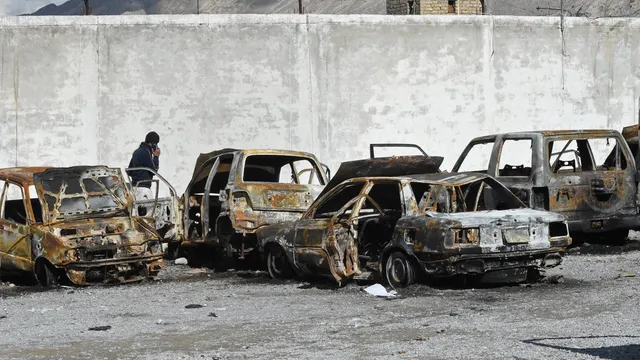
Pakistani military kills 177 militants after deadly Balochistan attacks
Pakistani military kills 177 militants after deadly Balochistan attacks
- Following coordinated attacks by Baloch militants that left roughly 50 people dead, Pakistani security forces launched an operation against the insurgents.
- During the crackdown over two days, at least 177 militants were killed, marking a significant milestone in terms of militant fatalities.
- Authorities stated that the BLA's actions are supported by foreign entities, leading to a military response aimed at restoring stability in Balochistan.
Story
On February 5, 2026, in Pakistan's insurgency-hit province of Balochistan, security forces launched a significant operation following coordinated militant attacks that resulted in substantial casualties. The operation targeted members of the Baloch Liberation Army (BLA), an outlawed group that has been involved in a long-standing insurgency in the region, which borders Afghanistan and Iran. These coordinated attacks, which began on the preceding Saturday, killed at least 50 people and included simultaneous assaults on police stations and civilian areas. The Pakistani Interior Ministry reported that 177 insurgents were killed in retaliation, marking the highest militant death toll in decades. The attacks were prompted by claims from the government that the BLA has been receiving support from foreign entities, particularly India, a narrative that has been met with denial from Indian officials. Following the violence, police and military operations aimed to restore stability in the region, which has a history of unrest fueled by grievances among the local Baloch population. The BLA has long sought greater autonomy and rights over the province's natural resources, igniting a conflict that continues to pose challenges to peace and security in Pakistan. Despite the military's claims of having regained control, locals expressed enduring fears about security and safety, highlighting the ongoing volatility in the region.
Context
The Balochistan insurgency has its roots in a complex history shaped by ethnic identity, economic grievances, and geopolitical dynamics. Balochistan, the largest province of Pakistan by land area, is rich in natural resources yet remains one of the least developed regions in the country. The Baloch people, who constitute the majority ethnic group, have long held aspirations for greater autonomy and control over their resources. Political disenfranchisement, socio-economic neglect, and cultural marginalization have fueled a sense of resentment towards the state. The insurgency gained momentum in the early 2000s, reacting to perceived injustices linked to the exploitation of Baloch resources, particularly gas and mineral wealth, by both federal authorities and foreign companies, often without fair compensation or local involvement. The insurgency is marked by the activities of various militant groups, each with varying objectives, ideologies, and leadership. Groups such as the Balochistan Liberation Army (BLA) and the Baloch Republican Army (BRA) have played pivotal roles in the ongoing conflict. These factions advocate for the rights of the Baloch people through armed resistance, targeting military installations, state infrastructure, and security personnel. The insurgents argue that their struggle is a fight for the self-determination of the Baloch people, seeking reform and restitution from the central government. However, the violent means employed have led to widespread instability and have exacerbated the humanitarian crisis in the region, resulting in significant loss of life, displacement, and societal fear. The Pakistani government’s response to the insurgency has oscillated between military operations aimed at suppressing the rebellion and efforts at political reconciliation. While the government has emphasized its commitment to developing Balochistan through initiatives like the China-Pakistan Economic Corridor (CPEC), local sentiments often reflect skepticism. Many Baloch citizens perceive such projects as continuing the trend of external exploitation rather than providing them with genuine benefits. The struggle for rights and recognition continues to be intertwined with wider national security concerns, as the state views the insurgents as threats to its sovereignty and territorial integrity. In the context of international interests, Balochistan’s geostrategic location bordering Afghanistan and Iran adds another layer of complexity to the insurgency. The region has attracted external powers, interested in influencing the balance of power in South Asia. Moreover, the insurgency is reflected in the broader narrative of ethnic and nationalist movements within Pakistan, raising questions about governance, representation, and inclusion. Moving forward, a comprehensive approach that addresses the socio-political and economic grievances of the Baloch people, while also ensuring security and stability, is crucial for resolving the insurgency and fostering long-lasting peace in Balochistan.


