

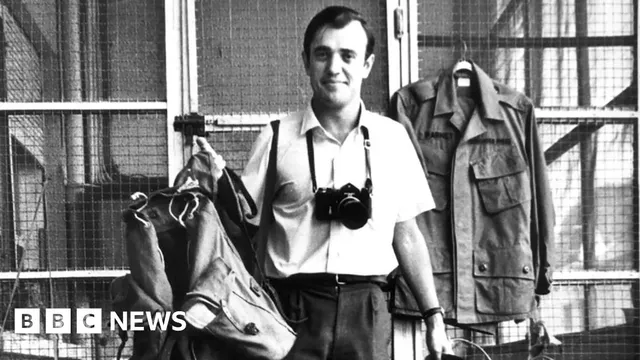
Peter Arnett dies at 91, leaving a legacy of war reporting
Peter Arnett dies at 91, leaving a legacy of war reporting
- Peter Arnett won the Pulitzer Prize for international reporting in 1966 for his coverage during the Vietnam War.
- He gained national recognition for his coverage of the first Gulf War, notably staying in Baghdad as other journalists evacuated.
- His legacy as a war correspondent will continue to inspire journalists for generations to come.
Story
Peter Arnett, a renowned journalist known for his war reporting, passed away at the age of 91 in California. Born in 1934 in Riverton, New Zealand, he later became a naturalized American citizen and lived in southern California since 2014. Throughout his extensive career, Arnett reported on significant global conflicts, including the Vietnam War, Gulf War, and military engagements in Iraq and El Salvador. He gained prominence for his courageous on-the-ground coverage, particularly his decision to remain in Baghdad during the first Gulf War, where he provided live updates while bombings occurred around him. Arnett began his journalism career with the Associated Press in Vietnam in 1962, where he faced dangers head-on, often accompanying troops on missions. His reporting during the Vietnam War earned him a Pulitzer Prize in 1966, marking the beginning of his respected legacy in journalism. He later joined CNN in 1981, where he became famous for his live updates during the first Gulf War in 1991. Arnett's fearless reporting style made him a household name and he became recognized for his brave choices during dangerous times. Over the years, he had notable interviews, including those with dictators such as Saddam Hussein and the terrorist leader Osama bin Laden, marking him as a significant figure in war journalism. Arnett also authored a memoir detailing his experiences in various conflict zones, sharing insights about the challenges and moral dilemmas faced by war correspondents. His comprehensive reporting style highlighted the human cost of war and brought important stories to the public. Despite some controversies later in his career, including his dismissal from NBC for criticizing U.S. military strategies, Arnett's work has left a lasting mark on journalism. His boldness and skill have inspired generations of journalists to continue reporting from the front lines. Edith Lederer, a former colleague, stated that Arnett was one of the greatest war correspondents of his generation, and his passing has left a significant void in the field of journalism.
Context
Peter Arnett is a prominent journalist whose reporting, especially during the Vietnam War and the Gulf War, has had a significant impact on the field of journalism. His candid reporting style has not only informed the public about the realities of war but has also challenged the norms of war reporting, emphasizing the importance of journalism as a tool for accountability. By providing an unfiltered portrayal of the costs of conflict, Arnett has underscored the ethical responsibility that journalists hold in accurately representing the human experience within violent contexts. His work has also sparked discussions about the balance between national security and the public's right to know, presenting a case for the role of journalism as a watchdog in society. Arnett's reporting style marked a shift in the landscape of war journalism, favoring on-the-ground experiences and stories from affected civilians over official government narratives. This personal approach allowed audiences to connect emotionally with the subjects of his stories and brought to light the critical human element that is often lost in strategic analyses of military operations. His groundbreaking reports during the Vietnam War, particularly his controversial coverage and his live broadcasts during the Tet Offensive in 1968, illustrated the unpredictability of war and the challenges journalists face in portraying its realities without bias or political influence. This has encouraged future journalists to embrace a more immersive, humanistic approach in their reporting. The influence of Arnett's work extends beyond the immediate context of the conflicts he reported on; it has also encouraged subsequent generations of journalists to prioritize authenticity and integrity in their work. His willingness to present a nuanced narrative has inspired journalists to investigate deeper social contexts of their stories, steering away from soundbite culture that often oversimplifies complex issues. Furthermore, Arnett's example has motivated journalists to question official governmental claims and advocate for transparency, promoting a more informed public discourse. In conclusion, Peter Arnett's impact on journalism lies in his dedication to a rigorous, empathetic, and fearless approach to reporting. By challenging conventional practices and boldly revealing the often harsh realities of warfare, he has played a crucial role in shaping journalistic standards and practices in times of conflict. His legacy encourages contemporary journalists to uphold the ethical responsibility of their profession while emphasizing the importance of human stories in reporting. As journalism continues to evolve in response to new challenges and technologies, the foundational principles demonstrated by Arnett's work remain vital to preserving the integrity and purpose of journalistic endeavors worldwide.


