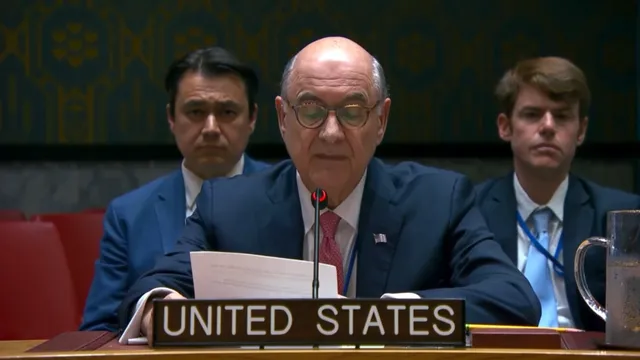
UN reports over 16,000 civilian deaths in Ukraine amid escalating conflict
military conflicts
tragic
impactful

UN reports over 16,000 civilian deaths in Ukraine amid escalating conflict

11
(Update: )
sovereign state in Eastern Europe and Northern Asia
country in Eastern Europe
global international and intergovernmental organization
  • The UN reported a significant increase in civilian casualties in Ukraine, with May 2026 being the deadliest month since April 2022.
  • The U.S. warned Russia at the UN about the unsustainable costs of its military actions and urged for diplomatic negotiations.
  • The ongoing conflict has resulted in over 16,000 confirmed civilian deaths, highlighting the urgent need for a resolution.
Share opinion
1

Story

In Ukraine, the ongoing conflict has resulted in a significant rise in civilian casualties, with May 2026 being reported as the deadliest month since April 2022. The United Nations Office of the High Commissioner for Human Rights reported that at least 274 civilians were killed and 1,763 wounded during this month alone, marking a 93 percent increase compared to May 2025. The situation has been exacerbated by intensified missile and drone attacks from Russian forces, which have targeted civilian infrastructure and cultural heritage sites across various regions, including Kyiv, Kharkiv, and Donetsk. The UN Security Council convened to address these alarming developments, with the United States delivering a stern warning to Russia regarding its military actions in Ukraine. Dan Negrea, the U.S. Deputy Permanent Representative to the UN, emphasized that Russia's position is deteriorating and urged for diplomatic negotiations to end the conflict. He highlighted the unsustainable costs that Russia is incurring to maintain its military efforts, both economically and in terms of human lives. UN officials have also noted that the real toll of the conflict is likely higher than reported figures, as many casualties may go unrecorded. The UN has confirmed a total of 16,126 civilian deaths since the onset of the full-scale war, including 796 children, and 46,590 civilians have been wounded, with 2,835 of them being children. The ongoing violence has not only resulted in loss of life but has also led to significant damage to cultural sites, with over 530 such sites reported as damaged since the invasion began in February 2022. As the conflict continues, the international community remains concerned about the humanitarian crisis unfolding in Ukraine. The UN has called for immediate action to protect civilians and preserve cultural heritage, stressing that the war must come to an end to prevent further bloodshed. The situation remains critical, with the potential for further escalation if diplomatic efforts do not succeed in bringing about a resolution.

Context

The ongoing conflict in Ukraine has prompted extensive diplomatic efforts aimed at achieving a resolution. Since the onset of hostilities in 2014, various international actors, including the United Nations, the European Union, and the Organization for Security and Co-operation in Europe (OSCE), have engaged in negotiations to facilitate peace. These efforts have included the Minsk agreements, which were designed to establish a ceasefire and outline steps for a political solution. However, the implementation of these agreements has faced significant challenges, with both sides accusing each other of violations, leading to a protracted stalemate and continued violence in the region. In recent years, the diplomatic landscape has evolved, with increased involvement from global powers such as the United States and Russia. The U.S. has provided military and economic support to Ukraine, while also imposing sanctions on Russia in response to its actions in the conflict. Meanwhile, Russia has sought to assert its influence in the region, complicating the diplomatic efforts. The dynamics of these relationships have made it difficult to reach a consensus on key issues, including the status of Crimea and the autonomy of the Donetsk and Luhansk regions. As a result, the conflict remains unresolved, with periodic escalations in violence and humanitarian crises affecting civilians. In 2026, the international community continues to explore new avenues for diplomacy. Recent initiatives have focused on fostering dialogue between Ukraine and Russia, with the aim of rebuilding trust and addressing the underlying grievances that fuel the conflict. High-level meetings and summits have been organized to bring together leaders from both sides, as well as representatives from key international organizations. These discussions have emphasized the importance of a comprehensive approach that includes not only a ceasefire but also economic support and reconstruction efforts for affected areas. The role of civil society and local stakeholders has also been recognized as crucial in ensuring a sustainable peace. Despite the complexities of the situation, there is a growing recognition that a diplomatic resolution is essential for long-term stability in Ukraine and the broader region. The humanitarian impact of the conflict, including displacement and loss of life, underscores the urgency of finding a solution. As diplomatic efforts continue, the international community remains hopeful that a negotiated settlement can be achieved, paving the way for a peaceful and prosperous future for Ukraine.

2026 All rights reserved