
military conflicts
tragic

Kenya faces hunger crisis as drought devastates livestock and crops

Feb 9, 2026, 2:58 PM10
(Update: Feb 9, 2026, 2:58 PM)
country in Eastern Africa

Kenya faces hunger crisis as drought devastates livestock and crops

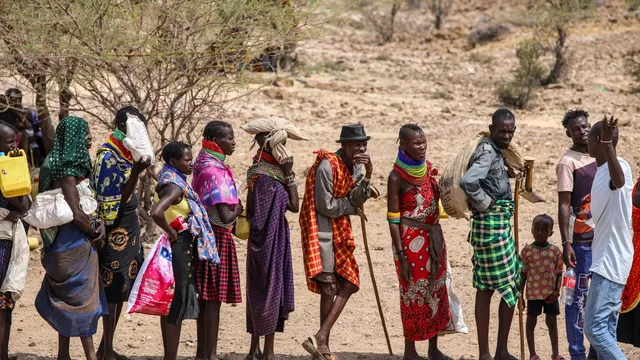
  • Drought conditions in Kenya have left over 2 million people facing hunger, particularly affecting cattle-keeping communities.
  • Four consecutive wet seasons have failed in the Horn of Africa, worsening the situation and leading to critical water shortages.
  • International aid is crucial to avert a humanitarian disaster as both livestock and crop losses continue to escalate.
Share your opinion
1

Story

Kenya is currently facing dire consequences as over 2 million people are experiencing hunger due to devastating drought conditions that have disproportionately affected cattle-keeping communities in the northeast. The situation is dire, with images of emaciated livestock surfacing from the arid regions near the Somali border, highlighting the impacts of climate change. This drought has compounded the issues faced by many communities, resulting in shorter rainy seasons which have traditionally sustained agriculture and livestock. The ongoing drought has deepened the humanitarian crisis across the Horn of Africa, extending beyond Kenyan borders and affecting Somalia, Tanzania, and Uganda. The United Nations and other organizations report that four consecutive wet seasons have failed in parts of the Horn of Africa, leading to alarm classifications in some counties, such as Mandera. These classifications indicate critical water shortages that have led not only to significant livestock deaths but also to malnutrition among children. Reports indicate that in Somalia alone, over 3 million people have been displaced by the worsening conditions, resulting in families seeking refuge in camps but struggling with severe food shortages. Many internally displaced people in the city of Baidoa are surviving on one meal a day or less, and children show visible signs of malnutrition, increasing the urgency for international aid. As the climate crisis continues to unfold, experts are sounding the alarm that much of the suffering in the region is a direct consequence of climate change, which has exacerbated the frequency and severity of droughts. The situation is compounded by the fact that the Indian Ocean has become warmer, which has contributed to more destructive tropical storms while prolonging drought conditions. Ultimately, the impacts on farmers, pastoralists, and communities reliant on rain-fed agriculture are profound, jeopardizing livelihoods and food security in a region highly vulnerable to these extreme weather events. Historically, the area has not been without its challenges, recalling the period from 2020 to 2023 when millions of animals died in a similar climate-related crisis. A famine in Somalia was averted during that time thanks to an influx of international aid, demonstrating the critical importance of timely support to vulnerable populations. However, the present circumstances suggest that the window for intervention may be closing as droughts become longer and impact over 10 counties in Kenya alone. Without concerted action, the current situation threatens to evolve into a larger humanitarian crisis requiring urgent attention from the global community.

Context

Climate change poses a significant threat to agriculture in Kenya, a country where over 75% of the population relies on agriculture for their livelihoods. This sector is crucial not only for food security but also for the national economy, contributing about one-third of the country's GDP. However, changing climate patterns, manifested through fluctuating rainfall patterns, increasing temperatures, and more frequent extreme weather events, jeopardize agricultural productivity. Research has shown that crop yields are declining due to prolonged droughts and unpredictable rainfall, adversely affecting staple crops such as maize, which is pivotal for food security in Kenya. The rise in temperatures further complicates farming practices, leading to increased pest and disease outbreaks, which further threaten crop yields and farming outcomes. The effects of climate change in Kenya are most pronounced among smallholder farmers, who lack the resources and technology necessary to adapt to changing conditions. These farmers often depend on traditional farming methods and have limited access to irrigation systems, making them vulnerable to climate-related shocks. As climate variability increases, traditional farming calendars become obsolete, leading to poor planning and crop failures. Farmers struggle to find effective coping mechanisms, resulting in a decline in agricultural productivity and increased food insecurity. Additionally, women, who make up a significant portion of the agricultural labor force, are disproportionately affected due to their limited access to resources and decision-making power. Adaptation strategies are critical to mitigate the adverse effects of climate change on Kenyan agriculture. These strategies include the adoption of climate-smart agricultural practices, such as improved crop varieties resilient to drought and pests, agroforestry, and soil conservation techniques. Government policies and initiatives aimed at enhancing access to technology, financial support, and education for farmers are also essential. Strengthening extension services to provide farmers with timely weather information and agricultural advice can further empower them to make informed decisions. Collaborative approaches that involve local communities, government agencies, and NGOs can enhance resilience and adaptive capacity in the agricultural sector. Despite the challenges posed by climate change, there is a significant opportunity for innovation in Kenyan agriculture. The promotion of sustainable practices, along with investments in research and development, can play a pivotal role in building a resilient agricultural sector. Enhancing sustainable land management practices, improving water resource management, and embracing digital technologies can help farmers adapt to changing climate conditions while also increasing productivity. It is imperative that stakeholders, including the government and international organizations, prioritize climate adaptation strategies to protect the agricultural sector and ensure food security for future generations in Kenya.

2026 All rights reserved
