

Russia threatens Armenia over EU membership plans
Russia threatens Armenia over EU membership plans
- Armenia is facing an ultimatum from Russia and its allies regarding its EU membership aspirations.
- The ultimatum demands a referendum on whether Armenia should join the EU or remain in the EAEU.
- This situation reflects Armenia's struggle to balance its Western ambitions with its historical ties to Russia.
Story
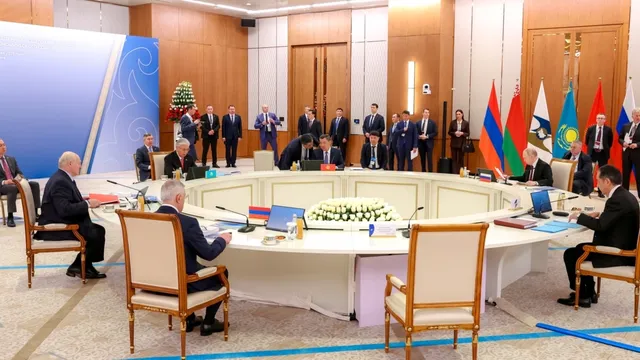
Armenia has faced significant pressure from Russia and its allies, including Belarus, Kazakhstan, and Kyrgyzstan, due to its aspirations to join the European Union. This culminated in an ultimatum issued during an EAEU summit in Astana, where the member states threatened to suspend Armenia's membership in the Eurasian Economic Union (EAEU). The ultimatum demands that Armenia hold a referendum on whether to pursue EU membership or remain in the EAEU, claiming that its EU ambitions threaten the economic security of the other member states. Armenian Prime Minister Nikol Pashinian's absence from the summit was interpreted as a political boycott, although he cited domestic campaign commitments as the reason for his non-attendance. The ultimatum follows weeks of escalating pressure from Moscow, with Russian officials asserting that Armenia's EU integration is incompatible with its EAEU membership. This situation has been exacerbated by Russia's recent ban on Armenian agricultural imports, which coincided with the summit, further straining relations. The political landscape is complicated by Armenia's pivot away from Moscow towards the West, gaining support from figures like U.S. President Donald Trump, who endorsed Pashinian for reelection. The dynamics of this situation reflect a broader trend of former Soviet states navigating their foreign relations amidst the ongoing geopolitical tensions between Russia and the West. As Armenia seeks a more independent future, the potential consequences of its choices could lead to a significant weakening of its ties with Russia, which has historically been a key ally. The developments at the summit highlight the challenges faced by Armenia as it attempts to balance its aspirations for EU integration with the realities of its existing commitments to the EAEU.
Context
The Eurasian Economic Union (EAEU) is a regional economic integration initiative that was established on January 1, 2015. It comprises five member states: Armenia, Belarus, Kazakhstan, Kyrgyzstan, and Russia. The EAEU aims to create a single market for goods, services, capital, and labor, thereby enhancing economic cooperation among its members. The union is built on the principles of free trade, customs cooperation, and the harmonization of economic policies, which are intended to foster economic growth and development within the region. The EAEU also seeks to strengthen the geopolitical influence of its member states on the global stage, particularly in relation to the European Union and China. One of the key features of the EAEU is the establishment of a customs union that facilitates the free movement of goods across member borders without tariffs or trade barriers. This has led to increased trade volumes among member states, as well as the simplification of customs procedures. Additionally, the EAEU has implemented a common external tariff, which standardizes tariffs on goods imported from non-member countries. This common approach not only enhances intra-union trade but also provides a unified front in negotiations with external trade partners. The EAEU also emphasizes the importance of labor mobility among its member states. Citizens of EAEU countries can work in any member state without the need for a work permit, which promotes labor exchange and addresses labor shortages in certain sectors. Furthermore, the EAEU is working towards the integration of various sectors, including energy, transportation, and agriculture, to create a more cohesive economic environment. This integration is expected to lead to increased investment opportunities and improved infrastructure across the region. Despite its potential benefits, the EAEU faces several challenges. Economic disparities among member states can lead to tensions, particularly when it comes to resource allocation and investment priorities. Additionally, the geopolitical landscape, including sanctions and external pressures, can impact the union's effectiveness and cohesion. Nevertheless, the EAEU continues to evolve, with ongoing discussions about expanding membership and deepening integration, which could further enhance its role as a significant player in the global economy.


