

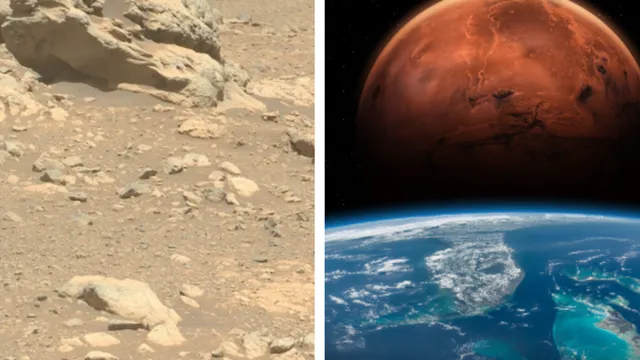
Perseverance rover discovers possible meteorite on Mars
Perseverance rover discovers possible meteorite on Mars
- NASA's Perseverance rover has identified an anomalous rock, named Phippsaksla, in Jezero Crater.
- The rock is rich in iron and nickel, suggesting it may be an iron-nickel meteorite.
- This discovery could provide crucial insights into Mars' geological history and the potential for past life.
Story
In a remarkable discovery on Mars, NASA's Perseverance rover identified an unusual rock in the Vernodden area of Jezero Crater, where it first landed in February 2021. The rock, named Phippsaksla, measures approximately 31 inches in diameter and stands out from the surrounding terrain due to its atypical shape and higher elevation. The rover's SuperCam instrument indicated that the rock contains high levels of iron and nickel, elements typically associated with iron-nickel meteorites that originate from the cores of large asteroids. This finding is significant, suggesting that Phippsaksla may have originated from outside Mars, possibly hinting at past interplanetary interactions within the solar system. The identification of Phippsaksla aligns with observations made during past Mars missions. Previous rovers, including Curiosity, Opportunity, and Spirit, have also encountered iron-nickel meteorites, expanding the understanding of Mars' geological history. The presence of such meteorites on Mars could offer insights into the planet's past, including its formation and the materials available before life potentially emerged. The Curiosity rover discovered the Lebanon meteorite in 2014 and the Cacao meteorite in 2023 within the Gale Crater, approximately 2,300 miles away from Jezero Crater, highlighting that meteorite findings are not unique to Perseverance. NASA scientists pointed out that it's been somewhat unexpected for the Perseverance rover to have not yet found any iron-nickel meteorites, especially given Jezero Crater's geological characteristics similar to those of Gale Crater. The ongoing search for meteorites is integral to understanding the type of materials that have impacted Mars over time and their implications for the planet's history and potential for past life. To establish a clearer understanding of Phippsaksla's origins, extensive analysis will be conducted. If this rock is confirmed as a meteorite, Perseverance will join the legacy of previous Mars rovers that have explored the remnants of extraterrestrial visitors. As scientific investigations continue, the presence of this out-of-place rock could aid researchers in uncovering the storied history of the Red Planet, shedding light on the environmental conditions that once might have supported life. With excitement over potential fossil material having already been generated from earlier findings in Jezero Crater, related to evidence of aqueous conditions and biosignatures, this new discovery strengthens NASA’s commitment to probing the mysteries of Mars' past.


