

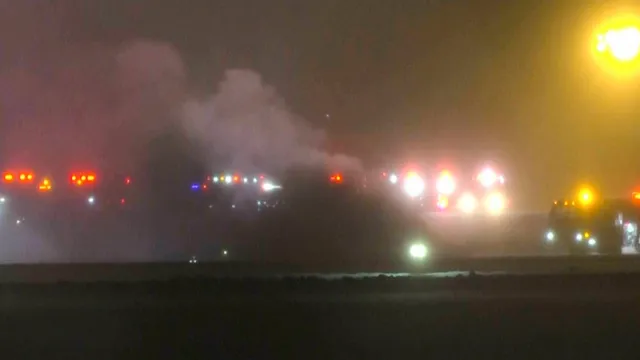
Aircraft crashes at Maine airport with eight onboard amid snowstorm
Aircraft crashes at Maine airport with eight onboard amid snowstorm
- Eight individuals were on board the Bombardier Challenger 600 aircraft that crashed shortly after takeoff from Bangor International Airport.
- The plane flipped over and caught fire, as confirmed by air traffic controller audio recordings.
- The airport remains closed and is experiencing significant flight cancellations and diversions due to the winter storm and the crash.
Story
An aircraft carrying eight individuals crashed on Sunday evening at Bangor International Airport in Maine, during a snowstorm that had been affecting the region. The incident occurred around 7:45 p.m. local time, shortly after the Bombardier Challenger 600 took off. According to the Federal Aviation Administration (FAA), both the FAA and the National Transportation Safety Board (NTSB) have launched an investigation into the circumstances surrounding the crash. Eyewitness accounts and audio recordings from air traffic control suggest that the jet flipped over and caught fire after takeoff. Immediate information about the conditions of those aboard remains unknown. The crash led to the immediate closure of Bangor International Airport, contributing to significant flight cancellations and diversions. It is important to note that the airport was already grappling with the effects of a winter storm that was impacting much of the northeastern United States during the same time. The storm was characterized by steady snowfall, causing disruptions in air travel and road traffic across the region. Following the crash, the Bangor Maine Police Department and airport authorities released a statement confirming the incident and emphasizing that multiple emergency crews were deployed to respond. The NTSB stated that they would provide more information only after investigators arrived on the scene, highlighting the ongoing nature of the investigation. Preliminary findings revealed that the aircraft experienced a post-crash fire, raising concerns about the safety protocols and the operational conditions at the airport. This occurrence adds to a series of disruptions across the nation, where thousands of flights were canceled or delayed as a consequence of the extensive winter storm. The broader impacts of harsh weather conditions in the eastern U.S. are being felt widely, emphasized by the vast number of flight cancellations that took place on that day, with reports of nearly 20,000 flights disrupted nationwide. As investigations continue and more details are gathered, safety measures and weather preparedness for aviation will likely be scrutinized in future discussions.
Context
The Federal Aviation Administration (FAA) plays a critical role in ensuring aviation safety in the United States, particularly through its investigation procedures for aircraft crashes. When an aircraft accident occurs, the FAA initiates an investigation to determine the facts and contributing factors leading to the incident. The process typically begins with the establishment of an investigation team, which may include FAA inspectors, representatives from the National Transportation Safety Board (NTSB), and other relevant authorities. The team assesses the crash site, collects physical evidence, and interviews witnesses and survivors to gather comprehensive data about the event. The investigation aims to not only determine what happened but also to identify safety issues that could prevent future accidents, thereby enhancing the overall safety of air travel. During the investigation, the FAA utilizes a variety of methodologies, such as examining the aircraft's maintenance records, analyzing flight data from black boxes, and reviewing communication transcripts between pilots and air traffic control. This thorough examination enables investigators to reconstruct the sequence of events leading up to the accident. Furthermore, the FAA often collaborates with aircraft manufacturers and other relevant stakeholders to analyze potential mechanical failures or human factors that may have contributed to the crash. By taking a multifaceted approach, the FAA ensures a complete understanding of the incident and its underlying causes. Once the investigation is complete, the FAA, in conjunction with the NTSB, publishes a report that outlines the findings and makes recommendations for preventive actions. These recommendations can lead to changes in regulations, updated training protocols for flight crews, or modifications to aircraft design and maintenance procedures. The ultimate goal of these investigations is to improve safety standards and prevent similar accidents from occurring in the future. Stakeholder engagement, including input from the aviation community and public forums, plays a vital role in the effectiveness of the recommendations made. Overall, the FAA’s investigation procedures are instrumental in promoting aviation safety and trust in air travel. By systematically analyzing crashes and implementing data-driven recommendations, the FAA fosters an environment where aviation can continue to grow safely. These procedures not only contribute to better policies and practices within the aviation industry but also ensure that the lessons learned from past incidents are widely disseminated and integrated into future operations. The FAA's commitment to rigorous investigation and proactive safety measures ultimately serves the dual purpose of protecting lives and advancing aviation technology.


