

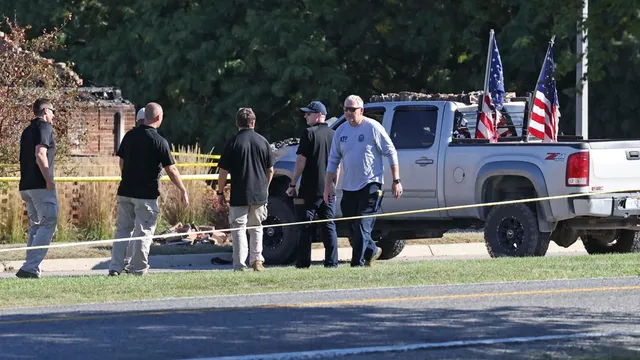
Gunman kills four in deadly Mormon church attack in Michigan
Gunman kills four in deadly Mormon church attack in Michigan
- Gunman Thomas Jacob Sanford made a 911 call reporting bomb threats to local churches shortly before attacking the LDS church.
- The attack resulted in four fatalities, two from gunfire and two from a fire.
- This incident highlights the rising concerns about safety in places of worship due to growing anti-religious sentiments.
Story
In the United States, specifically in Michigan, a tragic attack took place on September 28, 2023, when Thomas Jacob Sanford drove his truck into a Church of Jesus Christ of Latter-day Saints in Grand Blanc Township. Shortly before the attack, Sanford made a bomb threat to local churches to mislead law enforcement and divert their attention from his true target. This premeditated action occurred less than four minutes before he commenced firing on worshippers with a high-capacity rifle during their service at approximately 10:25 a.m. Sanford's actions resulted in the deaths of four individuals: two from gunfire and two more during a subsequent fire he intentionally set inside the chapel. Witness accounts describe a chaotic and terrifying scene, with victims reporting gunfire and the quick exit through smoke and debris. Law enforcement officials responded promptly and engaged in a shootout with Sanford, which ultimately led to his death. The attack has been classified as motivated by Sanford's anti-religious beliefs against the Mormon community, highlighting issues surrounding religious intolerance and violence in the U.S. The FBI noted that the threats made by Sanford to other churches were simply distractions from his true intentions and indicated that he did not plan to execute attacks on those other locations. This chilling incident raises questions about safety in places of worship and the possible need for increased security measures in the face of rising anti-religious sentiment. The aftermath of this horrific event has left the local community and the church congregants in mourning. Survivors are grappling with both physical and emotional scars while discussions about the implications of this attack on community safety are ongoing. Authorities are urging for more resources and awareness concerning potential attacks on places of worship, as this situation stresses the need for vigilance against hate crimes and the protection of religious freedoms.
Context
Gun violence in places of worship has emerged as a critical concern in recent years, reflecting broader trends in gun violence across the United States. These incidents have not only resulted in tragic loss of life but have also raised significant questions about security, community safety, and the protection of sacred spaces. Statistics reveal that places of worship, once perceived as sanctuaries, are increasingly becoming sites of violence, prompting leaders and congregations to rethink their safety protocols. Reports indicate that the number of shooting incidents in these locations has escalated, with various religious communities affected, including churches, synagogues, mosques, and temples. Understanding the scope of this issue is vital for developing effective preventive measures and enhancing security for worshippers. Recent analyses have highlighted that gun-related incidents in places of worship often coincide with broader sociopolitical tensions, hate crimes, and mental health issues. Consequently, the demographics of victims and perpetrators can vary widely, depending on the context of each incident. In many cases, such violence stems from ideologically motivated hate, targeting specific minority communities. This trend has compelled many religious organizations to establish partnerships for heightened security, engage law enforcement, and conduct training for their leaders and members on how to respond to potential threats. The data collected over the years underscores the necessity of addressing underlying issues that contribute to this phenomenon, including societal polarization and xenophobia. In response to the surge in violence, there has been increased advocacy for legislative reform surrounding gun control measures and the enforcement of existing laws. Many communities have responded proactively by implementing safety protocols such as increased surveillance, visible security personnel, and community awareness programs. Furthermore, congregational leaders and community advocates emphasize the importance of fostering an environment of dialogue to combat extremism and promote mutual respect among diverse faiths. Many religious institutions are investing in workshops aimed at educating members on conflict resolution, inclusivity, and communal support systems, which are essential to creating a safer environment for worship. Research into gun violence in places of worship emphasizes the need for holistic approaches that encompass not only immediate security responses but also long-term community engagement initiatives. By prioritizing mental health services, educational outreach, and effective communication strategies, communities can work towards mitigating the risks associated with gun violence. As places of worship continue to grapple with the implications of violence on their sanctuaries, stakeholders must collaborate to establish a secure atmosphere where all individuals can freely exercise their right to worship. In conclusion, the understanding of gun violence within these sacred spaces remains a pressing public concern, necessitating continued research, vigilance, and community action.


