
entertainment
controversial
impactful

Met Opera production team withdraws names over controversial 'Carmen' restaging

Jan 21, 2026, 6:55 PM20
(Update: Jan 23, 2026, 8:19 AM)
opera company in Manhattan, New York City
French composer (1838–1875)
opera house in Manhattan, New York

Met Opera production team withdraws names over controversial 'Carmen' restaging

  • The production team of 'Carmen' at the Metropolitan Opera demanded their names be removed from programs over a financial decision.
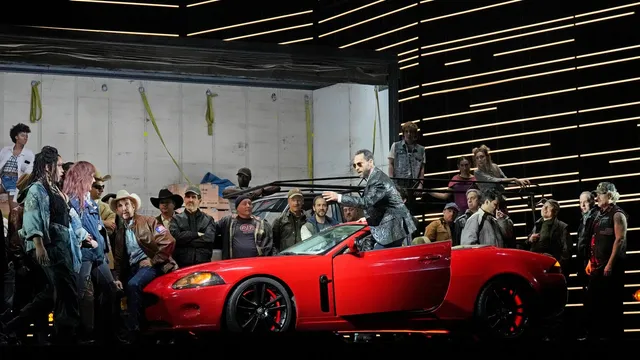
  • A new staging moved the setting to a modern industrial town, eliminating expensive automated elements.
  • This dispute highlights ongoing tensions between artistic vision and financial constraints in major opera productions.
Share your opinion
2

Story

In late 2023, the Metropolitan Opera in the United States faced significant backlash from the production team of George Bizet's 'Carmen' in light of a controversial restaging decision. This version of the opera moved the setting from the traditional early 19th century Seville, Spain, to a contemporary American industrial town. During the production's initial performance on December 31, 2023, director Carrie Cracknell's reinterpretation included a dramatic introduction with Escamillo arriving in a red Jaguar convertible, surrounded by an entourage in pickup trucks. However, shortly before the performance, it was revealed that the Met's management decided to cut these elaborate features due to financial constraints, replacing them with a simpler staging that only included a stationary pickup truck and a motorcycle. The decision to alter the staging was communicated to the production team by John Sellars, the Met's assistant general manager for production. Faced with a dire financial situation, he informed conductor and production collaborator James Levine that the Met needed to eliminate the automated elements for cost-saving measures, saving over $300,000. Despite attempts by Levine and Cracknell to negotiate a solution that would maintain some of the production's original vision, the Met remained firm in its cost-cutting mandate and implemented the changes. As the production team's dissatisfaction grew, Levine stated he couldn't comply with the drastic alterations considering his contractual obligations that prevented changes post-opening night. Consequently, he withdrew his name and was soon followed by the rest of the production team, including set designer Tom Scutt, lighting designer Guy Hoare, choreographer Ann Yee, and projections designer Roland Horvath. The team felt compelled to make a united stand against modifications to their work that fundamentally altered its artistic intent. Peter Gelb, the Met's general manager, justified the changes as not only fiscally necessary but also a reflection of their operational challenges. The production was set to run for 30 performances over two seasons and would be evaluated for its audience reception. Levine, who has an upcoming return planned for a future staging of Leoš Janáček's 'Jenůfa,' expressed distrust towards the Met, highlighting the troubling precedent the situation set for future collaborations, raising questions about artistic integrity and financial pressures in high-stakes opera production.

2026 All rights reserved
