

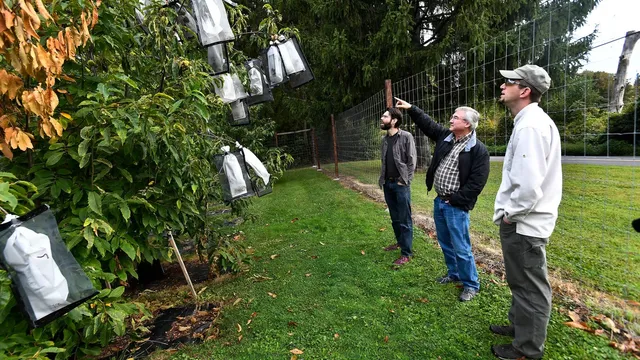
Genetic testing offers hope for restoring American chestnut tree
Genetic testing offers hope for restoring American chestnut tree
- The American chestnut tree faced decline and was functionally extinct by the 1950s due to disease.
- Recent studies show genetic testing can expedite the breeding of disease-resistant trees.
- Restoration efforts emphasize the importance of maintaining high levels of American chestnut DNA for ecological balance.
Story
In the United States, the American chestnut tree has faced significant decline due to a fungal blight and root rot, leading to its functional extinction by the 1950s. A recent study published in the journal Science proposes a promising method for its restoration through genetic testing. This process identifies trees with the best potential for disease resistance and growth characteristics, which could significantly shorten the generational gap necessary for reintroduction into Eastern forests. The American Chestnut Foundation oversees efforts to revive the species and aims to create a hybrid that retains about 70% to 85% of the American chestnut's DNA while incorporating the disease resistance traits from the Chinese chestnut. This endeavor is particularly challenging due to the desirable traits of the American chestnut being scattered throughout its genome, complicating the restoration efforts. Lead study author Jared Westbrook emphasizes that the use of genetic testing accelerates the breeding process, allowing researchers to identify promising offspring much earlier than traditional methods could. Some experts, such as Steven Strauss from Oregon State University, also advocate for gene editing as a more precise approach to ensure a faster route to rebuilding sustainable tree populations. However, regulatory hurdles remain a barrier for this technology. The American chestnut tree is notable for its ecological importance, serving as a keystone species in North American forests and supporting various wildlife, including squirrels, chipmunks, and black bears. While some scientists endorse hybrid approaches, others like Donald Edward Davis underscore the importance of utilizing surviving American chestnuts to enhance genetic diversity and prevent potential extinction due to a genetic bottleneck. This debate highlights the urgent need for balanced strategies in forest restoration that prioritize both ecological integrity and the revival of a beloved species.
Context
The decline of the American chestnut (Castanea dentata) has had significant repercussions on the ecosystem it once dominated. Historically, this tree species was a keystone in the eastern United States, providing critical resources for both wildlife and human populations. Its rapid decline, primarily due to the introduction of chestnut blight (Cryphonectaria parasitica), has led to a cascading effect across many ecological facets. The loss of the American chestnut not only diminished biodiversity but also altered species interactions, habitat structures, and nutrient cycling processes essential for the health of forest systems. Without this large, fast-growing tree, both flora and fauna that depended on it for sustenance and shelter have faced challenges in adaptation and survival. Wildlife that fed on chestnut nuts, such as squirrels, deer, and numerous bird species, have been forced to seek alternative food sources, which may not provide the same nutritional value or abundance, thus affecting their populations and behaviors in turn. The ecological impact of the American chestnut's decline extends to its role in forest ecosystems. As a dominant tree species, the American chestnut contributed to the overall structure and dynamics of the forest habitat. Its absence has opened up the canopy, allowing more sunlight to reach the forest floor, leading to changes in understorey vegetation composition. This shift can favor shade-tolerant species over others that require more light, resulting in a less diverse plant community over time. Consequently, the habitat alterations may lead to further declines in specific fauna that relied on the unique conditions created by the chestnut, highlighting the interconnectedness of ecosystem health and biodiversity. Efforts to restore the American chestnut to its former glory are ongoing and include genetic research aimed at producing blight-resistant hybrids. These restoration projects aim to reintroduce chestnuts back into their native habitats, hoping to revive the ecological and socio-economic roles they once played. Successful restoration could significantly benefit biodiversity by rehabilitating the forest canopy, which in turn would support a wider range of flora and fauna. Besides ecological benefits, the return of this tree can also have positive socio-economic impacts, revitalizing local economies reliant on timber and nuts, while re-establishing cultural connections to this iconic species. In summary, the decline of the American chestnut has profoundly affected eastern U.S. ecosystems, disrupting the intricate balance of species and habitats. Its role as a keystone species illustrates how the loss of one organism can lead to extensive environmental changes and challenges for other species. Addressing the decline through restoration efforts presents an opportunity to not only reclaim lost biodiversity but also to ensure the health and resilience of forest ecosystems in the face of ongoing environmental challenges.


