

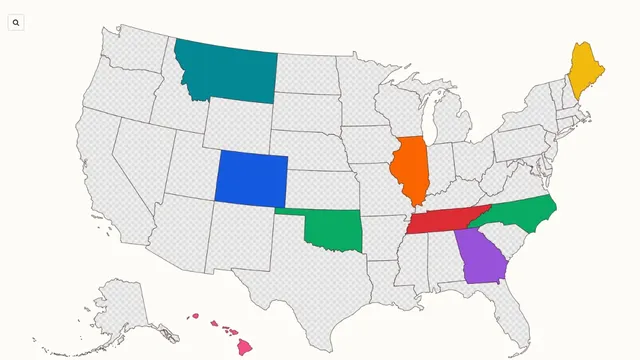
Colorado leads the U.S. in income growth with a 46.9 percent rise
Colorado leads the U.S. in income growth with a 46.9 percent rise
- Colorado has seen the largest increase in median household income in the U.S. at 46.9 percent from 2019 to 2024.
- North Carolina and Oklahoma experienced the slowest income growth at 9.9 percent during the same period.
- Economic pressures related to income disparities are significant concerns for voters as they influence political decisions.
Story
In the United States, a recent analysis conducted by Visual Capitalist reveals significant disparities in income growth across various states from 2019 to 2024. According to the data sourced from the U.S. Census Bureau, Colorado stands out with the highest increase in median household income, rising by 46.9 percent, reaching an average of $106,500. Georgia follows closely, experiencing a 43.4 percent increase in income, boosting its median to $81,210. Maine also recorded impressive growth with an increase of 36.3 percent, while Montana and Tennessee had notable increases of 36.1 percent and 34 percent, respectively. Conversely, North Carolina and Oklahoma had the slowest income growth rates at only 9.9 percent, significantly lagging behind states like Colorado and Georgia. Notably, Hawaii followed with an increase of 11.6 percent in median incomes, indicating a wider economic disparity across the country. An analysis from WalletHub highlighted that this economic variability might affect consumer behavior and financial conditions. Economists anticipate robust growth in the economy and strong performance in U.S. equities as a promising outlook for 2026. However, concerns remain regarding the financial pressures faced by less affluent consumers due to rising prices and potential labor market slowdowns. As income growth is essential for purchasing power, its impact on housing markets and overall economic health is crucial for American voters, particularly leading up to presidential elections where candidates often address economic concerns as primary issues. The correlation between rising incomes and increased purchasing power can enhance market demand and benefit both buyers and sellers in the real estate sector.


