

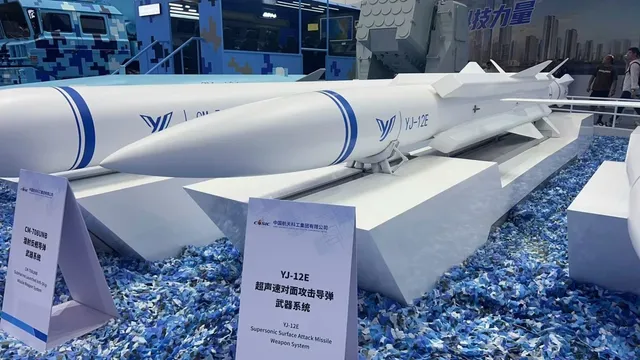
Iran inches closer to deal for Chinese missiles amid U.S. naval presence
Iran inches closer to deal for Chinese missiles amid U.S. naval presence
- Iran is close to finalizing a military agreement with China for the procurement of CM-302 anti-ship missiles.
- Negotiations intensified after the conflict between Israel and Iran, raising concerns over military balance in the region.
- The acquisition of these supersonic missiles could significantly enhance Iranian military capabilities, posing a challenge to U.S. interests.
Story
Iran is close to finalizing a significant military agreement with China for the purchase of anti-ship cruise missiles known as the CM-302. The negotiations have been ongoing for at least two years but intensified following the June 2025 conflict between Israel and Iran. This deal, if completed, would violate a United Nations weapons embargo imposed in 2006, which was lifted temporarily in 2015 but reimposed in September 2025. The Chinese-made missiles are designed for supersonic speed and can evade shipborne defenses, making them a significant upgrade for Iran’s military capabilities. Top Iranian officials, including Massoud Oraei, the deputy defense minister, visited China last summer to expedite the final stages of the negotiations. The range of these missiles extends to 290 kilometers (approximately 180 miles), which poses a new threat to U.S. naval forces currently stationed near Iran’s coast, including the USS Abraham Lincoln and USS Gerald R. Ford aircraft carriers. These developments have raised concerns among U.S. officials regarding the implications for military dynamics in the region as China and Iran strengthen their ties against U.S. interests. With the reimposition of sanctions and rising military tensions in the Gulf, Iran views this potential acquisition as critical not only for its military strategy but also as a means to reinforce its security agreements with allies. The sophistication of the CM-302 missiles, which can be deployed from ships, aircraft, or ground vehicles, could change the operational capabilities of the Iranian military significantly. Analysts, including former Israeli intelligence officer Danny Citrinowicz, have labeled the potential acquisition as a complete game changer, emphasizing the difficulty of intercepting such advanced weaponry. While China has claimed ignorance of specific negotiations related to this missile sale, the engagement of Russian and Iranian military forces in regional exercises highlights the growing alignment among these nations. The geopolitical climate surrounding this deal showcases a broader strategy among these countries to counterbalance U.S. influence in the Middle East. As negotiations near conclusion, the impending deal underscores the urgency felt by Iran amidst the increasing presence of U.S. naval forces and the escalating military brokering occurring in this historically volatile region.
Context
The US military presence in the Middle East has been a focal point of American foreign policy for decades, driven by geopolitical, economic, and security interests. Following the end of World War II, the United States established its foothold in the region to counter Soviet influence and safeguard its interests in oil resources. The presence intensified after the 1973 oil crisis, which highlighted the strategic importance of the region. Over the years, multiple military bases and operations have been set up, leading to heightened tension, especially with local populations and regional powers. This presence is often justified on grounds of promoting stability, countering terrorism, and protecting allies, particularly Israel and Gulf states like Saudi Arabia and the UAE. The impact of the US military presence has been multifaceted. On one hand, it has provided a deterrent against external aggression and helped to maintain a balance of power in the region. On the other hand, it has also led to resentment among local populations, who often view American troops as occupiers rather than protectors. This dichotomy has fostered anti-American sentiment and, at times, spurred conflicts such as the Iraq War in 2003, which was justified by the US on the premise of dismantling weapons of mass destruction but ultimately led to prolonged instability in the country and the broader region. The strategic landscape in the Middle East is evolving, with new players emerging and longstanding alliances being redefined. The rise of China and its increasing involvement in the region represents a significant shift, challenging the traditional dominance of the US. Additionally, the resurgence of Russia in Middle Eastern affairs, especially through military support in Syria and active engagement with Iran, has further complicated America's role. As these dynamics unfold, the US must navigate its military commitments while addressing the changing perceptions of its involvement among regional powers and populations. In recent years, there has been a growing debate regarding the future of US military operations in the region. Factors such as domestic political pressures, budget constraints, and shifting strategic priorities are influencing discussions on how to effectively manage military resources in an increasingly complex environment. The fight against ISIS has showcased both the necessity of military presence and the potential for local forces to take on more responsibility. Ultimately, the US military presence in the Middle East remains critical but requires reassessment and adaptation to ensure it aligns with contemporary geopolitical realities and promotes long-term stability.


