

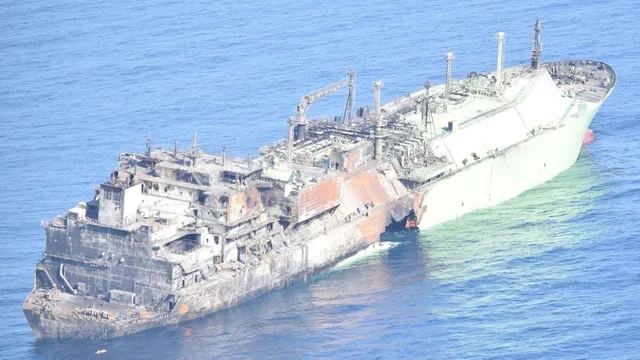
Russian tanker adrift poses imminent ecological disaster in Mediterranean
Russian tanker adrift poses imminent ecological disaster in Mediterranean
- The Arctic Metagaz, a Russian tanker, is currently adrift in the Mediterranean Sea carrying hazardous fuel and natural gas.
- European Union nations have raised alarms about the tanker posing a serious risk of an ecological disaster.
- The situation requires immediate attention to prevent environmental catastrophe while navigating international sanctions against Russia.
Story
The Arctic Metagaz, a Russian tanker that caught fire early March 2023 while carrying liquefied natural gas from the Arctic port of Murmansk, is currently adrift between Malta and Italy in the Mediterranean Sea. This situation arose following claims by Russia that Ukrainian naval drones attacked the vessel, launching concerns regarding an environmental disaster due to its hazardous cargo of fuel and natural gas. The vessel has no crew aboard and has been acknowledged by Russia's transport ministry as posing a significant risk to maritime safety and ecology. On March 4, Libyan maritime authorities reported the vessel had sunk, though it had been confirmed to still be adrift. European Union countries, including France and Italy, expressed urgent concerns in a joint letter to the European Commission, highlighting the dual challenge of ensuring maritime safety while addressing the risk posed by the drifting tanker under the EU's sanctions against Russia due to its invasion of Ukraine in 2022. Alfredo Mantovano, the Italian Council of Ministers' secretary, labeled the tanker as an 'environmental bomb' that could potentially explode at any moment, further underlining the dangers posed by its condition and cargo. The complex situation is exacerbated by the vessel's status as part of Russia’s 'shadow fleet', which aims to bypass sanctions. This context raises questions about how to manage maritime safety and ecological protection without undermining the efficacy of EU sanctions. Russia has indicated that its further involvement will be contingent on concrete circumstances while maintaining contact with the vessel's owner and relevant foreign authorities, reflecting its cautious stance amid international criticism. As the situation remains precarious, the need for surveillance, monitoring, and potential technical support to prevent ecological disaster has become increasingly clear. European countries are calling for urgent action to address the potential environmental threat, placing responsibility on coastal nations to intervene effectively in such crises. Given the nature of the vessel's cargo and its current state, the threat it poses to the Mediterranean waters is considered severe.
Context
Maritime safety regulations in the European Union (EU) are critical to ensuring the protection of life at sea, the preservation of marine environments, and the promotion of safe shipping practices. The EU has established a comprehensive framework for maritime safety, which includes directives and regulations that member states must implement to enhance safety standards across all waters under EU jurisdiction. This framework is anchored in international conventions such as the International Convention for the Safety of Life at Sea (SOLAS) and the International Maritime Organization (IMO) guidelines, thereby ensuring consistency with global maritime safety norms while allowing for regional specificity. One of the key components of maritime safety regulations in EU waters is the European Maritime Safety Agency (EMSA), which plays a vital role in supporting the EU’s maritime safety policy. EMSA provides technical assistance and expertise to member states, contributing to the harmonization of safety standards and practices. Among its various responsibilities, EMSA monitors the implementation of safety regulations, assesses risks, and advises on best practices for maritime safety. Furthermore, it conducts inspections and audits, helping to ensure compliance with established regulations across member states, which is essential for fostering a culture of safety within the maritime industry. The regulations cover a range of areas, including vessel safety, crew training, accident investigation, and pollution prevention. For example, the EU has established stringent requirements for vessel design and construction, ensuring that ships are built to withstand various maritime challenges. Training and certification of seafarers are also critical, with regulations mandating that crew members meet specific qualifications to operate vessels safely. Additionally, the EU places a strong emphasis on environmental protection, enforcing strict measures to prevent marine pollution from ships, thereby promoting sustainable maritime practices. The commitment to safety is further underscored by regulations requiring systematic accident investigations to identify causes and prevent future occurrences, thus enhancing the overall safety culture in EU waters. In conclusion, maritime safety regulations in EU waters reflect a robust commitment to ensuring safe and sustainable shipping practices. The interplay between EU directives, the work of EMSA, and adherence to international standards creates a comprehensive safety net that protects maritime life and the environment. As global shipping continues to evolve, the EU remains vigilant in adapting its regulatory framework to address emerging challenges and maintain high safety standards in the face of growing maritime traffic. The continuous improvement of these regulations will be vital in safeguarding both the inhabitants of the sea and those who rely on its resources.


