
society
tragic
impactful

K-pop stars donate millions to support victims of Hong Kong tower fire

Nov 28, 2025, 5:31 PM30
(Update: Dec 1, 2025, 8:56 AM)
city and special administrative region of China

K-pop stars donate millions to support victims of Hong Kong tower fire

  • A devastating apartment fire in Hong Kong led to at least 146 fatalities and left thousands without homes.
  • K-pop groups, including aespa, donated significant funds to help victims, with total donations reaching around $115 million.
  • The incident has raised questions about building safety and governmental accountability in Hong Kong.
Share your opinion
3

Story

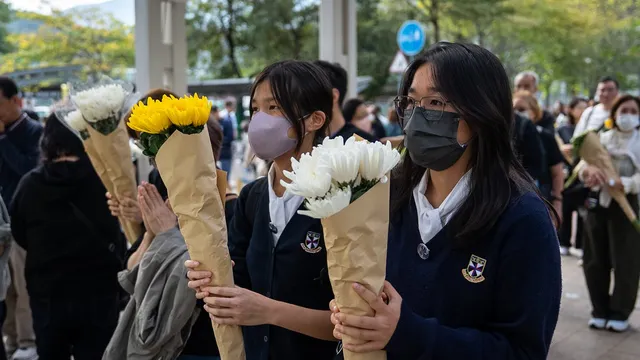
In a tragic incident in Hong Kong, a devastating apartment fire occurred, claiming at least 146 lives and rendering thousands homeless. The fire began on a Wednesday, engulfing seven of the eight apartment towers within the complex, which housed around 4,600 residents. Following the calamity, a significant wave of support emerged, leading to donations reaching approximately 900 million Hong Kong dollars (around 115 million US dollars). This sum reflects a collective outpouring of sympathy and assistance to help those affected by the disaster. Local officials have initiated efforts to help victims find housing, cover funeral expenses, and rebuild their lives. Amidst this tragedy, several K-pop bands, including aespa, made notable contributions to the relief efforts. aespa pledged to donate 500,000 Hong Kong dollars (about 64,000 US dollars) to the Hong Kong Red Cross, expressing their profound sorrow over the incident. SM and JYP Entertainment, major players in the South Korean entertainment industry, combined to donate 3 million Hong Kong dollars (approximately 385,000 US dollars) for emergency relief. Other K-pop groups, such as Riize, EXO-CBX, and KickFlip, also joined the efforts, donating lesser amounts through charitable organizations. The situation surrounding the fire has raised serious concerns and questions regarding safety protocols at the site, especially given previous complaints from residents about renovations and adherence to fire codes. Investigations revealed that authorities had conducted multiple inspections in the year leading up to the fire, yet issues remained unaddressed. Subsequently, the Hong Kong anti-corruption agency arrested 11 individuals, including directors of the construction company involved, indicating a probe into potential negligence that contributed to the fire's severity. As public anger grows, scrutiny is also directed toward government officials and the effectiveness of their responses to public safety. While a memorial was established for the victims, authorities are grappling with public dissatisfaction and unrest. The Hong Kong government has been criticized for its perceived lack of accountability in managing such hazards, alongside new accusations of stifling dissent against those questioning the government's role in the incident. This move has drawn a parallel to the intensifying crackdown on protests in the region, reminiscent of events that unfolded in 2019. The financial aid raised for the victims and ongoing investigations into government actions and building safety reveal a complex interplay between civic response and governmental accountability in the wake of this tragedy.

Context

The fire safety regulations in Hong Kong are a crucial element of the city's infrastructure, designed to ensure the safety of its residents and the protection of property. These regulations are governed by the Fire Services Department and are influenced by international best practices alongside local requirements. A comprehensive set of codes outlines standards for building safety, emergency exits, fire prevention, detection systems, and firefighting measures. It is imperative that all structures comply with these regulations, which are continuously updated to address emerging fire risks and advancements in technology. In Hong Kong, stringent enforcement of fire safety codes is mandated, particularly in high-rise buildings and densely populated areas. This is due to the unique challenges posed by urban density, where fire hazards can escalate rapidly. For instance, the Buildings Ordinance and the Fire Services Ordinance play critical roles in setting protocols for fire safety measures, including mandatory fire drills, accessible emergency routes, and installation of fire suppression systems. Regular inspections are conducted by the Fire Services Department to ensure compliance and to provide guidance and training on emergency preparedness for both building managers and occupants. Community awareness and education are also significant components of the fire safety framework in Hong Kong. The government and various organizations conduct outreach programs to raise awareness among citizens about fire hazards, the importance of fire safety equipment, and appropriate responses in case of a fire. This grassroots involvement is vital to fostering a culture of safety that extends beyond mere regulatory compliance. Furthermore, the inclusion of fire safety training in educational institutions equips the younger population with knowledge that can protect them and their families. Lastly, the evolving landscape of fire safety regulations reflects the need for adaptability in response to new challenges such as climate change and the development of smart building technologies. The growing number of potential hazards necessitates ongoing research and development of innovative solutions to enhance fire safety measures. Continuous dialogue among stakeholders, including government agencies, the construction industry, and the public, is essential to promote better practices, ensure the effectiveness of fire regulations, and ultimately safeguard the lives and properties of Hong Kong's inhabitants.

2026 All rights reserved
