

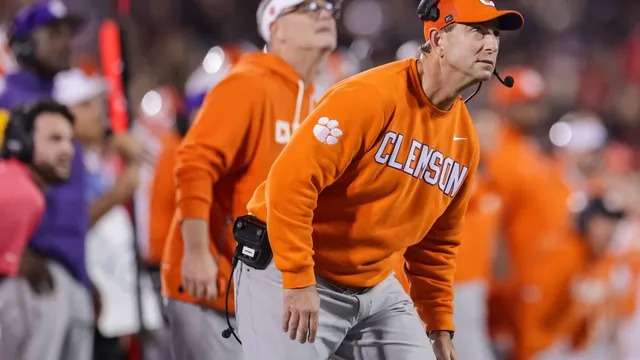
Dabo Swinney accuses Ole Miss of tampering with player recruitment
Dabo Swinney accuses Ole Miss of tampering with player recruitment
- Dabo Swinney accused Ole Miss coach Pete Golding of contacting linebacker Luke Ferrelli while he was enrolled at Clemson.
- Golding allegedly offered Ferrelli a deal starting at $1 million, which was raised to $2 million.
- This incident has prompted an NCAA investigation into tampering practices in college football.
Story
Clemson head coach Dabo Swinney recently made serious allegations against Ole Miss and its coach Pete Golding regarding tampering with linebacker Luke Ferrelli. Swinney claimed that Golding contacted Ferrelli while he was enrolled at Clemson, even after the player had signed a commitment to the Tigers. Swinney indicated that Ole Miss offered Ferrelli a lucrative contract, starting at $1 million, and then raised it to $2 million in attempts to lure him away from Clemson. This situation has ignited a controversy in college football and has drawn the attention of the NCAA. The timeline of events indicates that Ferrelli committed to Clemson on January 6 and began classes at the university. However, by January 22, he had entered the transfer portal and subsequently agreed to transfer to Ole Miss. Swinney's accusations included specific details where Golding texted Ferrelli asking for his buyout from Clemson, which raised concerns about the legality of Ole Miss's conduct under NCAA rules. The allegations suggest a systemic issue regarding recruitment ethics in college football. Responses from both the NCAA and Clemson indicate that the situation is taken seriously, with the NCAA claiming it would investigate the allegations thoroughly. Swinney addressed the media, wanting accountability in college football, emphasizing that if rules exist against tampering, there should be consequences. He referenced the hypocrisy and poor governance he perceives in current NCAA practices and expressed his frustration over how tampering practices undermine the integrity of the sport. The situation was exacerbated when it was revealed that Ferrelli's agent suggested to Clemson that they increase their offer to win the player's loyalty in light of Ole Miss's actions. Swinney made it explicit that he is willing to protect his players from tampering and highlighted the need for reform in NCAA policies regarding player recruitment and transfer protocols. He argued that without reform, players risk making hasty decisions that could impact their long-term futures negatively.
Context
The NCAA's rules on tampering and enforcement are critical in maintaining the integrity of college sports and ensuring fair competition among student-athletes. Tampering, defined as any attempt by a coach or athletics representative to recruit a student-athlete who is legally committed to another institution, poses a significant threat to the established order of collegiate athletics. To combat this, the NCAA has implemented clear guidelines and penalties aimed at deterring such practices. These rules are designed to protect the commitment of student-athletes to their respective institutions and uphold the principles of fair play and sportsmanship within college sports. Enforcement of these tampering rules is a crucial aspect of the NCAA's regulatory framework. Institutions found to be engaging in tampering face various repercussions, which may include loss of scholarships, probation, and in severe cases, disqualification from postseason play. The NCAA has established a reporting system for violations, encouraging both institutions and individuals to come forward with evidence of tampering. This proactive approach extends to monitoring communication between coaches and recruits, thereby ensuring compliance with NCAA bylaws. The association continuously reviews and updates its tampering rules to address emerging issues and maintain fairness across all sports. Moreover, education plays an essential role in mitigating tampering incidents. The NCAA promotes awareness among coaches, student-athletes, and institutions regarding the consequences of tampering and the importance of ethical recruiting practices. Workshops and informational sessions help reinforce the message that adhering to established rules fosters a level playing field and enhances the overall reputation of college athletics. By prioritizing education on these matters, the NCAA strives to cultivate an environment where all stakeholders understand their responsibilities and the impact of their actions. In recent years, the dialogue surrounding tampering has intensified, especially with the rise of the transfer portal and the changing landscape of college sports. As institutions adapt to these changes, the NCAA remains committed to ensuring that tampering does not undermine the student-athlete experience. By enforcing stringent rules and fostering a culture of compliance, the NCAA aims to protect both the integrity of its competitions and the well-being of student-athletes, ensuring that they can compete in a fair and equitable environment.


