

U.S. military kills Iranian plotter against Trump
U.S. military kills Iranian plotter against Trump
- On March 4, 2026, the U.S. military killed an Iranian official linked to a plot to assassinate Donald Trump.
- This strike was part of broader military operations against Iran amid ongoing tensions.
- The incident highlights the escalating threats between Iran and U.S. figures, including several assassination plots against Trump.
Story
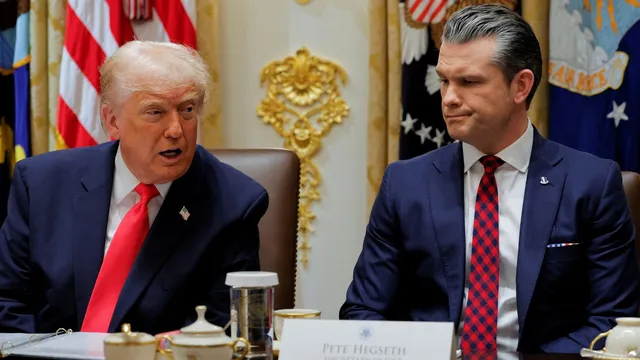
In early March 2026, U.S. Defense Secretary Pete Hegseth announced that the U.S. military had conducted strikes in Iran, resulting in the death of an Iranian official linked to a 2024 plot to assassinate then-President Donald Trump. This news surfaced during an increased military engagement between the United States and Iran, subsequent to a joint operation with Israel that killed Iran's Supreme Leader Ayatollah Ali Khamenei. Hegseth remarked that while the elimination of the assassination plotter was not the focal point of the operation, it symbolized a significant moment in the ongoing conflict between the two nations. The attempt to assassinate Trump was reportedly orchestrated by members of Iran's Islamic Revolutionary Guard Corps (IRGC), amid threats against U.S. officials during Trump's presidency as tensions escalated following the assassination of IRGC commander Qassem Soleimani in January 2020, an act sanctioned by Trump. In conjunction with the military operations, U.S. intelligence agencies had uncovered threats to Trump prior to the elections, prompting heightened security details for the president-elect in 2024. Furthermore, the context of the assassination plots involves arrests of numerous individuals, including Farhad Shakeri, who was charged with conspiracy to commit murder and planning to surveil Trump per directives from the Iranian regime. Asif Merchant, a Pakistani national alleged to be involved in a separate murder-for-hire scheme also linked to Iran, faced federal charges in a New York court for conspiring to kill U.S. politicians, including Trump. Merchant was arrested before he could execute any plans and was said to have connections with the IRGC, further illustrating the ongoing threats posed by Iran to U.S. figures. The unfolding events raised discussions around the legality of military actions undertaken by the U.S. government without congressional approval and the implications of such operations on international relations, especially concerning Iran. Increasing military actions alongside diplomatic tensions have created uncertainty about the future national security landscape, as accusations from Iran of assassination plots and retaliatory actions continue to shape the narrative in U.S.-Iran relations.
Context
The history of assassination plots against U.S. presidents is marked by a series of attempted killings that reflect the political tensions and social issues of their respective eras. The first successful assassination of a U.S. president occurred in 1865 with Abraham Lincoln, who was shot by John Wilkes Booth, a Confederate sympathizer. This tragic event not only altered the course of American history but also foreshadowed future threats to presidential safety. Subsequent plots arose throughout the late 19th and early 20th centuries, including attempts on the lives of presidents such as James Garfield and William McKinley, who both fell victim to assassins motivated by personal grievances and ideological disputes. Notably, McKinley was assassinated in 1901 by an anarchist, underscoring the growing fears of political extremism during this period. In the mid-20th century, the assassination of John F. Kennedy in 1963 became one of the most significant and defining moments in American history. Shot while riding in a motorcade in Dallas, Texas, the event shocked the nation and led to widespread conspiracy theories regarding the motive behind the assassination. Lee Harvey Oswald was arrested for the crime, but his murder two days later by nightclub owner Jack Ruby only fueled speculation and doubt regarding the official narrative. This period also saw other plots against presidents, with figures such as Richard Nixon facing threats related to the polarization of the Vietnam War and domestic unrest. The complexities of these threats heightened the need for more comprehensive security measures. Despite advancements in security protocols, the late 20th and early 21st centuries witnessed further assassination attempts against U.S. leaders, including plots against Ronald Reagan in 1981, where he survived an attack by John Hinckley Jr., an individual who believed he was trying to impress actress Jodie Foster. This attempt highlighted the intersections of celebrity culture and mental health issues within the landscape of political violence. Additionally, security concerns expanded as the U.S. faced new global threats, leading to heightened vigilance around presidential safety, especially post-September 11, 2001, when the risks of terrorism became a central focus for national security agencies. Throughout these various events, the recurring theme of political discontent and personal animus against the presidency underscores the volatile relationship between leaders and those who oppose them. The evolution of threats against U.S. presidents prompts an ongoing discussion about the balance between safeguarding the office and addressing the root causes of political violence. It is crucial for current and future administrations to remain aware of historical patterns of assassination and attempt plots in order to cultivate a safer political environment. The far-reaching impact of these events continues to resonate through American society, informing our understanding of political dissent, security measures, and the necessity of protecting democratic institutions.


