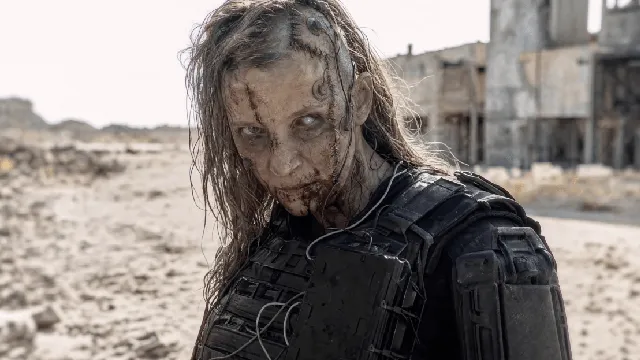
On July 20, 2026, Neill Blomkamp, known for his work on District 9 and Gran Turismo, released a new project titled Nightborne, a 13-minute sci-fi short film. This film is loosely based on Peter Watts' 2014 novel Echopraxia and is produced by Blomkamp's AI startup, Barley Studios. The short features characters whose voices and faces are modeled after human actors, showcasing the capabilities of generative AI in filmmaking. Blomkamp described Nightborne as a 'test start' to demonstrate what generative AI can achieve, with aspirations to create a full feature film in this format in the future. Despite the involvement of a team of real people in the production, the film has been criticized for its lack of coherence and artistic value. Critics have noted that Nightborne feels more like a collection of disjointed video clips rather than a cohesive narrative. The film's visuals and audio reveal significant limitations of generative AI, with nonsensical background signs and unnatural character performances. Although 32 human actors contributed their likenesses to the project, the human input appears insufficient to elevate the film beyond its machine-generated roots. The narrative of Nightborne, which involves military repurposing of deceased individuals for labor, serves as a commentary on the ethical implications of generative AI technology. This aspect of the story draws parallels to the motivations of those advocating for the use of such technology, highlighting a desire for cheap labor reminiscent of the film's villains. Overall, while Blomkamp may have hoped for positive reception, Nightborne has instead drawn comparisons to other unsuccessful AI-generated projects, indicating a challenging road ahead for the integration of AI in creative industries.