

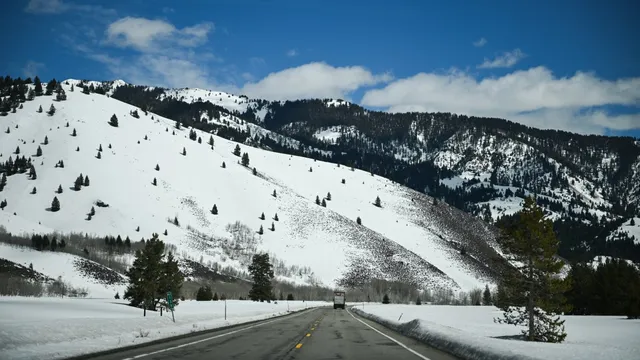
Severe winter storm threatens lives with heavy snow and ice across the US
Severe winter storm threatens lives with heavy snow and ice across the US
- The National Weather Service forecasts heavy snowfall and strong winds across several U.S. states.
- California may receive up to 8 feet of snow in certain areas, creating dangerous visibility conditions.
- Travelers are advised to take precautions and be prepared for life-threatening conditions during this winter storm.
Story
As of December 25, 2025, a significant winter storm system has impacted several regions across the United States, causing hazardous weather and dangerous travel conditions. The National Weather Service has emphasized the potential for life-threatening situations due to the heavy snowfall and strong winds accompanying this storm. States notably affected include California, Maine, New Hampshire, Idaho, and Alaska, where accumulations of snow range vastly, with decent snowfall expected in urban areas leading to serious travel challenges. In California, areas such as Yosemite National Park are poised for severe weather, forecasting between 4 and 8 feet of snow, particularly at elevations above 6,000 feet, with dangerously high winds approaching 100 mph. The National Weather Service has alerted drivers that the conditions could create whiteout scenarios, significantly reducing visibility. Communities in the Greater Lake Tahoe area could see up to 5 feet of snow, and these tempestuous conditions are expected to last until the early hours of December 26. Further, in the Northeast, states like Maine and New Hampshire are likely to experience accumulations up to 14 inches, coinciding with high winds, which will contribute to extremely dangerous travel conditions. Forecasts suggest that continued snow and ice could affect commuting and holiday travel disproportionately, potentially stranding drivers and passengers. The conditions are being labeled critical by the National Weather Service, which urges significant caution, especially for those traveling during this peak holiday period. Idaho and Alaska are also bracing for heavy snows, with predictions of up to 3 feet of snow in specific areas above 6,500 feet in Idaho. Meanwhile, parts of Alaska expect between 1 and 14 inches of snow, highlighting the widespread and severe nature of these winter conditions. Authorities have made clear that travelers should be exceptionally careful, advising them to carry emergency supplies in their vehicles to better prepare for potential accidents or delays as a result of the storm's impact.
Context
Winter storms have been a significant aspect of the United States' climate history, often resulting in considerable impacts on society, economy, and infrastructure. These storms can produce a range of severe weather phenomena, including heavy snowfall, ice accumulation, and blizzard conditions. Historical records illustrate the devastating nature of such events, beginning with notable storms like the Great Blizzard of 1888, which affected the East Coast, paralyzing cities and resulting in substantial casualties. More recent storms, such as the winter storm that hit the Eastern U.S. in February 2021, also demonstrated the potential for widespread disruption and economic loss, with millions experiencing power outages and travel delays. Understanding these events is essential for preparing for future winter storms and mitigating their impacts on communities. Numerous factors contribute to the severity and frequency of winter storms across the United States, including geographical variations and climatic trends. Regions such as the Northeast and the Midwest are particularly susceptible to intense winter weather due to their proximity to cold air masses and moisture sources. The interaction of these elements can lead to severe snowstorms and ice storms that significantly impact daily life. Climatological studies suggest that patterns such as La Niña and El Niño can influence winter storm behavior, affecting long-range forecasting and storm prediction efforts. Enhanced understanding of these patterns can help improve preparedness and response strategies. In addition to immediate effects, historical winter storms have also shaped federal and state responses to emergency management. For instance, the Federal Emergency Management Agency (FEMA) has adapted its strategies based on past winter storms' challenges and successes. The response to snowstorms now incorporates better forecasting technologies, improved communication protocols, and more comprehensive plans for resource allocation. Learning from the past helps agencies negotiate the demands of managing emergency services during intense winter weather, thereby reducing the loss of life and property. Moreover, as climate change continues to evolve, the characteristics of winter storms are likely to change as well. Studies show that warmer air holds more moisture, potentially increasing snowfall amounts during winter storms. This highlights the importance of continuously analyzing historical data and trends. By understanding how past winter storms have influenced the current landscape of emergency management and climate, communities can better prepare for future weather-related events. Thus, it is essential to document and study historical winter storms since they provide invaluable insights that can aid in enhancing resilience against future storms.


