

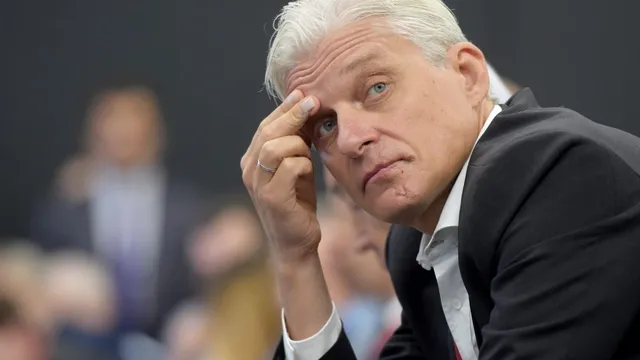
Oleg Tinkov loses $9 billion after denouncing war in Instagram post
Oleg Tinkov loses $9 billion after denouncing war in Instagram post
- In April 2022, Oleg Tinkov criticized the Russian invasion of Ukraine, calling it 'insane' in an Instagram post.
- Immediately after the post, Kremlin officials threatened Tinkov with nationalization of Tinkoff Bank if he did not sell his stake.
- Tinkov lost nearly $9 billion, selling his stake for only 3% of its true market value.
Story
In April 2022, Oleg Tinkov, a prominent Russian banker and founder of Tinkoff Bank, publicly criticized the Russian government's invasion of Ukraine through an Instagram post. He condemned the war as 'insane', highlighting his belief that 90% of Russians opposed it and calling for an end to the conflict. This sparked a rapid response from Kremlin officials, who threatened Tinkov with nationalization of his bank if he did not sell his stake in TCS Group, the parent company of Tinkoff Bank, which he owned approximately 35% of. Forced under duress, Tinkov's participation in the decision-making process was stripped away, and he had to accept an offer that valued his stake at only about 3% of its true market worth. As a result, he lost nearly $9 billion that he had accumulated over decades in business. The deal was made with a company linked to Vladimir Potanin, a major player in Russia's metals industry. Following the forced sale, Tinkov renounced his Russian citizenship and left the country, becoming one of the few high-profile businessmen to openly disagree with the Kremlin's actions regarding the war. His actions underline the severe repercussions faced by wealthy individuals in Russia who voice dissent against the government's decisions, particularly in wartime. Such incidents are part of a broader trend, wherein political loyalty has become essential for maintaining wealth and influence within the Russian elite, particularly as sanctions and wartime controls continue to shape the business landscape. Tinkov's situation reflects the atmosphere of fear and compliance that the Kremlin fosters among its oligarchs, resonating with the experiences of others like Mikhail Khodorkovsky, who faced severe consequences for challenging the government in the past.
Context
The ongoing conflict in Ukraine, ignited by Russia's military actions, has had far-reaching implications, particularly for the nation’s oligarchs. Historically, oligarchs in Russia have wielded immense influence, often acting as key players in the economy and politics. However, the war has disrupted traditional power dynamics and significantly impacted their wealth and status. The imposition of international sanctions, aimed at crippling the Russian economy and freezing assets, combined with domestic pressures to support the war, has led to a precarious situation for these elites. Many oligarchs have seen their fortunes systematically eroded, as the western sanctions target industries where they hold significant stakes including energy, metallurgy, and finance. Moreover, their ability to conduct international business has been heavily restricted, further destabilizing their financial positions. Furthermore, the conflict has instigated a shift in the balance of power within Russia itself. While some oligarchs have fled abroad, seeking refuge from the increasingly hostile political environment, others have aligned more closely with the Kremlin in a bid for survival. This shift has cultivated a new wave of loyalty among the oligarchs toward Vladimir Putin's government, with many choosing to reinvest their dwindling resources to pave a path for themselves within the current regime. This behavior illustrates a key strategy among a subset of oligarchs to insulate themselves against future hardships by gaining favor with the state. However, this strategy comes with its own risks, as the political landscape remains murky, breeding uncertainty regarding who will remain on top as the conflict unfolds. The war has also revealed the vulnerabilities of the oligarchs, exacerbating fractures among them. Tensions have shifted dramatically as some oligarchs find themselves at odds with one another over resources and access to state contracts. As the government increasingly relies on the oligarchs for military and economic support, competition is likely to heighten, potentially leading to rifts within the elite. This shift not only threatens their traditional alliances but could also lay the groundwork for conflicts that may alter the oligarch landscape in Russia for years to come. The dichotomy between self-preservation and loyalty to the state presents a complex challenge for these business magnates. In conclusion, the impact of the Russian war on oligarchs has been profound and multifaceted. As their wealth is threatened, their partnerships evolve, and their political alignments are tested. The ongoing conflict poses existential questions for Russia's elite, with potential ramifications that may redefine their roles within the Russian economy and political sphere. The future remains uncertain as these oligarchs navigate a rapidly changing environment, where both opportunity and peril abound. This period of upheaval not only challenges the established order but may ultimately shape a new generation of leadership within Russia's oligarchic system.


