

US warns citizens to leave Iran amid rising safety threats
US warns citizens to leave Iran amid rising safety threats
- The U.S. Virtual Embassy in Iran advised American citizens to leave the country immediately amid escalating unrest.
- Significant risks include terrorism, arbitrary arrest, and questioning by Iranian authorities.
- The situation necessitates a heightened alert for U.S. nationals, culminating in the urgent travel advisory.
Story
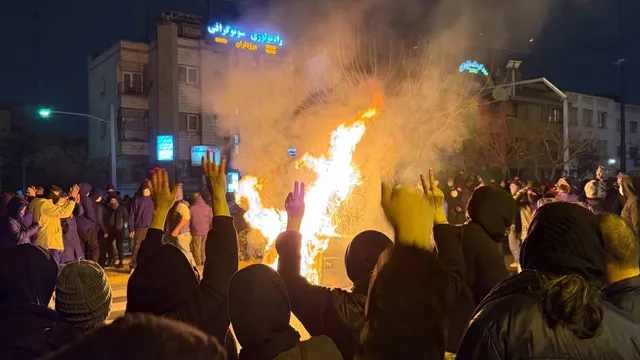
In Iran, tensions have been escalating, prompting the U.S. Virtual Embassy to issue an urgent warning to American citizens to leave the country immediately. This action comes amid reports of significant unrest and anti-regime protests across Iran that have resulted in thousands of deaths. The U.S. government has expressed concern over the safety of its citizens, reiterating a previous travel advisory classified as Level 4, which advises against traveling to Iran due to serious risks such as terrorism, arbitrary arrests, and wrongful detentions. Travelers are reminded that they may face questioning and detention by Iranian authorities, especially if they display connections to the U.S. government. In light of ongoing unrest, the advisory suggests alternative means of communication apart from the internet, citing expected internet outages and disruptions in public transportation. The warning extends to recommending land routes for departure, notably via Armenia or Turkey, where specific border crossings are open. U.S. citizens may stay in Turkey visa-free for up to 90 days, offering a potential escape route. Additionally, it is noted that Turkmenistan's borders with Iran are open but require prior authorization from local authorities, and that Americans should avoid travel to Afghanistan or the border areas between Pakistan and Iran. The U.S. has emphasized that its ability to guarantee the safety of American citizens remains compromised due to a lack of formal diplomatic relations following the 1979 Iranian Revolution. This situation has led the U.S. to rely on a virtual embassy to communicate with its citizens in Iran. Notably, any inquiries of U.S. citizens in Iran by Iranian authorities can lead to significant legal and safety challenges. This travel advisory by the U.S. State Department highlights the broader geopolitical tensions between Washington and Tehran, particularly in light of military buildups in the Middle East, including the deployment of a U.S. aircraft carrier group in the Persian Gulf. President Donald Trump has warned of military action should the situation in Iran continue to deteriorate. Ongoing diplomatic discussions further enhance the complexities of the interactions between the two countries, as U.S. officials seek to negotiate key issues regarding Iran's nuclear program and its support for proxy groups. Various factors contribute to the urgency of this advisory, including internal political risks and external military threats, impacting the safety of U.S. nationals in Iran.
Context
The diplomatic relations between the United States and Iran have been marked by tension and conflict since the 1979 Iranian Revolution, which resulted in the overthrow of the U.S.-backed Shah and the establishment of an Islamic Republic. The subsequent seizure of the U.S. Embassy in Tehran and the holding of American hostages for 444 days provoked a severe breakdown in relations. This event not only galvanized U.S. policy against Iran but also set the stage for decades of antagonism. The U.S. imposed economic sanctions on Iran, aiming to limit its influence in the region and curb its nuclear ambitions. These sanctions have often been a focal point of contention in diplomatic discussions, with the U.S. asserting they are necessary for national security, while Iran views them as unjust and crippling to its economy. In the early 21st century, the nuclear issue became central to U.S.-Iran relations. The Joint Comprehensive Plan of Action (JCPOA), negotiated under the Obama administration in 2015, was initially seen as a breakthrough. It offered Iran relief from sanctions in exchange for limits on its nuclear program, which the U.S. and its allies feared could lead to the development of nuclear weapons. However, the U.S.'s withdrawal from the agreement in 2018 under President Trump marked a significant reversal in policy and intensified hostilities. Iran responded by gradually rolling back its compliance with the JCPOA, leading to increased tensions in the region, including military confrontations and incidents involving attacks on shipping in the Persian Gulf. The Biden administration has expressed a desire to re-enter the JCPOA and engage diplomatically with Iran, but talks have been fraught with challenges. The delicate regional balance, along with issues such as Iran's missile program, regional proxies, and human rights situation, complicates negotiations. Both nations face internal pressures that influence their foreign policies. In Iran, hardline factions exert considerable influence on decision-making, making it difficult for more moderate voices to advocate for rapprochement. In the U.S., bipartisan support for a tough stance on Iran persists, with concerns over Iran's regional activities undermining diplomatic overtures. As of 2026, U.S.-Iran relations remain strained, characterized by a complex interplay of diplomacy, regional dynamics, and national identity. The potential for future negotiations exists, but they are often overshadowed by historical grievances and geopolitical maneuvering. Shifts in U.S. domestic politics, changes in leadership within Iran, and broader regional developments in the Middle East will likely continue to shape the trajectory of these pivotal relations. The ongoing need for a coherent and sustainable diplomatic strategy underlines the importance of resolving longstanding issues while addressing mutual concerns to foster stability in the region.


