

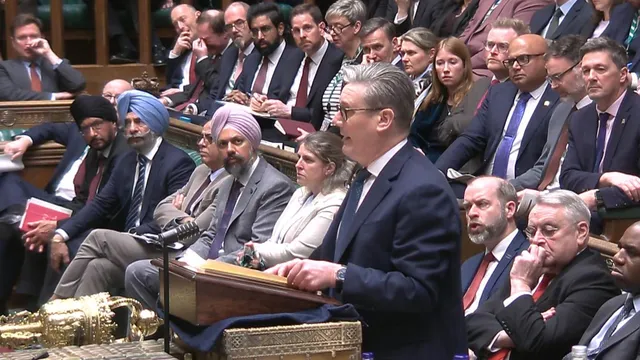
Starmer defies Trump by refusing to join strikes on Iran
Starmer defies Trump by refusing to join strikes on Iran
- Prime Minister Sir Keir Starmer announced he will not support US and Israel's strikes on Iran, emphasizing Britain's national interest.
- Starmer faced criticism from US President Donald Trump for his stance, yet maintained the necessity of a lawful basis for military action.
- The decision reflects longstanding complexities in the UK-US special relationship, highlighting a cautious approach to foreign military engagement.
Story
In a significant political stance taken in the United Kingdom, Prime Minister Sir Keir Starmer announced his decision not to partake in military strikes on Iran conducted by the United States and Israel. This decision was articulated during a session in the House of Commons, where Starmer aimed to provide clarity on Britain's involvement in the ongoing Middle Eastern conflict. Starmer emphasized the importance of determining what serves Britain's national interests and underscored the necessity for a lawful basis and a viable plan for military engagement. Starmer's refusal to join the offensive has sparked criticism from US President Donald Trump, who expressed dissatisfaction regarding Britain's position. The Prime Minister defended his approach by stating that historical lessons teach the importance of a structured plan in international military actions. His decisions over the weekend included two key actions: abstaining from the strikes while permitting US planes to conduct defensive operations from UK bases. Starmer stressed that these actions align with a cautious and principled strategy and reaffirmed his belief in maintaining the UK's sovereignty over military decisions. Despite facing backlash from some British lawmakers who accused him of indecisiveness, Starmer's position reflects a complex balance between supporting the longtime ally, the US, and acting in the best interest of the UK. Kemi Badenoch, an opposition leader, criticized Starmer’s supposed hesitation, while others questioned the rationale behind the strikes. The apparent strain in the US-UK special relationship also adds context to this political maneuver. Starmer's stance mirrors historical tensions between the US and UK regarding military interventions. Emphasizing a diplomatic approach, Starmer noted that the belief in regime change via aerial attacks is not a viable solution. This perspective highlights a growing sentiment among European leaders as they grapple with the ramifications of military operations within the region. Ultimately, Starmer's actions signify a re-evaluation of the UK's role in international conflicts, as he navigates between maintaining international alliances and prioritizing national interests.


