
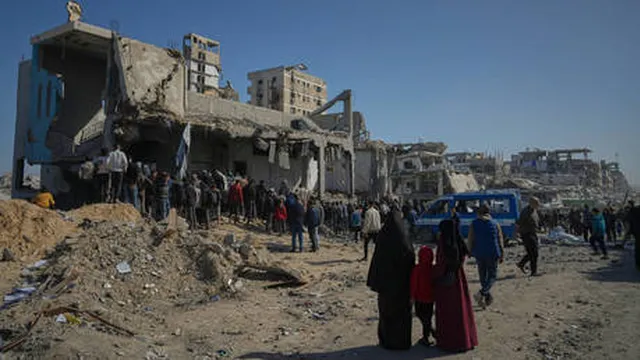
Death toll surpasses 600 in ongoing Gaza conflict despite ceasefire
- Palestinian Ministry of Health reported 603 deaths in Gaza since the ceasefire began on October 11, 2025.
- Ongoing Israeli airstrikes have violated the ceasefire, with claims of targeting Hamas activity along military boundaries.
- Humanitarian concerns grow over the impact of conflict on civilians and the need for international intervention.
Story
In Gaza, the ongoing airstrikes by the Israeli Defense Forces (IDF) have led to significant casualties among Palestinians, with local health officials reporting 603 deaths and over 1,600 injuries since a ceasefire took effect on October 11, 2025. The situation worsened on February 17, 2026, as Israeli airstrikes continued, reportedly targeting areas where displaced families sought refuge. Reports indicate that many bodies remain undiscovered under rubble due to the dangerous conditions for rescue teams. The ongoing violence has raised serious concerns among humanitarian organizations over the rights and safety of civilians in Gaza. The DN Israeli military justified the strikes by stating they were responses to ceasefire violations by Hamas, claiming to have acted in accordance with international law. An Israeli official asserted that terrorist activities were observed near a designated military boundary, known as the 'Yellow Line', which prohibits Palestinians from accessing large portions of Gaza. Critics argue that the IDF's operations along this boundary constitute violations of the declared ceasefire. Local media coverage highlights an alarming escalation of post-ceasefire killings predominantly occurring in areas along this no-go zone. As the violence and casualties escalate, the United States has taken a stance to broker peace in the region through a newly established body called the 'Board of Peace', which is set to hold its inaugural meeting on February 19, 2026. This initiative aims to oversee reconstruction efforts and manage political transitions in Gaza. Despite invitations sent to numerous foreign leaders to join the Board of Peace, notable European countries have declined participation, while Russia is currently reviewing its option. The environment remains volatile, as changes in governance and security protocols are being negotiated without a full ceasefire. Advocates for Palestinian rights are raising alarms about the disproportionate impact of the ongoing conflict on civilians and the humanitarian crisis that is unfolding in Gaza. With aid organizations unable to reach certain areas due to ongoing violence, many fear that the death toll will continue to rise unless immediate steps are taken to restore peace and protect civilian lives. The international community faces pressure to intervene and address the worsening situation, as the consequences of the violence extend beyond Gaza, impacting broader regional stability and international relations.
Context
The Israel Hamas conflict has continued to shape the geopolitical landscape of the Middle East, influencing not only regional stability but also global politics. As we enter 2026, the conflict persists as a significant and complex influence on the societies of both Israel and Palestine, with violence erupting sporadically despite various peace initiatives over the years. The humanitarian impact in Gaza remains dire, with ongoing blockades resulting in limited access to essential resources such as food, water, and medical care. The international community has consistently called for a renewed focus on negotiations, emphasizing a two-state solution as a path toward long-lasting peace. However, skepticism about the feasibility of such solutions has grown, particularly in light of continued settlement expansion in the West Bank and the intricate political realities on the ground. Hamas, designated as a terrorist organization by many countries, including the United States and the European Union, continues to assert its prominence in Palestinian politics, despite facing significant internal and external pressures. The organization's military capabilities have evolved, leading to escalated conflicts and increased civilian casualties during flare-ups. Meanwhile, Israel maintains a strong military presence in response to security threats, which has exacerbated tensions and resulted in further humanitarian crises. The cycle of violence impacts both sides, with civilian populations caught in the crossfire, contributing to a cycle of retaliation that defies a peaceful resolution. In recent developments leading up to 2026, there have been signs of shifting dynamics. Efforts by regional players, such as Egypt and Qatar, to broker ceasefires and facilitate negotiations indicate a potential for change, although these efforts often face setbacks. The normalization of relations between Israel and several Arab states has also altered the landscape, prompting discussions on shared security interests while creating friction within the Palestinian territories regarding representation and recognition. Additionally, grassroots movements for peace and reconciliation are emerging, though they often struggle to gain substantial traction amid prevailing discord. As the situation develops, the engagement of the international community remains crucial. The United Nations and various humanitarian organizations continue to advocate for the protection of civilians and the provision of assistance to affected populations, emphasizing the need for political solutions over military approaches. In conclusion, the Israel Hamas conflict in 2026 reflects deeply rooted historical grievances and contemporary realities that complicate peace efforts. Achieving a sustainable resolution necessitates concerted efforts from local leadership, regional stakeholders, and the international community to address both the immediate humanitarian concerns and the broader political issues that fuel this long-standing conflict.
