

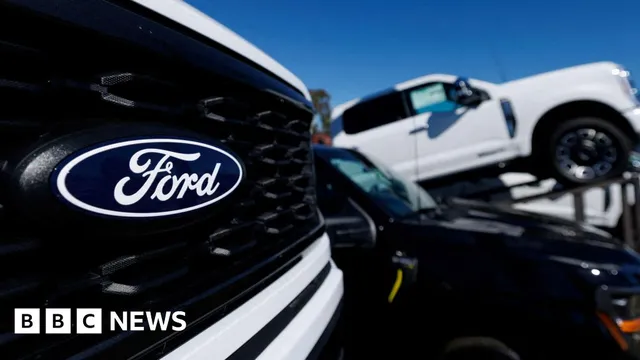
Ford halts electric vehicle plans amid significant losses
Ford halts electric vehicle plans amid significant losses
- Ford Motor Company is reducing its electric vehicle efforts due to significant financial losses.
- The company will focus on producing more profitable hybrid and gas-powered models instead.
- This strategic pivot aims to adapt to consumer demand and improve profitability.
Story
In recent months, Ford Motor Company has announced a dramatic shift in its approach to electric vehicles (EVs) in the United States. Faced with increasing financial losses and reduced consumer interest in electric models, the company decided to scale back its EV production plans significantly. This includes the cancellation of the fully electric F-150 Lightning, a once-promising vehicle that failed to meet production capacity expectations. As part of this strategic pivot, Ford will now focus on producing hybrid and gasoline-powered vehicles, which are expected to offer higher profit margins in the current market environment. The automaker has reported losses totaling approximately $13 billion in its EV sector since the beginning of 2023. Furthermore, Ford anticipates an additional financial setback amounting to $19.5 billion due to its changed strategy. CEO Jim Farley characterized this decision as a necessary response to an evolving market landscape, noting that the previously strong business case for large electric vehicles has diminished due to several factors, including regulatory changes and a lack of demand from consumers. Ford's shift reflects a broader trend in the automotive industry, as several manufacturers reevaluate their electric ambitions amidst similar struggles with consumer adoption rates. Analysts have indicated that EVs accounted for only about 8% of new vehicle sales in the U.S. last year, with various concerns like high prices and inadequate charging infrastructure inhibiting growth. President Donald Trump's administration has also played a role by rolling back previous incentives and stricter fuel economy regulations, further complicating the landscape for electric vehicle adoption in the country. Additionally, Ford plans to redirect investments toward its more profitable product lines, including trucks, vans, and hybrids, while also investing in its energy storage business. The company aims to increase its global volume of hybrids and extended-range EVs to 50% by 2030, shifting away from earlier, more aggressive electric-only targets. This calculated pivot showcases Ford's intent to remain competitive amid changing consumer demands and regulatory pressures.
Context
The US electric vehicle (EV) market has undergone significant transformations over recent years, achieving robust growth and establishing itself as a crucial component of the broader automotive industry by 2025. This momentum has been driven by various factors, including technological advancements, increased consumer demand, and supportive government policies aimed at reducing carbon emissions and promoting sustainability. Key players in the industry have expanded their offerings, providing consumers with a wider range of EV choices, ranging from compact cars to larger SUVs and trucks. The partnership between traditional automotive manufacturers and tech companies has further accelerated the development of innovative technologies such as battery improvements, autonomous driving features, and enhanced charging infrastructure, contributing to heightened consumer confidence and interest in EVs. A primary factor influencing the growth of the electric vehicle market is the declining cost of battery technology. The price of lithium-ion batteries has dropped significantly over the past decade, making electric vehicles more affordable and appealing to the average consumer. This trend is expected to continue as research and development efforts yield even more efficient batteries with longer ranges and shorter charging times. Additionally, the availability of federal and state incentives, such as tax credits and rebates, has encouraged consumers to transition from conventional gasoline-powered vehicles to electric alternatives, further solidifying the market's trajectory. The regulatory landscape has also played a critical role in the EV market's evolution. With stricter emissions standards being implemented across the nation, automakers are repositioning their strategies to align with the growing push for sustainable transportation options. Various states have set ambitious targets for EV adoption, aiming for substantial increases in registration rates as part of broader climate action goals. This creates a favorable environment for the development of infrastructure, including public charging stations, which is essential for addressing consumers' range anxiety and fostering widespread adoption of electric vehicles. Looking forward, the US electric vehicle market is poised to continue its upward trajectory. Projections suggest that EV sales will comprise a significant share of the overall automotive market in the coming years, led by continued consumer adoption and innovation. As manufacturers respond to consumer desires for environmentally friendly options and autonomous features, it is expected that electric vehicles will increasingly dominate the automotive landscape. A combination of sustained investment in infrastructure, advancements in vehicle technology, and collaborative efforts between the public and private sectors will be essential in realizing the full potential of this dynamic and rapidly evolving market.


