

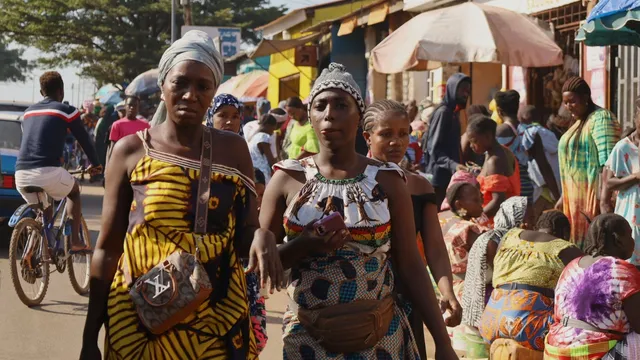
African Union suspends Guinea-Bissau following military coup
African Union suspends Guinea-Bissau following military coup
- Guinea-Bissau experienced a military coup on November 26, 2025, following disputed elections.
- The African Union has suspended Guinea-Bissau from its activities, citing zero tolerance for unconstitutional changes.
- International bodies, including ECOWAS and the United Nations, are actively seeking to mediate and restore constitutional order.
Story
Guinea-Bissau has faced significant political turmoil following a military coup that occurred on November 26, 2025, shortly after contentious presidential and legislative elections. Reports indicate that both the incumbent president, Umaro Sissoco Embaló, and opposition candidate Fernando Dias claimed victory in the elections held just days before the takeover, highlighting the contentious political landscape of the nation. The military seized power and announced a one-year transition period led by former army chief of staff, General Horta Inta-a. This situation has drawn the condemnation of both the African Union and the Economic Community of West African States (ECOWAS), which swiftly moved to suspend Guinea-Bissau from their decision-making bodies until constitutional order is restored. The African Union's decision to suspend Guinea-Bissau underscores its strict policy against unconstitutional changes of governance. This suspension prevents Guinea-Bissau from participating in the Union's activities until a lawful and democratic government is reinstated. The AU, through its Peace and Security Council, reaffirmed a zero-tolerance approach towards such changes, citing the necessity of maintaining political stability across the continent. Guinea-Bissau, known as one of the world’s poorest countries, has a history of political instability marked by numerous coups and attempts since its independence from Portugal over 50 years ago. ECOWAS has also taken measures in light of this coup, with a delegation arriving in Guinea-Bissau for talks aimed at encouraging the military leaders to restore constitutional governance. This delegation's visit aims not only to mediate but also to ascertain the situation on the ground following the coup, especially as the military government has banned demonstrations and activities perceived as threats to peace. Meanwhile, UN Secretary-General Antonio Guterres expressed alarm at these developments, stressing that the actions of the military constitute a blatant violation of democratic principles, as they disregard the results of the elections where citizens exercised their right to vote. As the situation continues to unfold, international observers remain concerned about the implications for Guinea-Bissau’s political landscape and the broader West African region. Historical patterns of instability raise alarms about the potential for violence or further political unrest as both governmental authority and order hang in the balance. The military government's commitment to a one-year transition and the appointment of a new government, mainly composed of allies of the deposed president, could further complicate efforts for consensus and a peaceful resolution to the ongoing crisis. The broader issues of governance, transparency, and development in Guinea-Bissau remain pressing, as the nation grapples with the consequences of corruption and challenges posed by its status as a drug trafficking hub connecting Latin America and Europe.
Context
Guinea-Bissau's history has been significantly marked by a series of coups and political instability that has shaped its current sociopolitical landscape. Since gaining independence from Portugal in 1973, the nation has faced a tumultuous journey fueled by power struggles and military influence over governance. The first major coup occurred in 1980 when João Bernardo Vieira, a former military officer, overthrew the ruling government, claiming a need to address economic issues and political mismanagement. This event set the tone for a volatile political atmosphere that would see several leaders deposed and re-emerge over subsequent decades. Throughout the 1990s and early 2000s, Guinea-Bissau experienced a sequence of coups, with Vieira returning to power in 1994 following democratic elections. However, the political scene was far from stable, as infighting among various factions within the military and political opposition often led to conflict. The 2000 coup led to the assassination of Vieira, which left a power vacuum and further destabilized the country. The subsequent struggle for power highlighted the ongoing influence of the military in the country’s politics, often serving as kingmakers or outright rulers. In 2012, another coup resulted in the ousting of the interim president, which was met with international condemnation but did little to change the underlying issues of military interference in politics. The cycle of coups has created a pervasive culture of impunity in Guinea-Bissau's political arena, resulting in weakened institutions and corruption that obstruct the democratic process. Efforts for reform have often been undermined by the constant threat of military intervention, with different factions within the armed forces continually vying for influence. The political instability in Guinea-Bissau has broader implications for its development and for regional security in West Africa. The nation's struggles with drug trafficking and its lack of economic opportunities have only exacerbated the fragility of its political environment. The international community has often called for stricter measures to promote stability, encouraging dialogue among political leaders to forge a consensus for governance without the shadow of military influence. Only by addressing the root causes of these recurring coups and fostering a culture of political accountability can Guinea-Bissau hope to achieve lasting peace and prosperity.


