

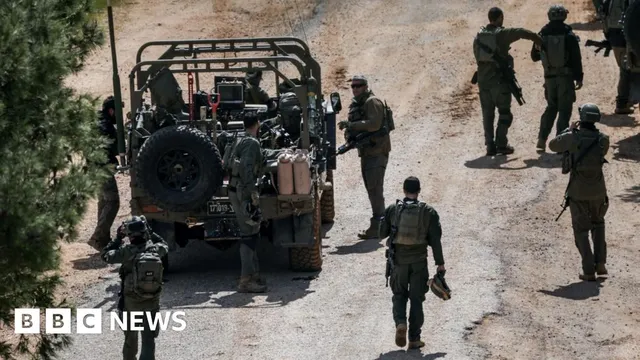
Israel launches limited ground operations against Hezbollah in Lebanon
Israel launches limited ground operations against Hezbollah in Lebanon
- Israeli military has begun limited ground operations targeting Hezbollah strongholds in southern Lebanon.
- Recent military actions have resulted in significant casualties, with reports of at least 850 deaths and 830,000 displaced individuals.
- The escalation of hostilities continues to draw international calls for a ceasefire, highlighting the urgent humanitarian crisis.
Story
Israel has initiated limited and targeted ground operations against the armed group Hezbollah in southern Lebanon as part of ongoing hostilities. This action followed a recent escalation marked by Hezbollah's missile and rocket fire, prompting Israeli military responses including airstrikes. As of March 16, 2026, strikes have reportedly claimed the lives of at least seven individuals, including two paramedics. Additionally, casualties from Israeli attacks have reportedly led to approximately 850 fatalities, including children, along with the displacement of around 830,000 people within Lebanon. Israeli media indicated that significant troop deployments are occurring, with three divisions mobilized alongside elite units like the Radwan Force, and two additional divisions expected soon. Israel's operations seem focused on areas south of the Litani River, approximately 30km from its border, aiming to dismantle Hezbollah's military capabilities. Notably, Israeli Defence Minister Israel Katz emphasized that displaced residents from southern regions would not be permitted to return until security is established in northern Israel. Hezbollah has also retaliated, launching missiles and drones targeting Israeli border towns in response to Israeli military actions. Reports indicate that Hezbollah has conducted shelling operations and missile strikes, further intensifying the conflict. The effectiveness and consequences of these hostilities have drawn international attention, leading to calls for a ceasefire from figures like UN Secretary General António Guterres and French President Emmanuel Macron, who proposed Paris as a venue for peace talks. While discussions concerning a ceasefire and disarmament of Hezbollah have emerged, the negotiations seem strained. Israeli cabinet officials have publicly stated that disarming Hezbollah is a non-negotiable condition, obstructing potential diplomatic resolutions. Consequently, the ongoing violence leads to increased humanitarian crises in affected areas, illustrating a complex geopolitical situation mired in violence with no immediate resolution in sight.


