
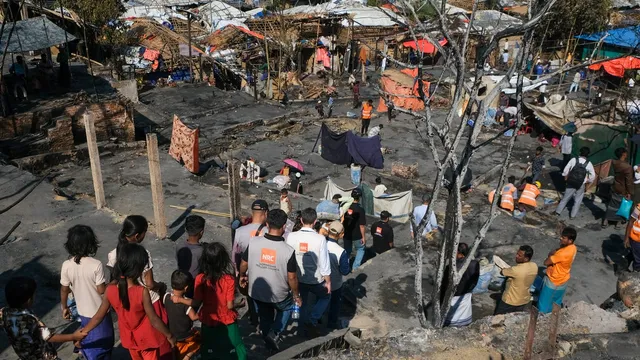
Fire devastates Rohingya refugee camp, displacing thousands
- A fire broke out in Camp 16 of Cox's Bazar, Bangladesh, affecting hundreds of shelters.
- The blaze displaced over 2,000 individuals and caused damage to essential camp services.
- Urgent action and increased funding are necessary to prevent future disasters in the overcrowded camps.
Story
In Bangladesh, a significant fire erupted recently in Camp 16, one of the many Rohingya refugee camps located in Cox's Bazar. This camp is part of the world's largest refugee center, which shelters over 1 million Rohingya who fled from Myanmar due to persecution. The fire broke out during the early morning hours of Tuesday, resulting in the destruction of hundreds of makeshift homes and displacing more than 2,000 individuals. Despite efforts, firefighters took around three hours to bring the blaze under control. Fortunately, there were no fatalities, although some sustained minor injuries, and numerous families lost all their belongings. The disaster not only wiped out shelters but also damaged essential services in the camp. Water and sanitation points, eleven learning centers, and vital pathway infrastructures were affected. The International Organization for Migration (IOM) called the event a new crisis for families already in dire conditions, highlighting the increased protection risks in overcrowded camps. Lance Bonneau, IOM Chief of Mission in Bangladesh, underscored the broader implications fires have in such settings, prompting calls for urgent international assistance to prevent future occurrences. The context surrounding the Rohingya crisis is rooted in significant political turmoil in Myanmar, notably since the military coup in February 2021, which has escalated violence and persecution against the Rohingya. The situation has led to ongoing conflicts in Rakhine State, exacerbating the humanitarian crisis as many more Rohingya have fled to Cox's Bazar. Previously planned constructions of semi-permanent housing structures have been stalled due to funding cuts from various nations, including the United States, leading to overcrowded conditions and heightened fire risks in the camps. In 2025, there was a reported funding gap of $466.6 million for addressing the needs of the Rohingya refugees. The delay or denial of necessary aid has severe consequences, as evidenced by the recurring disasters that force families to repeatedly rebuild their homes from scratch. With the lack of immediate action and support, situations like the recent fire in Camp 16 are likely to recur, which could lead to further loss of life and property. In an effort to respond to these urgent needs, organizations on the ground have begun constructing new temporary housing to shelter those affected by the blaze, alongside the immediate provision of food, clothing, sanitation services, and household items. The recent incident highlights the urgent requirement for increased humanitarian support to ensure the safety and survival of the displaced Rohingya community.
Context
The Rohingya refugee crisis, which has escalated significantly since 2017, has necessitated urgent aid funding to address the humanitarian needs of the displaced population. The Rohingya, an ethnically and religiously distinct group from Myanmar, have faced systematic persecution, leading to their mass exodus to neighboring countries like Bangladesh. This influx has placed immense pressure on the already limited resources of host countries, prompting calls for international assistance. The current funding landscape reveals a critical gap between the available resources and the projected needs of the Rohingya refugees, with millions still lacking access to basic necessities such as food, shelter, healthcare, and education. The international community must galvanize support to fill this funding shortfall and adequately support the refugees' plight. In response to the crisis, several organizations have mobilized resources, yet funding remains inadequate compared to the overwhelming scale of the needs. The United Nations and various NGOs have reported that, as of early 2023, less than half of the required funds had been secured for humanitarian operations in refugee camps across Bangladesh and other host nations. The funding deficiencies have led to the scaling back of vital services, exacerbating the suffering among the Rohingya population. Effective coordination among international aid organizations, donor countries, and local governments is crucial to ensure that the funds raised are utilized effectively and transparently to address the most pressing needs and vulnerabilities faced by the refugees. Moreover, political challenges complicate the funding dynamics, as geopolitical interests often overshadow the humanitarian imperatives. Efforts to secure long-term solutions must accompany immediate funding initiatives to foster self-reliance among refugees. Investing in education and vocational training can empower Rohingya individuals, potentially alleviating their dependency on aid in the long run. By addressing root causes such as poverty and lack of access to education, the international community can help build resilience within the displaced population, ultimately paving the way for integration and possible repatriation in the future. A multi-faceted approach is essential to ensure that aid funding not only meets immediate humanitarian needs but also lays the foundation for sustainable development for the Rohingya people. Engaging local communities and government authorities in Bangladesh and elsewhere will enhance accountability and ownership of the solutions implemented. Increased advocacy and awareness must drive further funding commitments from the international community to ensure that the plight of the Rohingya remains at the forefront of humanitarian agendas. Collaborative efforts, transparent communication, and long-term planning will ultimately define the success of funding initiatives aimed at alleviating the Rohingya refugee crisis.
