

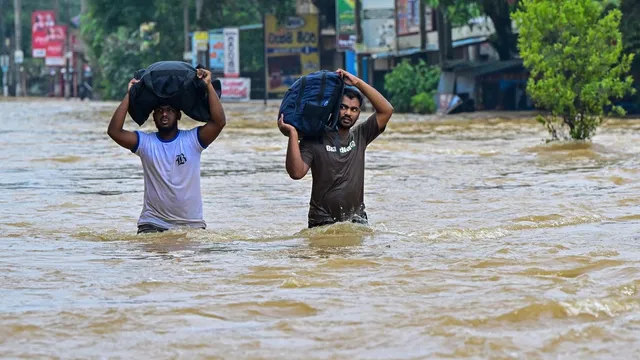
Cyclone Ditwah wreaks havoc, killing over 123 in Sri Lanka
Cyclone Ditwah wreaks havoc, killing over 123 in Sri Lanka
- Cyclone Ditwah caused severe flooding and landslides in Sri Lanka, leading to the death of at least 123 people and displacing thousands.
- India has initiated humanitarian assistance under Operation Sagar Bandhu to support the recovery efforts.
- The disaster underscores the vulnerability of Sri Lanka to severe weather, necessitating ongoing support and emergency preparedness.
Story
Sri Lanka has faced devastating consequences from Cyclone Ditwah, which has resulted in significant loss of life and widespread displacement. The storm, categorized as a tropical cyclone by the Indian Meteorological Department, formed off Sri Lanka’s east coast and struck the island nation, leading to both severe flooding and landslides due to intense rainfall. As rescue operations continue, the official death toll stands at 123, with many individuals reported missing. The impact of the cyclone has strained the country's resources, necessitating immediate humanitarian assistance and disaster relief efforts. The widespread destruction includes more than 15,000 homes destroyed and approximately 78,000 individuals currently in temporary shelters. With many areas rendered inaccessible due to blocked roads from landslides, rescue teams are struggling to reach remote villages. The Disaster Management Centre in Sri Lanka has reported that around 44,000 people have been displaced, with emergency shelters being established to accommodate the affected population. Government-thought actions included declaring a state of emergency to empower military and police mobilization for rescue efforts. India has swiftly responded, dispatching aid under Operation Sagar Bandhu to assist neighboring Sri Lanka in recovery efforts. This response reflects the strong maritime relationship between the two nations as India sends critical supplies to support the affected communities. Prime Minister Narendra Modi has expressed condolences to the victims, emphasizing the importance of solidarity in facing such natural disasters. While rain has subsided in some areas, parts of northern Sri Lanka continue to experience adverse weather conditions, affecting efforts to restore normalcy in the affected regions. The long-term consequences of the cyclone may affect the country’s agricultural yields and infrastructure, leading to economic challenges ahead. Local authorities continue to assess the situation as they endeavor to provide timely assistance to those in need as the recovery process unfolds.
Context
strategic global economic data global global trends geopolitical policy market trends impact shift shift shift strategic analysis trends market analysis policy economic market shift market economic market policy data data global impact data trends market data geopolitical economic economic insight global strategic economic strategic policy economic strategic policy market trends analysis impact market analysis shift analysis shift global impact insight trends shift impact data trends strategic data shift global strategic trends policy economic geopolitical data economic market market shift strategic...


