

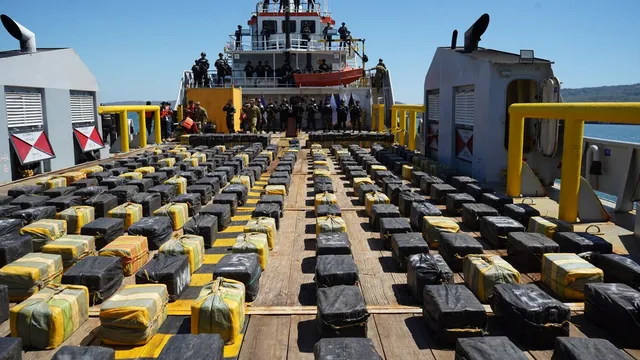
Mexico and El Salvador announce record cocaine seizures amid US military strikes
Mexico and El Salvador announce record cocaine seizures amid US military strikes
- El Salvador's navy seized a historic 6.6 tonnes of cocaine from a Tanzanian-registered boat.
- Mexico reported nearly four tonnes of cocaine seizures, supported by U.S. intelligence.
- These drug seizures occur amid controversial U.S. military strikes against drug trafficking boats, resulting in multiple casualties.
Story
In recent days, significant drug seizures have been reported by the navies of both El Salvador and Mexico, marking a key moment in the ongoing struggle against drug trafficking in Central America. This week, these nations collectively seized more than 10 tonnes of cocaine in the Pacific Ocean. On Sunday, El Salvador’s navy achieved a historic milestone with a seizure of 6.6 tonnes of cocaine, intercepted from a boat registered in Tanzania. The operation, conducted 380 miles southwest of the coast, resulted in the arrest of ten individuals from various countries, including Colombia and Nicaragua. On Thursday, Mexican authorities announced the seizure of nearly four tonnes of suspected drugs from a semisubmersible vessel located 250 nautical miles south of Manzanillo. Security Secretary Omar García Harfuch reported that the seizures were supported by intelligence collaboration with the U.S. Northern Command, elevating the weekly total of drug confiscations to almost 10 tonnes. However, no details were provided about additional seizures that contributed to this total. These drug operations come against the backdrop of increased U.S. military strikes targeting suspected drug traffickers in Latin American waters. Just this week, strikes by U.S. forces resulted in the deaths of 11 individuals on three boats believed to be carrying drugs. The nature of these strikes has sparked controversy, with Mexican President Claudia Sheinbaum expressing her opposition to such aggressive tactics by the U.S. government and emphasizing Mexico's commitment to combating drug cartels through its own methods, including the extradition of drug trafficking prisoners to the United States. The actions taken by El Salvador and Mexico are seen as attempts to bolster their efforts against a growing drug trade that has been exacerbated by the opioid crisis and high levels of illegal drug trafficking. With the Trump administration exerting pressure on Mexico to increase drug seizures, these events raise questions about the effectiveness and morality of the U.S. military's involvement and whether international cooperation can yield better outcomes in the war against drugs.
Context
The fight against narcotics trafficking poses a significant challenge to nations across the globe, impacting societies, economies, and public health. The illicit drug market fuels organized crime, corrupts institutions, and devastates communities. In response, international cooperation has emerged as a vital strategy in combating this widespread issue. Collaborative efforts among countries allow for the sharing of intelligence, resources, and best practices, which are crucial for dismantling trafficking networks and minimizing the production, distribution, and consumption of illegal substances. The importance of treaties, such as the United Nations Single Convention on Narcotic Drugs and the United Nations Convention Against Illicit Traffic in Narcotic Drugs and Psychotropic Substances, cannot be overstated. These international agreements provide a legal framework for cooperation and impose obligations on signatories to take measures against drug trafficking within their borders. A key element of successful international cooperation is the establishment of networks and task forces that enable countries to pool their efforts. This includes regional initiatives, like the Central American Integration System (SICA) and the European Monitoring Centre for Drugs and Drug Addiction (EMCDDA), which facilitate information exchange and collaboration among member states. Additionally, agencies such as INTERPOL and the United Nations Office on Drugs and Crime (UNODC) play critical roles in fostering cooperation by coordinating operations, providing training for law enforcement, and supporting capacity-building initiatives. Such collaborations have resulted in successful operations that have disrupted major trafficking routes and seized significant quantities of narcotics, demonstrating the tangible benefits of a unified approach. Moreover, the role of technology in combating narcotics trafficking cannot be overlooked. With advancements in data analysis, artificial intelligence, and surveillance techniques, law enforcement agencies can enhance their capability to identify and target trafficking activities. International cooperation facilitates the sharing of technological research and innovations, enabling countries to stay ahead of traffickers who employ sophisticated methods to evade detection. Furthermore, public awareness campaigns that engage communities and promote prevention measures are essential components of a comprehensive strategy against drug abuse. Collaboration with non-governmental organizations and local communities helps in creating resilience against drug trafficking, addressing the root causes of addiction, and fostering a culture of awareness and vigilance. Nonetheless, international cooperation faces challenges, including varying political will, resource limitations, and differing legal frameworks among countries. To overcome these challenges, nations must prioritize the establishment of trust and mutual understanding. This can be achieved through regular dialogue, joint training programs, and the alignment of legal standards and definitions relevant to drug trafficking. As the global landscape continues to evolve, factors such as globalization, economic disparities, and social conditions will influence the nature of narcotics trafficking. Therefore, sustained commitment to international cooperation and adaptability in strategies will be key in the ongoing battle against narcotics trafficking, ensuring that it remains a priority on the international agenda.


