
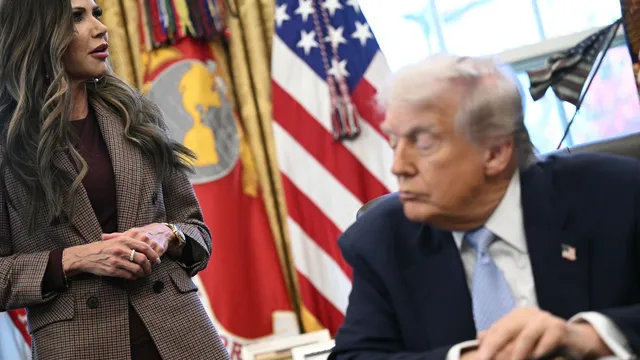
House Democrats push impeachment against Kristi Noem over deadly shootings
- House Democrats are threatening impeachment proceedings against Kristi Noem unless President Trump fires her due to fatal shootings by DHS officers.
- The impeachment investigation follows the deaths of two U.S. citizens during immigration enforcement actions in Minnesota.
- Political pressures are escalating as both Democrats and some Republicans call for accountability within the Department of Homeland Security.
Story
In the United States, following two fatal shootings involving federal agents in Minnesota, significant political pressure has mounted against Homeland Security Secretary Kristi Noem. The incidents involved the deaths of Alex Pretti and Renee Good, both US citizens, which occurred during heightened immigration enforcement actions by agents from the Department of Homeland Security (DHS). Critics, including House Democrats, have accused Noem of failing to ensure transparency and responsible operations within the agency, leading to violence against American citizens. In response to these incidents, top House Democrats have issued an ultimatum to President Donald Trump, insisting that he must fire Noem or they will pursue impeachment proceedings against her. They have outlined a case for impeachment stemming from their ongoing investigation into Noem's conduct, which they argue represents a violation of public trust and an obstruction of Congress. Notably, the Democratic impeachment resolution has gained significant traction, attracting over 160 co-sponsors, although it has yet to see bipartisan support, with Republicans focusing on inquiries into ICE. Supporters of the DHS operations claim that Noem has been carrying out the law effectively. However, some Republican senators have also expressed dissatisfaction with her handling of the situation, calling for her resignation. Amidst these calls and after the second fatal incident, President Trump has defended Noem's actions, indicating no immediate plans to dismiss her. The ongoing investigations and increasing scrutiny from both Democrats and some Republicans highlight the complexities surrounding immigration enforcement and the accountability expected from leadership within federal agencies tasked with these operations.
Context
The history of cabinet member impeachments in the United States is a relatively limited but significant aspect of the broader political landscape. Impeachment serves as a constitutional mechanism for holding federal officials, including cabinet members, accountable for misconduct. Throughout American history, there have been only a few instances where cabinet members faced impeachment proceedings, reflecting the rarity of such actions against high-ranking officials within the executive branch. These occurrences underscore the complexities involved in the intersection of political power, governance, and law in the United States. The first notable impeachment of a cabinet member occurred in 1876, when Secretary of War William W. Belknap was impeached by the House of Representatives. Belknap was accused of corruption related to selling licenses for trading posts to private individuals, demonstrating that misconduct in financial dealings can catalyze impeachment discussions. Belknap's case was particularly unique, as he resigned from his position before the Senate trial commenced, raising questions about the accountability of officials who leave office in the face of impeachment. Ultimately, the Senate acquitted Belknap, which contributed to the perception that impeachments of cabinet members might be more political than factual in their foundation. The next significant instance occurred over a century later, when President Bill Clinton's impeachment proceedings sparked considerable political turmoil. This situation highlighted the broader implications of impeachment beyond just cabinet members. While no cabinet member was directly impeached, the political environment fostered discussions around accountability and ethics within the executive branch. The scrutiny placed on cabinet members often intensified during such national crises, emphasizing the dynamic political landscape where cabinet officials could also face fallout from executive controversies. In modern terms, the impeachment process shines a spotlight on the expectations placed on cabinet members regarding ethical conduct and public trust. The rarity of these impeachments points to the prevailing view that such actions are extreme measures, often resulting from deeply partisan divides rather than straightforward legal violations. As such, cabinet members navigate a complex landscape where their actions are closely monitored, and the possibility of impeachment—while uncommon—remains a powerful tool within the political toolkit of Congress. Understanding this history not only provides insight into past events, but it also underscores the evolving relationships between the branches of government and the continuous balance of power that characterizes American democracy.
