

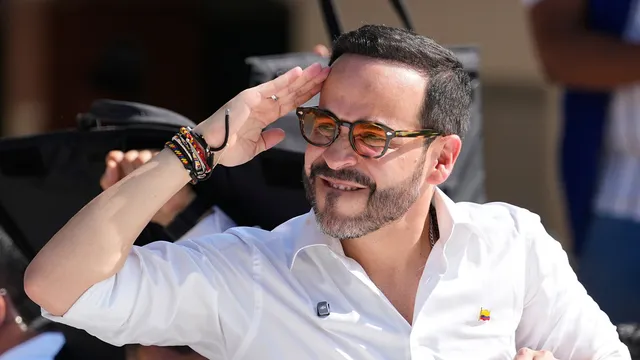
Colombia's presidential race sees right-wing outsider rise to prominence
Colombia's presidential race sees right-wing outsider rise to prominence
- Colombia is heading to the polls amid rising tensions between President Gustavo Petro and U.S. President Donald Trump over drug trafficking.
- Abelardo De La Espriella has emerged as a leading right-wing candidate, polling closely behind Ivan Cepeda.
- The election outcome could redefine Colombia's foreign relations and approach to drug-related violence.
Story
Colombia is currently facing a pivotal presidential election that could significantly alter its international relations, particularly with the United States. The election follows a tumultuous period marked by escalating tensions between the current left-wing President Gustavo Petro and U.S. President Donald Trump, primarily over issues related to drug trafficking and security. As the election approaches, the leading candidates include Ivan Cepeda, Petro's chosen successor, and Abelardo De La Espriella, a lawyer and political outsider who has gained substantial support, polling at 45 percent against Cepeda's 52 percent in potential runoff scenarios. The political landscape has been shaped by a surge in coca cultivation and cocaine production under Petro's administration, which has led to a breaking point in U.S.-Colombia relations. In 2023, coca cultivation reached 253,000 hectares, marking a 10 percent increase from the previous year, while cocaine production surged by 53 percent to 2,664 metric tons. This alarming rise prompted the Trump administration to strip Colombia of its drug certification for the first time in nearly three decades, citing Petro's failure to uphold international counternarcotics commitments. As the election unfolds, both De La Espriella and fellow right-wing candidate Paloma Valencia have pledged to restore close ties with Washington, advocating for a hard-right security strategy to combat drug trafficking and violence. However, critics warn that such an approach may not effectively address the underlying issues of extreme inequality and lack of opportunities that fuel the illicit drug economy. The next president will face the challenge of navigating Colombia's complex relationship with Venezuela, which shares a nearly 1,400-mile border with Colombia and has become a significant hub for armed groups and drug trafficking. The outcome of this election is crucial, as it will determine not only the future of Colombia's domestic policies but also its alignment with international partners, particularly the United States. The potential for a right-wing victory could lead to a shift in Colombia's approach to drug-related violence and its foreign policy, with implications for regional stability and security. As the election date approaches, the stakes are high for all candidates, and the political violence that has marred the campaign season underscores the urgency of addressing Colombia's pressing challenges.
Context
geopolitical analysis insight policy policy impact global trends market market market market economic strategic market shift market impact trends data geopolitical economic insight shift analysis shift economic trends policy shift insight global data strategic market insight impact trends geopolitical geopolitical global trends data analysis data economic policy market analysis geopolitical analysis economic market shift economic insight geopolitical trends shift analysis impact impact trends economic shift trends market geopolitical analysis analysis trends analysis analysis policy policy policy analysis insight market shift...


