

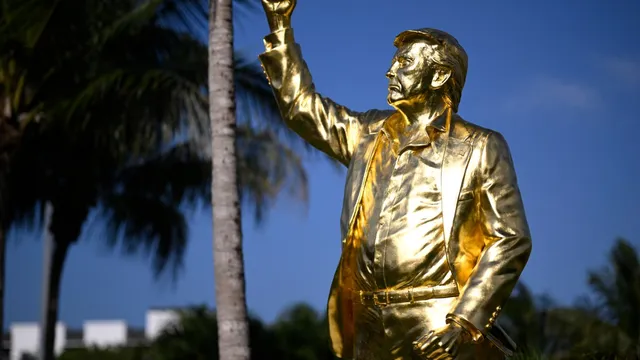
Pastor defends golden Trump statue against idol worship claims
Pastor defends golden Trump statue against idol worship claims
- A 22-foot golden statue of Donald Trump was unveiled at Trump National Doral in Miami, led by evangelical minister John Mark Burns.
- Critics, including Reverend Benjamin Cremer, have likened the statue to idol worship, referring to the biblical 'golden calf' and arguing against its creation.
- Burns defends the statue as a symbol of resilience and patriotism, emphasizing it is not intended for worship despite the backlash.
Story
In the United States, a 22-foot golden statue of Donald Trump was unveiled at Trump National Doral Miami. The unveiling, which took place weeks ago, was led by John Mark Burns, an evangelical minister and spiritual adviser to Trump. The statue has sparked significant controversy due to criticisms labeling it as a form of idolatry, akin to the biblical 'golden calf' deemed inappropriate for worship. Critics, including Reverend Benjamin Cremer, argue that the statue represents a breach of biblical prohibitions against idol worship and contrasts with social needs, like supporting hungry children and helping the poor. Burns asserted that the statue is not meant for worship but symbolizes patriotism, resilience, and honor. He emphasized that millions believe Trump has made significant contributions to the nation's strength. The pastor spoke out against the backlash, stating that worship is reserved for Jesus Christ alone. Additionally, some commentators drew comparisons to King Nebuchadnezzar's historical idol, suggesting the statue could symbolize a narcissistic embrace of self-importance. They argued that such portrayals could create dangerous idolization, undermining the boundaries of faith. Despite the criticisms, Burns continued to promote the statue as a positive symbol, leading to further debate within both religious and secular circles about the role of personality in politics. The event has fueled discussions about the growing trend of personality-driven branding associated with Trump, raising concerns about the implications for the intersection of faith and politics in America. Ultimately, the ceremony and the statue have become focal points for broader issues regarding idolatry, belief, and political loyalty in the contemporary landscape. The statue’s unveiling was attended by various religious figures who joined Burns in celebrating its significance. The complexity surrounding its interpretation showcases the challenges faced by many religious leaders who navigate the fine line between honoring influential figures and adhering to their spiritual convictions. As the debate continues to unfold, the public's perception of the statue may influence future discussions on faith, idolatry, and political allegiance in America.


