

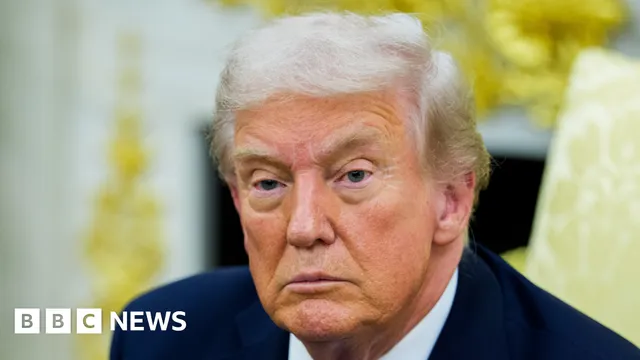
Trump acknowledges UK troops as among the greatest after backlash
Trump acknowledges UK troops as among the greatest after backlash
- Donald Trump previously criticized NATO troops, claiming they stayed off the front lines during the Afghanistan conflict.
- His comments were met with widespread condemnation, prompting UK Prime Minister Keir Starmer to demand an apology.
- In a later social media post, Trump praised UK soldiers, acknowledging their sacrifices and highlighting their bravery.
Story
Earlier this week, President Donald Trump faced backlash from NATO allies due to his remarks downplaying their contributions during the Afghanistan conflict. In an interview, he suggested that NATO troops had remained 'a little back, little off the front lines' and indicated that the U.S. never needed their help, positioning NATO in a negative light. This criticism ignited outrage across Europe, especially from UK Prime Minister Kier Starmer, who labeled Trump's comments as insulting and appalling. The controversy resulted in hurt sentiments among families of fallen soldiers and members of the military community who felt their sacrifices were overlooked. Following a conversation with Prime Minister Starmer where they addressed the bravery of British soldiers, Trump took to his social media platform to adjust his tone and commended the sacrifices made by UK forces in Afghanistan. In his post, he stated that the soldiers were 'among the greatest of all warriors' and acknowledged the bond uniting US and UK forces. Trump's comments followed the loss of 457 British servicemen during the conflict, which underscored the significant sacrifices made by UK armed forces. He expressed love and respect for the UK military, emphasizing their contributions and valor. While his social media post has been viewed as an attempt to smooth over his earlier statements, it did not include a formal apology, leaving some skepticism about his commitment to recognizing the sacrifices made by NATO allies in combat. The overall response from political leaders and the public in both the UK and other NATO countries illustrates the ongoing sensitivity around national honor and the relationship between these allies in the face of such remarks.
Context
NATO's involvement in Afghanistan marks a significant chapter in the history of international military cooperation and peacekeeping efforts. Following the September 11, 2001 terrorist attacks, the North Atlantic Treaty Organization (NATO) invoked Article 5 of the Washington Treaty for the first time in its history, thereby affirming that an attack against one member is an attack against them all. This led to the establishment of the International Security Assistance Force (ISAF) in Afghanistan in late 2001, aimed at providing security and aiding in the rebuilding efforts of a nation ravaged by years of conflict. Over the years, NATO's role extended beyond mere military engagement, engaging in a comprehensive approach that included capacity building and development assistance alongside the Afghan National Security Forces (ANSF). The transition to a training-led mission occurred in 2011, based on the assessment that Afghan forces were increasingly capable of securing and governing their nation. Security responsibilities were gradually handed over to the ANSF, culminating in the complete withdrawal of NATO combat troops by December 2014. However, NATO's mission did not end there; the Resolute Support Mission commenced in January 2015, focusing on training, advising, and assisting Afghan forces across various levels while understanding the importance of a synergistic approach to ensure long-term stability in the region. By maintaining a presence, NATO aimed to reinforce the positive outcomes of the ISAF mission and help prevent a resurgence of terrorism. Throughout its engagement, NATO faced significant challenges, including an evolving battlefield, frequent changes in the Taliban strategy, and the complexities inherent in nation-building processes. Multiple factors such as political instability within Afghanistan, corruption, and the insurgency continued to pose threats to NATO's efforts and broader regional peace. Despite these challenges, NATO's commitment to Afghanistan underscored its dedication to global security and stability, as it aligned not only military resources but also bolstered partnerships with other international organizations and neighboring countries to foster regional cooperation. As of 2021, following the announcement of the U.S. troop withdrawal, NATO reassessed its role and objectives in Afghanistan. The concern from member states regarding the potential consequences of a sudden withdrawal emphasized the need for a coherent strategy for a sustainable future for Afghanistan. The challenge lay not only in the immediate military considerations but also in ensuring that the socio-economic frameworks established over the last two decades were maintained. As the political landscape continues to evolve, NATO's role in Afghanistan epitomizes the complexities of modern international military operations and peacekeeping mandates, delineating lessons learned that will inform future engagements and collaborative efforts in similar geopolitical contexts.


