

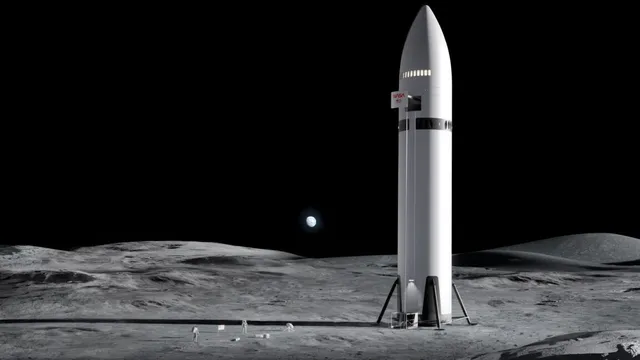
NASA seeks faster lunar lander development from SpaceX and Blue Origin
NASA seeks faster lunar lander development from SpaceX and Blue Origin
- NASA is developing lunar landers in partnership with SpaceX and Blue Origin.
- Changes have been made to the mission's orbital requirements and landing strategies.
- The adjustments aim to enhance the Artemis program's timeline and improve efficiency.
Story
In recent developments regarding lunar exploration, NASA faces challenges with the Artemis program, which includes the need for a lander to take astronauts to the lunar surface and back to an orbiting spacecraft named Orion. To address this, NASA has formed partnerships with SpaceX and Blue Origin for the development of these crucial landers: Starship and Blue Moon MK2, respectively. The urgency of this mission has intensified as space agencies race to achieve lunar goals, with discussions focusing on the possibility of launching a revamped Artemis III mission to test these landers near Earth before human landings on the Moon later this decade. The leadership transition within NASA is marked by a new administrator and a commitment to overcoming existing obstacles in the timeline. Isaacman, the new administrator, emphasized the importance of meeting with companies involved in the Artemis program to find ways to accelerate the timeline further. As a significant revision in the program's orbiting strategy, NASA has made adjustments to the trajectory requirements for the lunar landers. Instead of requiring docking procedures in a challenging orbital position known as a near-rectilinear halo orbit, the criteria have been loosened to allow for less complex orbital rendezvous operations. The rationale for this change is tied to the performance limitations of Orion’s service module, which lacks the necessary capabilities for a safe return from low-lunar orbit. With new orbital strategies being proposed, the Human Landing System could implement a singular burn to achieve lower orbits closer to the Moon’s surface. For subsequent Artemis missions beyond Artemis III, plans to standardize the launch vehicle's upper stage are considered, potentially enhancing propulsive performance and making lunar access more efficient. Despite the complications arising from differing mission plans, NASA remains focused on achieving lunar objectives as quickly as possible, particularly in light of the competitive landscape, including advancements from international players like China. The emphasis on speed has led to constructive dialogues between NASA and both SpaceX and Blue Origin, with companies adapting their operations to prioritize the urgent developmental needs surrounding lunar landers. This pivotal collaboration with private space companies showcases a strategic shift to utilize commercial capabilities to enhance NASA's lunar mission performance as it strives to return humans to the Moon in this decade.


