

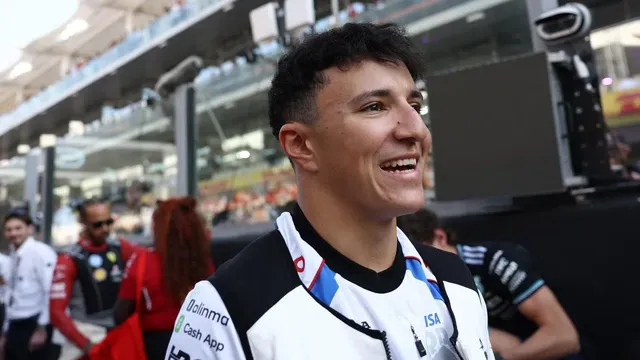
Isack Hadjar's crash throws Red Bull's testing schedule into chaos
Isack Hadjar's crash throws Red Bull's testing schedule into chaos
- Red Bull's Isack Hadjar crashed during pre-season testing on January 27, 2026, in Barcelona.
- The team is assessing the damage and considering plans moving forward due to limited testing days left.
- The incident poses challenges for Red Bull as they look to prove their new powertrain as part of a larger $50 billion investment.
Story
In Spain, Red Bull's pre-season testing schedule faced significant disruption due to a crash involving their new driver Isack Hadjar, which occurred on January 27, 2026, at the Circuit de Catalunya in Barcelona. The 21-year-old Frenchman, who had recently been promoted from the Racing Bulls team, lost control of the RB22 car and collided with barriers during a session conducted in rainy conditions while the event was closed to media. Following the incident, team principal Laurent Mekies indicated that the team would evaluate the damage to the car before making any decisions regarding the remaining testing days, having already utilized two of the allotted three days for testing. Hadjar's crash resulted in a potential delay for the team, which was conducting critical trials ahead of the season's start with new regulations coming into play in 2026. The team, partnered with Ford to develop their engine, faced logistical challenges in securing spare parts to repair the damaged vehicle, leading to discussions about possibly postponing further running until January 30. Mekies emphasized the importance of prioritizing the assessment of the car's damage and expressed relief in that Hadjar came away unscathed from the ordeal. The atmosphere at the testing was tense, as other teams like Ferrari and Mercedes continued their practice runs without incident. Red Bull was aiming to emerge from the shadow of its collaboration with Ford, especially with a hefty investment of $50 billion directed towards electric vehicle development. With the element of competition freshly ignited in Detroit, both Ford and GM industries were monitoring performance closely as they re-entered the Formula 1 landscape. Amid the difficulties of inclement weather, both Ferrari and Mercedes took advantage of the chance to gather significant data for their own cars while Red Bull faced the setback, causing the need for a reassessment of their strategy leading into the season. With only days remaining before the official start of the 2026 season, the stakes have grown high as teams finalize their vehicles for the highly competitive championship.


