

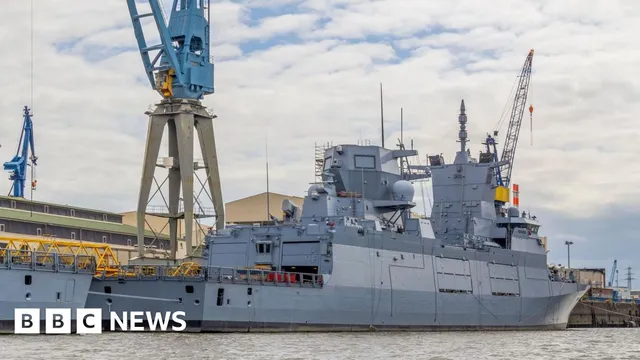
Two workers arrested for sabotaging German naval vessels in Hamburg
Two workers arrested for sabotaging German naval vessels in Hamburg
- Two workers arrested in connection with the sabotage of German naval vessels at Hamburg harbour in 2025.
- The sabotage included significant tampering with ship engines and systems, potentially endangering naval operations.
- The incident highlights ongoing concerns over sabotage and security in Europe amidst geopolitical tensions.
Story
In 2025, two workers, a 37-year-old Romanian and a 54-year-old Greek, were arrested for allegedly sabotaging various German naval vessels at Hamburg harbour. The sabotage was discovered during pre-departure inspections, particularly with the corvette 'Emden', which was preparing for its inaugural journey to Kiel. The suspects reportedly tampered with crucial components of the ships, which included pouring steel pellets into the engine block, puncturing fresh-water lines, and disabling onboard electronics. Investigating authorities indicated that these acts could have resulted in severe damage had they not been detected prior to the ships' departure. The arrests resulted from a coordinated operation involving German, Greek, and Romanian law enforcement, which extended across multiple countries with the suspects' residences searched for evidence in Hamburg, Romania, and Greece. The Eurojust crime agency emphasized the potential risks posed by the suspects' actions, stating that, if unaddressed, their interference would have jeopardized German naval operations and could have led to significant delays. Although these alarming incidents took place against a backdrop of increased tensions regarding sabotage linked to Russia in Europe, the authorities did not explicitly associate this specific act of sabotage with any country. Since Russia's full-scale invasion of Ukraine in 2022, there has been a surge in concerns around sabotage and hybrid warfare across Europe, prompting countries like Germany to bolster their defenses against such threats. Recent years have seen various suspected sabotage incidents affecting naval operations and infrastructure, highlighting the need for vigilance and resilience in national security measures. The investigation into the broader circumstances surrounding the incident is ongoing, reflecting the serious nature of the threats to military and civilian infrastructure posed by potential sabotage. As more information comes to light, it is essential for authorities to evaluate the involvement of external actors and strengthen their response against future threats. The arrests serve as a reminder of the ever-present dangers faced by nations involved in complex geopolitical tensions.
Context
The impact of Russia's invasion of Ukraine on European security has been profound and multifaceted, reshaping the geopolitical landscape of the continent since the conflict began in February 2022. The invasion has prompted unprecedented levels of military mobilization and political re-alignment within Europe, with NATO countries reinforcing their eastern borders and increasing defense spending in response to the perceived threat from Russia. This military buildup signifies a departure from previous post-Cold War security paradigms, where Europe largely focused on diplomatic and economic partnerships rather than direct military readiness. The invasion has also accelerated discussions on collective defense commitments, demonstrating a renewed sense of urgency among European nations to bolster their security frameworks against potential aggressors. The war has underscored the importance of unity within the transatlantic alliance, as member states collaborate to provide military and humanitarian aid to Ukraine, thereby reinforcing the principles of collective defense enshrined in Article 5 of the NATO treaty. Furthermore, the invasion has led to a reassessment of energy security across Europe, as dependency on Russian oil and gas has become a critical vulnerability. In an effort to reduce this dependency, European nations have explored alternative energy sources and implemented strategies to diversify their energy portfolios. The EU has made significant strides in promoting renewable energy investments and enhancing interconnectivity among member states to ensure energy resilience, which is vital for maintaining stability and security in the region. Additionally, energy sanctions imposed on Russia have had notable economic repercussions, forcing a reevaluation of trade relationships and economic dependencies that could be exploited for political leverage. The conflict's impact extends to societal factors, as the influx of millions of refugees from Ukraine has strained resources and prompted discussions on migration policies across Europe. Countries have had to balance their humanitarian obligations with the challenges of integration and social cohesion within their borders. This has sparked debates regarding national identity, social spending, and the European Union’s capacity to manage large-scale migrations effectively. The humanitarian crisis has revitalized public support for Ukraine in many European nations, fostering a sense of solidarity that transcends national boundaries and reinforces a collective European identity in the face of external threats. Lastly, the impact of the invasion on European security has profound implications for democratic governance and stability within the region. Rising tensions and the reinforcement of militarization may lead to increased political polarization and shifts toward authoritarianism in some member states, as governments respond to citizens' concerns regarding national security and public safety. The dynamic interplay between regional conflicts, external threats, and internal socio-political changes necessitates continuous dialogue and collaborative approaches among European nations to build a resilient security architecture. As the situation evolves, it will be essential for Europe to navigate these challenges thoughtfully to secure a stable and peaceful future in the face of ongoing uncertainties.


