

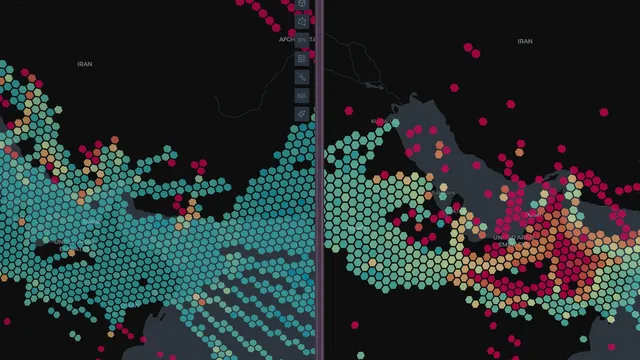
GPS interference skyrockets post-US strikes on Iran
GPS interference skyrockets post-US strikes on Iran
- GPS interference has drastically increased since February 28, 2026, following military actions against Iran.
- Iran has developed advanced spoofing technologies and allegedly acquired China's BeiDou navigation system.
- This electronic warfare impacts both military strategies and civilian navigation, leading to heightened risks and operational challenges.
Story
Since the military actions by the US and Israel against Iran on February 28, 2026, GPS jamming and spoofing have significantly increased in the Middle East, highlighting the onset of an electronic warfare arms race between the involved parties. These tactics have become critical in modern combat, allowing one side to disrupt the navigational capabilities of the other. Analysts have noted that both Iran and its adversaries are employing these methods in both offensive and defensive operations to impair enemy intelligence operations. The implications of this technological battle extend beyond military operations, increasing risks and operational difficulties for civilian transport in the region. Iran is particularly noted for its advances in spoofing techniques, with experts such as Philip Ingram suggesting that the nation has developed sophisticated capabilities to confuse enemy drones, specifically targeting the Shahed drones. This enhances their military effectiveness by integrating technology shared by Russia. Furthermore, former French foreign intelligence director Alain Juillet mentioned Iran's potential acquisition of China's BeiDou navigation system, which has improved the targeting accuracy of Iranian operations. Consequently, the spike in GPS interference affects commercial and civilian operations across the Middle East. Most countries have closed their airspaces due to the ongoing conflict, complicating flight routes and maritime navigation. While some flights continue from Muscat, navigating without GPS has become a challenge causing increased risks and inconvenience for those at sea and their counterparts on land. This conflict's nuances are imperative for understanding the dangers that modern warfare presents, reinforcing the necessity for advanced navigation systems even amidst conflict. As the rivalry continues and evolves, analysts predict that GPS interference tactics will persist, potentially redefining operational strategies for both military and civilian transport in the involved areas. The stakes have grown higher as nations vie for dominance not just on physical battlegrounds but also in electronic warfare, impacting thousands of lives reliant on secure navigational systems.
Context
The history of electronic warfare (EW) in Middle East conflicts is a significant aspect of modern military strategy, evolving substantially over the past several decades. Electronic warfare encompasses the use of electromagnetic spectrum to disrupt, deceive, or deny adversary capabilities while ensuring the effective use of one's own systems. The Middle East has been a focal point for such technologies given its strategic importance, and the conflicts witnessed in this region have substantially influenced the development and application of EW tactics and technology. The early applications of EW during the Arab-Israeli conflicts of the 1960s and 1970s marked critical milestones, with techniques employed to jam radio communications and radar systems. Notably, Israel became a pioneer in utilizing extensive electronic measures against its adversaries, which has had a lasting impact on the conduct of warfare in this arena. As conflicts continued into the late 20th century, particularly during the Gulf War of 1991, the role of electronic warfare became more pronounced with the integration of advanced technologies. The United States, using sophisticated EW systems, was able to achieve air superiority and disrupt Iraqi command and control systems effectively. The introduction of systems such as the EF-111 A Raven and the Navy's EA-6B Prowler showcased how electronic countermeasures (ECM) could be effectively deployed to overwhelm enemy defenses and facilitate ground operations. This era highlighted how quick and effective EW tactics could lead to a significant tactical advantage in modern warfare, setting a precedent for future conflicts. The post-9/11 era marked a shift in the landscape of electronic warfare within the Middle East, particularly in the context of asymmetrical warfare and counter-insurgency operations. The rise of non-state actors and insurgent groups necessitated new approaches to EW. Modern conflicts in Iraq and Syria have demonstrated how these groups have adapted and utilized communication technologies, which in turn led to the development of countermeasures by state actors. The emergence of UAVs (unmanned aerial vehicles) in surveillance and strike operations has also influenced EW strategy, moving beyond traditional jamming to encompass advanced cyber operations and electronic attacks aimed at disabling UAVs and other communication systems used by enemy forces. In recent years, the integration of cyber capabilities with electronic warfare has become increasingly important in the Middle East theater. States such as Iran and Israel have invested heavily in enhancing their EW and cyber warfare capabilities, recognizing their significance in achieving strategic objectives. The ongoing conflicts and tensions in the region continue to push the boundaries of electronic warfare, with each engagement providing lessons learned that shape future operations. The continuous evolution of technology, coupled with the changing nature of conflict, suggests that the history of electronic warfare in the Middle East will remain a dynamic field of study, reflecting the complexities and challenges faced by military forces as they adapt to new realities and adversary capabilities.


